


In today’s fast-changing workplace, office space management software is essential for organizations looking to optimize their workspace and reduce operational costs. Studies show that a significant portion of office space sits underutilized — sometimes as much as 30–40%. Businesses pay for unused desks, empty meeting rooms, and inefficient layouts, resulting in unnecessary costs.
By implementing office space management software effectively, companies can reduce office costs by up to 30%, while improving employee satisfaction, operational efficiency, and overall productivity.
In this guide, we’ll dive into how office space management software delivers these savings and explain how Zenith can help organizations achieve a more efficient, cost-effective workplace.
What Is Office Space Management Software?
Office space management software is a digital solution that provides real-time insights into how your office space is used. Unlike traditional floor plans or spreadsheets, modern solutions offer actionable analytics, helping organizations optimize space and reduce costs.
Core Functions Include:
- Desk & Room Booking: Reserve desks, offices, or meeting rooms on-demand.
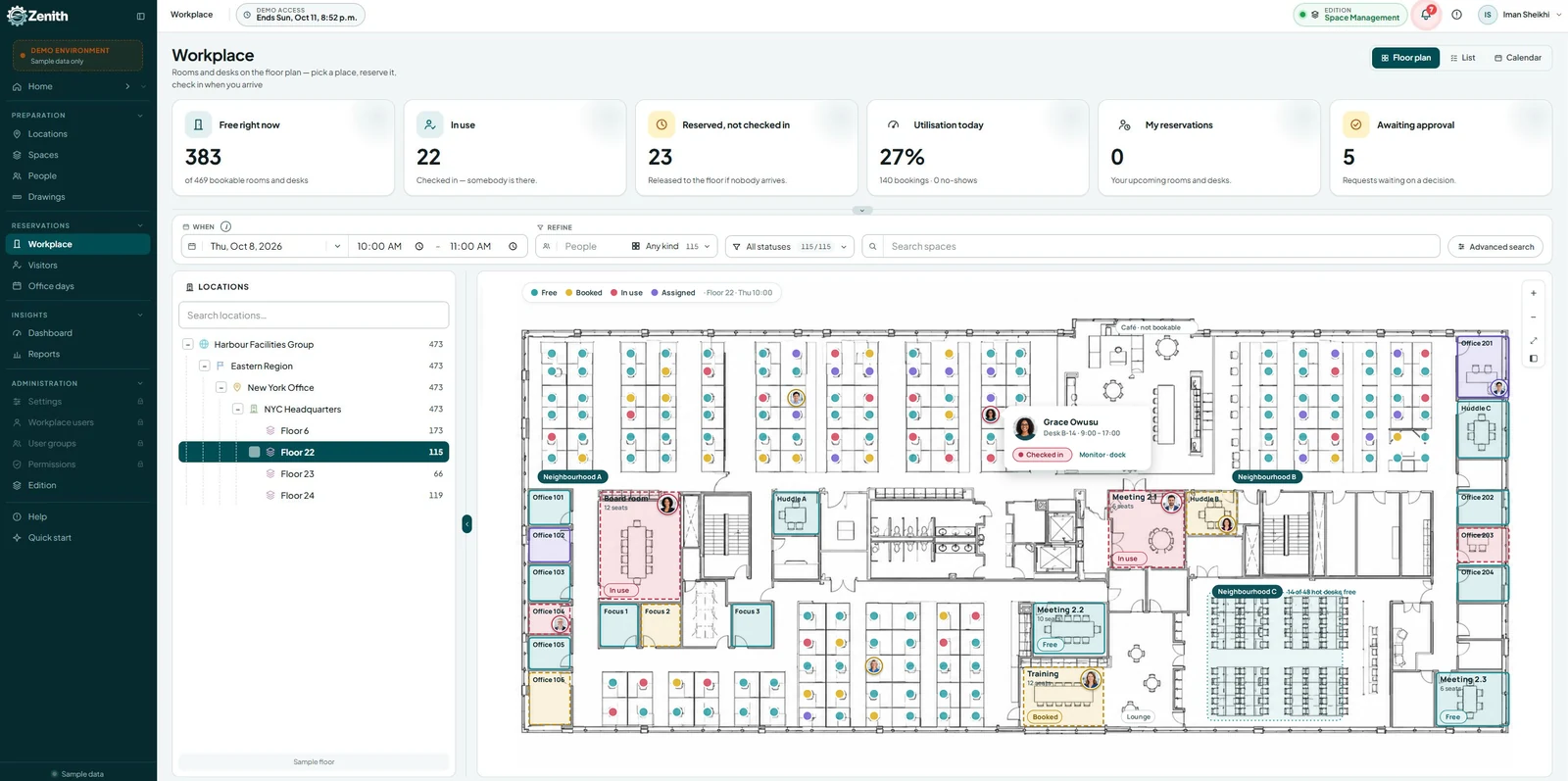
- Occupancy Monitoring: Track real-time usage of desks, rooms, and common areas.
- Analytics & Reporting: Identify underused spaces, peak usage times, and trends.
- Integration with Other Systems: Calendar apps, HR systems, IoT sensors, and security systems.
- Space Optimization Recommendations: Automated suggestions for layout changes, desk sharing, or room reallocation.

Why Office Space Costs So Much
Office space expenses come from several sources:
- Lease & Rent Costs: Premium office locations carry high rents. Paying for unused space is a direct loss.
- Maintenance & Utilities: Cleaning, HVAC, electricity, IT, and repairs are recurring costs that grow with unused areas.
- Underutilized Workspaces: Empty desks, meeting rooms, and collaboration areas represent wasted investment.
- Inefficient Layouts: Poorly planned layouts lead to overcrowding in some areas and underuse in others.
- Administrative Overhead: Manual tracking (spreadsheets, emails) is inefficient and error-prone.
Learn more about workplace efficiency strategies in this Gartner report.
How Office Space Management Software Reduces Costs
1. Identify and Eliminate Underused Space
Real-time occupancy data helps identify:
- Rarely used desks or offices
- Empty meeting rooms during peak hours
- Unnecessary common areas
Actionable Steps:
- Repurpose or remove underused desks
- Consolidate floors or zones to reduce leased space
- Avoid unnecessary renovations
Impact: Companies often see 15–25% savings on office lease costs.
2. Support Flexible Work and Desk Sharing
Hybrid work models leave many desks empty. Office space management software enables:
- Hot-desking and hoteling
- Reserving desks only when needed
- Reducing the total number of desks required
Impact: 10–20% savings on furniture and space costs.
Image suggestion: Employees using hot-desking software
Alt text: “Hybrid workspace using office space management software”
3. Optimize Meeting Rooms and Shared Spaces
Meeting rooms are frequently double-booked or abandoned. The software tracks:
- Real-time room availability
- No-show meetings
- Room features usage (AV, seating capacity)
Actionable Steps:
- Automatically release unused bookings
- Allocate rooms based on team needs
- Reduce unnecessary expansions
Impact: Improved space utilization, better productivity, and lower operational overhead.
4. Automate Facility Management
Manual tracking is inefficient. Office space management software automates:
- Desk, room, and workspace reservations
- Data collection and reporting
- Space optimization suggestions
Impact: Reduces administrative time by 20–30% while improving accuracy.
5. Enable Data-Driven Decisions
Accurate data empowers organizations to:
- Negotiate leases based on real usage
- Avoid over-leasing or unnecessary expansion
- Plan for future workspace needs
Impact: Thousands of dollars saved annually and more strategic planning.
6. Enhance Employee Productivity
Optimized space leads to happier, more productive teams:
- Fewer disruptions in crowded areas
- Easier access to collaboration zones
- Flexibility to work in the right environment
Impact: Increased employee satisfaction and reduced turnover, indirectly saving costs.
Real-World Examples
| Company | Challenge | Solution | Result |
|---|---|---|---|
| Tech Startup | Over 40% desks unused | Hot-desking with software | Reduced desks by 25%, saving $200K/year |
| Professional Services | Poor meeting room usage | Real-time occupancy monitoring | Cut wasted room hours by 40% |
| Enterprise | Inefficient office layout | Analytics-driven space reallocation | Consolidated space, saving 18% on lease |
Case studies improve credibility and encourage adoption.
How Zenith Can Help
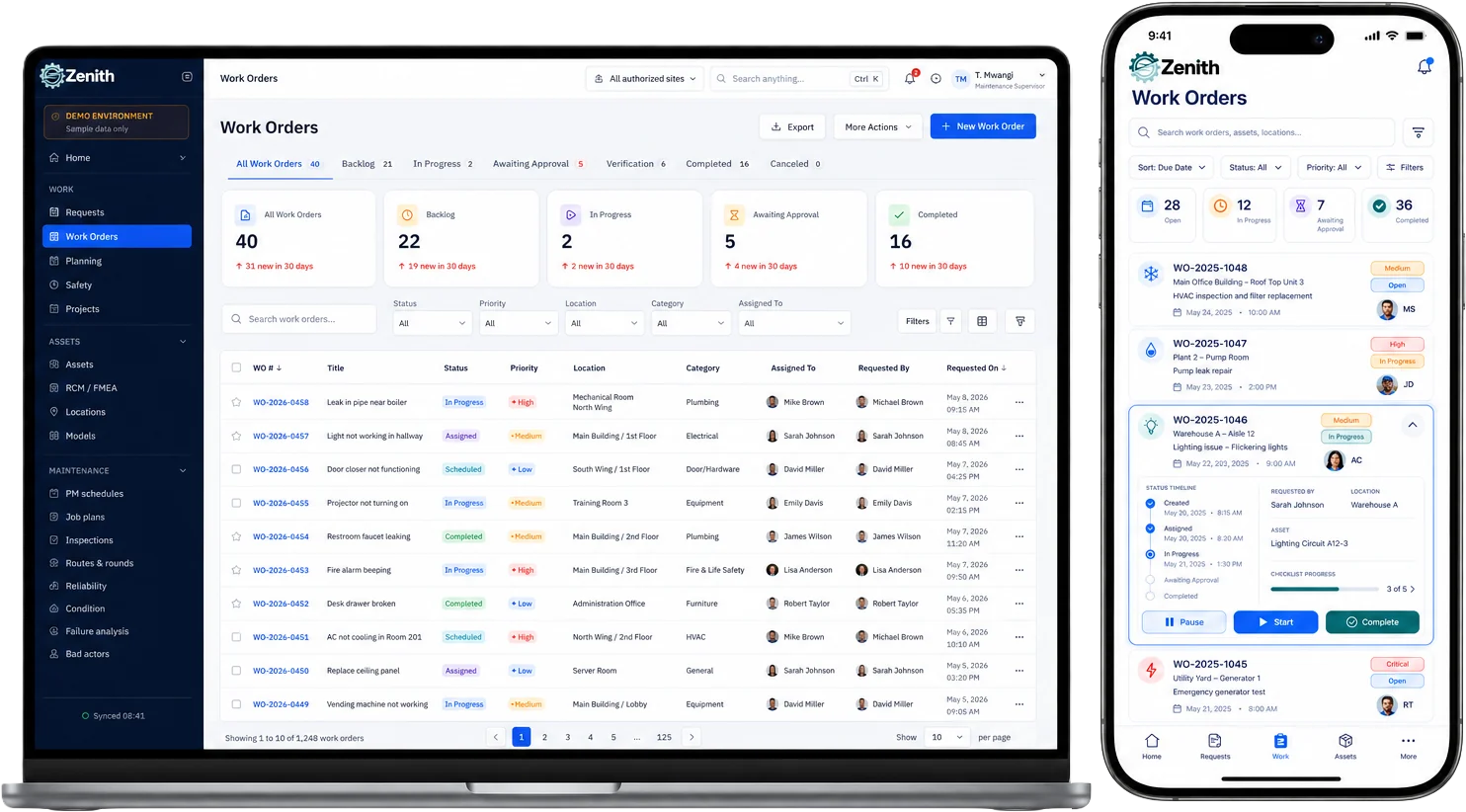
Zenith is a comprehensive facility and office space management platform designed to help businesses reduce office costs and maximize space efficiency.
1. Real-Time Occupancy Monitoring
- Track desk, office, and meeting room usage instantly
- Identify underutilized spaces and high-traffic areas
- Monitor occupancy trends by time of day or day of the week
- Receive automated alerts for overcrowded areas
- Visualize heatmaps for space utilization
- Measure attendance patterns for hybrid work planning
- Track shared spaces, common areas, and collaboration zones
2. Desk & Room Booking
- Employees reserve workspaces with just a few clicks
- Supports hybrid work, hot-desking, and hoteling
- Automatically releases unused bookings after no-shows
- Integrates with calendar apps (Outlook, Google Workspace) for seamless scheduling
- Enables recurring reservations for regular meetings or team rotations
- Provides real-time availability of desks and meeting rooms
- Allows custom rules for booking priority and resource allocation
3. Advanced Analytics
- Historical reporting to analyze long-term space usage trends
- Predictive analytics to forecast occupancy needs based on patterns
- Visual dashboards showing desk, room, and zone utilization
- Compare planned vs actual usage to identify inefficiencies
- Reports on cost savings opportunities (lease, furniture, utilities)
- Track employee behavior and workspace preferences
- Supports executive and facility management reporting with downloadable PDFs or charts
4. Integration with Other Systems
- Connects with Outlook, Google Workspace, HRIS, IoT sensors, and security systems
- Centralizes data from multiple sources for better insights
- Supports single sign-on (SSO) for user convenience
- Integrates with existing workplace apps like maintenance requests or room access systems
- Synchronizes occupancy and booking data across platforms
- Enables automated notifications via email, SMS, or app
- Supports API integration for custom workflows
5. Optimization Recommendations
- Automated suggestions for space allocation based on usage data
- Helps reduce lease, furniture, and operational costs
- Identifies underutilized desks, rooms, and floors for potential downsizing
- Recommends optimal layouts for collaboration and productivity
- Provides “what-if” scenarios for different hybrid work strategies
- Suggests resource reallocation for high-demand areas
- Monitors improvements over time and adjusts recommendations accordingly
Impact: Many organizations see up to 30% savings in office costs, faster ROI, and a more agile, data-driven workplace.
Best Practices for Implementation
- Start Small – Pilot with a department or floor first
- Collect Baseline Data – Measure current utilization
- Communicate Benefits – Educate employees on the software
- Integrate Systems – Connect calendars, HR, IoT, and security for accuracy
- Monitor & Improve – Use analytics to continuously refine allocation
ROI: The Numbers Speak
- Software Investment: $X/year
- Savings from Space Optimization: $Y/year (often exceeding software cost)
- Efficiency Gains: Reduced admin time, better utilization
- Payback Period: 6–12 months
Even modest reductions in unused space can generate tens of thousands of dollars in annual savings.
Conclusion
Modern workplaces demand smarter space management. Office space management software provides real-time insights, flexible booking options, automated reporting, and optimization recommendations — reducing costs, increasing productivity, and enhancing employee experience.
Zenith goes further by offering a complete platform for workspace optimization, helping businesses cut office costs by up to 30% and make data-driven decisions for the future.
Learn more about how Zenith’s integrated CMMS and CAFM today.