


Introduction: The Campus Space Conundrum
Universities today face a paradox: while student populations grow and academic programs diversify, many campuses still struggle with underutilized classrooms, overcrowded labs, and inefficient scheduling. The culprit? Poor space visibility and outdated management practices.
Enter space management software for universities—a transformative solution that empowers institutions to optimize their physical footprint, reduce costs, and enhance the student experience.
What Is Space Management in Higher Education?
Space management refers to the strategic planning, allocation, and utilization of physical spaces—classrooms, labs, offices, dormitories, and common areas—across a university campus. It involves:
🗂️ Inventory Tracking of Rooms and Facilities
Effective space management begins with a comprehensive inventory of all campus assets. Universities often span dozens of buildings with hundreds of rooms, each serving different purposes—from lecture halls and labs to offices and recreational spaces. Space management software for universities enables facility teams to maintain a centralized, real-time database of these spaces, complete with attributes like square footage, capacity, equipment, and accessibility features. This digital inventory not only streamlines audits and compliance reporting but also lays the foundation for smarter allocation and maintenance planning. With accurate data at their fingertips, administrators can make informed decisions about renovations, repurposing, or expansion.
📈 Usage Analytics to Monitor Occupancy and Demand
Knowing what spaces exist is only half the battle—understanding how they’re used is where the real optimization begins. Space management software for universities leverages occupancy sensors, booking logs, and integration with academic schedules to generate powerful usage analytics. These insights reveal patterns such as peak usage times, underutilized rooms, and mismatches between assigned space and actual demand. For example, a lecture hall designed for 200 students might consistently host classes of 40, signaling an opportunity to reassign or redesign the space. By monitoring usage trends, universities can align physical resources with academic needs, reduce waste, and improve the overall campus experience.
🗓️ Scheduling Coordination Across Departments
Universities are dynamic environments where multiple departments compete for limited space. Without a unified system, scheduling conflicts, double bookings, and inefficient room assignments are inevitable. Space management software for universities solves this by offering centralized scheduling tools that coordinate across faculties, administrative units, and student services. These platforms often integrate with Student Information Systems (SIS) and Learning Management Systems (LMS), ensuring that room bookings align with course timetables and faculty availability. The result is a smoother, more equitable allocation process that minimizes friction and maximizes utilization. Departments can collaborate more effectively, and students benefit from consistent, well-organized learning environments.
🔮 Forecasting Needs for Future Growth or Downsizing
Campus planning isn’t just about today—it’s about anticipating tomorrow. Whether a university is expanding its enrollment, launching new programs, or responding to budget constraints, space management software provides the forecasting tools needed to plan ahead. By analyzing historical usage data, demographic trends, and academic projections, these platforms help facility managers simulate future scenarios and model space requirements. For instance, if a university expects a surge in STEM enrollment, it can proactively assess lab capacity and plan for upgrades or new construction. Conversely, if certain programs are downsizing, the software can identify opportunities to consolidate and reallocate space. This strategic foresight ensures that campus resources evolve in step with institutional goals.
Modern universities rely on space management software to automate these tasks, integrate data, and make informed decisions.
Why Universities Need Space Management Software
Here’s why space management software is no longer optional:
📊 Data-Driven Decision Making
In today’s data-rich academic environment, intuition alone isn’t enough to manage campus resources effectively. Space management software for universities empowers administrators with real-time data on room occupancy, usage frequency, and departmental allocation. Platforms like Archibus, FM:Systems, and Zenith transform raw data into actionable insights, helping universities identify underutilized areas, eliminate redundancies, and make strategic decisions about space reallocation. Whether it’s consolidating offices or repurposing seldom-used lecture halls, data-driven space planning ensures that every square foot supports institutional goals.
🗓️ Improved Scheduling Efficiency
Scheduling conflicts are a common pain point across university campuses, especially when multiple departments vie for limited resources. Space management software for universities streamlines this process by integrating with academic calendars, student information systems, and booking platforms. The result is a centralized scheduling ecosystem that eliminates double-bookings, optimizes room assignments, and ensures equitable access to shared spaces. Faculty can reserve classrooms with confidence, students benefit from consistent learning environments, and facility managers gain visibility into usage patterns—all contributing to a more efficient and harmonious campus operation.
💰 Cost Reduction
Inefficient space usage isn’t just inconvenient—it’s expensive. Heating, cooling, lighting, and maintaining underutilized rooms can drain university budgets without delivering value. Space management software for universities helps pinpoint these inefficiencies by analyzing occupancy trends and operational costs. With this insight, institutions can consolidate spaces, adjust HVAC schedules, and prioritize maintenance based on actual usage. The financial impact is significant: reduced utility bills, lower maintenance overhead, and smarter capital planning. In an era of tightening budgets, space optimization becomes a strategic lever for cost control.
🧭 Strategic Planning
Universities are constantly evolving—new programs launch, student populations shift, and research initiatives expand. Space management software for universities supports long-term strategic planning by simulating future scenarios and modeling space requirements. Whether anticipating a surge in enrollment or preparing for a new engineering wing, administrators can forecast demand, assess capacity, and plan renovations or construction with confidence. These tools also help align physical infrastructure with academic priorities, ensuring that space investments support teaching, research, and student life in meaningful ways.
🌱 Sustainability Goals
Sustainability is no longer a buzzword—it’s a mandate. Universities are under increasing pressure to reduce their environmental footprint, and space management software plays a pivotal role in this effort. By optimizing room usage, consolidating operations, and reducing energy consumption, institutions can make measurable progress toward their green campus initiatives. The software also supports LEED certification efforts and carbon reporting by providing detailed analytics on space efficiency. From smarter lighting schedules to reduced HVAC loads, space optimization is a powerful ally in building a more sustainable future for higher education.
Reducing energy consumption and optimizing space contributes to green campus initiatives.
Real-World Applications: How Universities Use It
🏫 Classroom Optimization
Classrooms are the backbone of academic life, yet many universities struggle with inefficient utilization. Studies have shown that some lecture halls remain vacant for more than half the day, representing a significant waste of space and resources. With space management software for universities, facility teams can analyze usage patterns, identify underutilized rooms, and reassign them for more dynamic purposes—such as group study zones, hybrid learning pods, or community events. These tools also help align classroom capacity with actual enrollment, ensuring that large spaces aren’t assigned to small classes and vice versa. The result is a smarter, more responsive learning environment that adapts to evolving pedagogical needs.
🧪 Lab Scheduling
Research labs present unique challenges in space management due to their specialized equipment, safety protocols, and restricted access. Space management software for universities streamlines lab scheduling by integrating booking systems with departmental calendars and access controls. This ensures that labs are used efficiently, equipment is not duplicated across departments, and researchers have equitable access to the facilities they need. The software also supports maintenance tracking and compliance documentation, helping universities meet regulatory standards while maximizing scientific output. In high-demand environments, automated scheduling reduces friction and fosters collaboration across disciplines.
🏢 Office Consolidation
Administrative offices often occupy prime campus real estate, yet many remain underutilized due to outdated layouts or inconsistent occupancy. Space management software for universities helps facility managers analyze real-time occupancy data and identify opportunities for consolidation. By implementing strategies like hot-desking, shared workspaces, and remote work rotations, institutions can reduce their physical footprint without compromising productivity. These changes not only free up space for academic or student-focused functions but also contribute to cost savings in utilities and maintenance. With the right software, office planning becomes a strategic exercise in efficiency and adaptability.
🛏️ Dormitory Planning
Student housing is a critical component of campus life, and its management requires precision and foresight. Space management software for universities enables housing departments to track occupancy rates, forecast demand, and plan renovations or expansions based on actual usage trends. Whether adjusting room assignments, optimizing common areas, or preparing for seasonal fluctuations, the software provides the data needed to make informed decisions. It also supports emergency planning and accessibility audits, ensuring that dormitories meet the diverse needs of the student population. In a competitive enrollment landscape, well-managed housing can be a key differentiator for prospective students.
🧘♀️ Wellness and Recreation Spaces
Wellness centers, gyms, and student lounges play a vital role in campus culture and mental health. However, their usage can vary widely depending on time of day, season, and student demographics. Space management software for universities provides detailed analytics on foot traffic, occupancy, and peak usage times, allowing administrators to adjust staffing, hours of operation, and programming accordingly. These insights help ensure that wellness resources are accessible, inclusive, and aligned with student needs. Whether reallocating space for yoga classes or expanding counseling services, data-driven planning enhances the impact of these essential campus amenities.
🔍 Features to Look for in Space Management Software for Universities
When selecting a solution, universities should prioritize:
| Feature | Benefit |
|---|---|
| Interactive Floor Plans | Visualize space layouts and occupancy |
| Integration with SIS & LMS | Sync with student and course data |
| Mobile Access | Enable on-the-go updates and bookings |
| Reporting & Dashboards | Generate insights for stakeholders |
| Maintenance Tracking | Link space usage with upkeep needs |
| Security & Access Control | Manage permissions for sensitive areas |
Expert Insight: The Role of IT and Facility Managers
Facility managers and IT leaders are the unsung heroes of space optimization. Their collaboration ensures:
- Accurate data collection (via sensors, booking logs, and surveys)
- Seamless integration with existing infrastructure
- Continuous improvement through feedback loops
Universities like Stanford and UBC have pioneered smart campus initiatives that rely heavily on space management software to align physical resources with academic goals.
How Zenith Helps Universities Optimize Campus Space
Zenith is purpose-built to help universities take control of their campus operations by transforming how they manage space, assets, and maintenance. Here’s how it delivers real value in higher education settings:
🧠 Smart Space Classification & Reporting
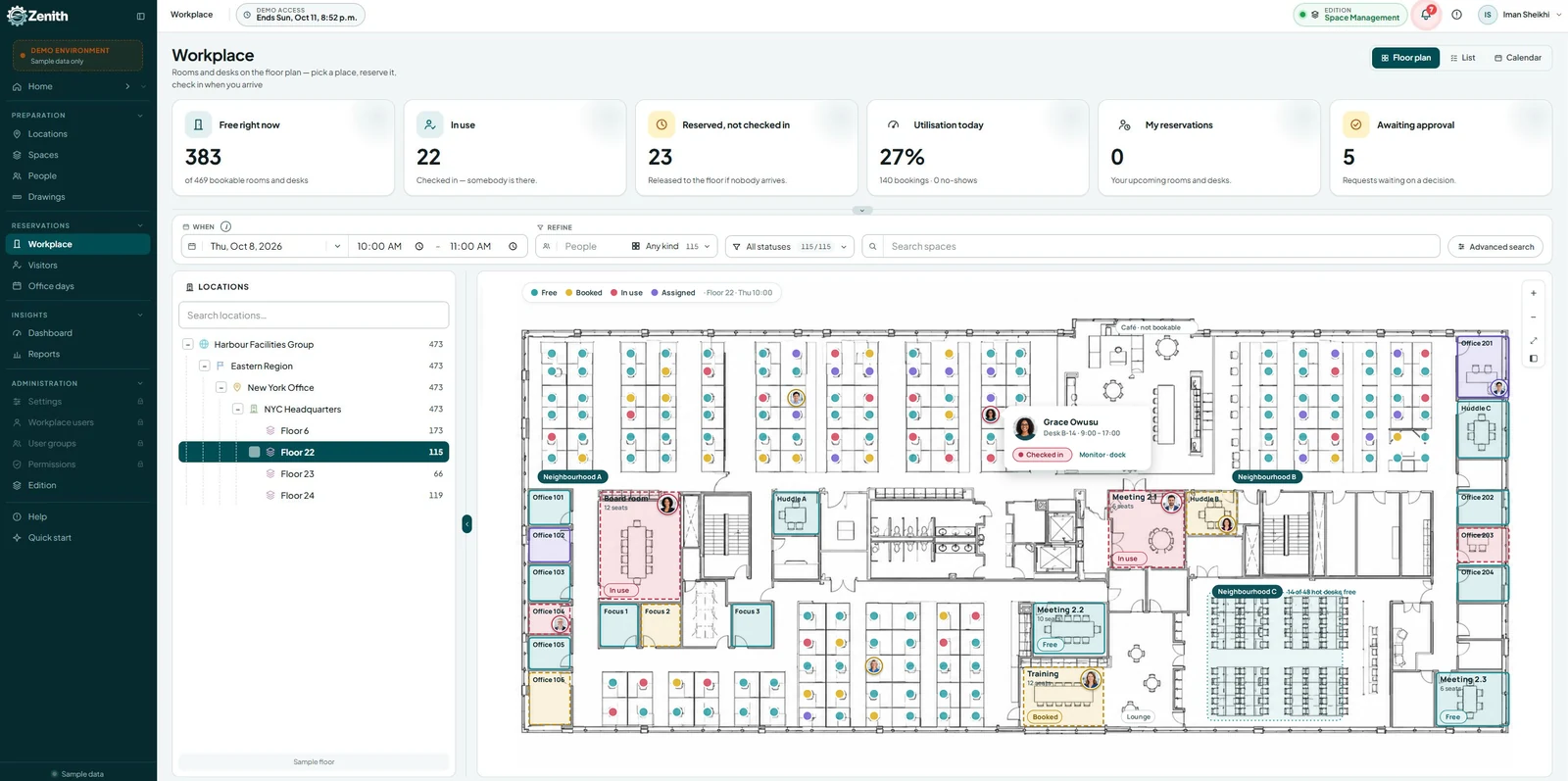
Zenith supports the Postsecondary Education Facilities Inventory and Classification Manual (FICM) standards, which are essential for universities tracking space usage across academic, research, and administrative functions. It allows facility teams to import existing data and instantly generate color-coded floor plans and FICM-compliant reports—without needing CAD expertise. What used to take weeks of manual effort can now be done in seconds.
📊 Real-Time Visibility & Utilization Insights
Universities often struggle with fragmented data—spreadsheets, outdated drawings, and siloed systems. Zenith centralizes this information, giving facility managers real-time visibility into occupancy, departmental allocations, and space conditions. This helps identify underutilized areas, optimize scheduling, and support strategic decisions like office consolidation or lab expansion.
🛠️ Maintenance & Asset Management
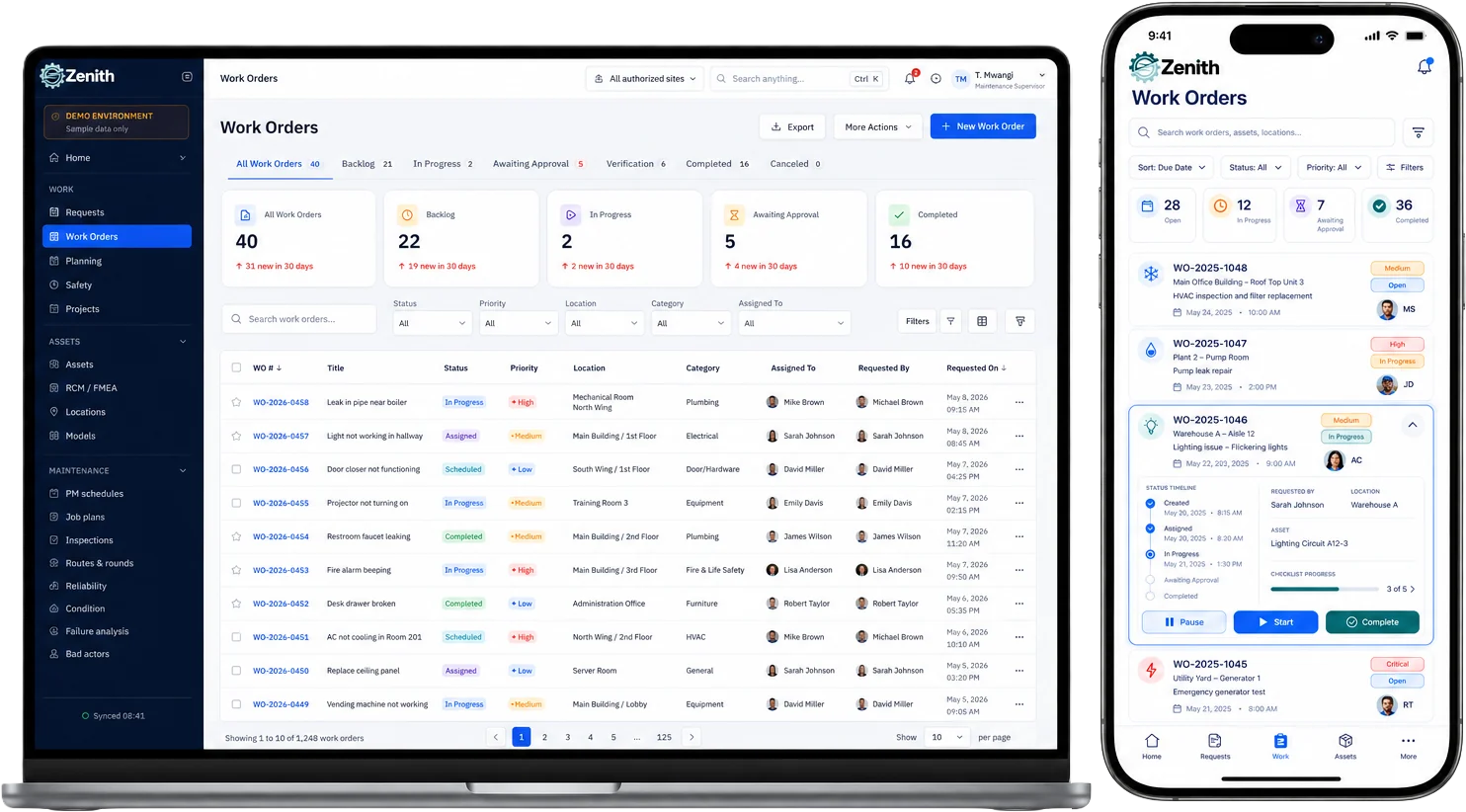
Beyond space tracking, Zenith includes robust CMMS (Computerized Maintenance Management System) capabilities. It streamlines preventive maintenance, tracks work orders, and links service requests directly to rooms and assets. This reduces downtime, improves response times, and ensures compliance with safety regulations—especially critical in labs and technical facilities.
💸 Budget Optimization & Indirect Cost Recovery
Zenith helps universities manage space allocations for Indirect Cost Recovery (ICR)—a key factor in research funding. It allows detailed tracking of how rooms are used across academic disciplines and functional categories, ensuring accurate reporting for grants and financial audits. This level of granularity supports better budgeting and resource justification.
🌐 Browser-Based & Scalable
The platform is 100% browser-based, meaning authorized users can access it securely from anywhere—ideal for distributed campuses or hybrid work environments. It’s designed to be intuitive, so facility managers don’t need to be software engineers or CAD experts to use it effectively.
In short, Zenith empowers universities to move from reactive facility management to proactive, data-driven planning. It’s not just software—it’s a strategic tool for maximizing campus resources, improving sustainability, and enhancing the student experience.
🌍 Future Trends in Campus Space Management
🔮 AI-Powered Forecasting
Predictive analytics will help universities anticipate space needs based on enrollment trends, program popularity, and seasonal usage.
🧩 Modular Spaces
Flexible, reconfigurable spaces will become the norm, supported by software that tracks usage and suggests layout changes.
🌐 Hybrid Learning Integration
As online and in-person learning blend, space management tools will help balance digital and physical resource allocation.
🏙️ Smart Campus Ecosystems
IoT devices, occupancy sensors, and digital twins will feed real-time data into space management platforms, enabling dynamic adjustments.
✅ Conclusion: Making the Most of Every Square Foot
Universities are more than buildings—they’re ecosystems of learning, collaboration, and innovation. By embracing space management software for universities, institutions can:
- Maximize resource efficiency
- Enhance student and faculty experiences
- Support strategic growth
- Meet sustainability goals
Whether you’re a facility manager, IT director, or campus planner, investing in space management is investing in the future of education.
📚 Frequently Asked Questions (FAQ)
1. What is space management software for universities?
Space management software helps universities track, analyze, and optimize the use of physical spaces across campus—classrooms, labs, offices, dorms, and more. It centralizes data, improves scheduling, and supports strategic planning.
2. Why do universities need space management software?
Universities face growing demands for space while managing tight budgets. This software helps reduce waste, improve efficiency, and align facilities with academic goals. It also supports sustainability and compliance reporting.
3. How does space management software improve classroom scheduling?
By integrating with academic calendars and booking systems, the software prevents double-bookings, matches room sizes to class sizes, and ensures equitable access across departments.
4. Can space management software help with dormitory planning?
Yes. Housing departments use it to monitor occupancy, forecast demand, and plan renovations. It also supports accessibility audits and emergency preparedness.
5. What features should universities look for in space management software?
Key features include interactive floor plans, real-time usage analytics, mobile access, integration with SIS/LMS, maintenance tracking, and security controls.
6. Is Zenith suitable for higher education institutions?
Absolutely. Zenith supports FICM standards, offers browser-based access, and provides tools for space classification, reporting, maintenance, and strategic planning—making it ideal for universities.
7. How does space management software support sustainability?
By identifying underused spaces and optimizing HVAC, lighting, and maintenance schedules, universities can reduce energy consumption and meet green campus goals.
📣 Call to Action
Looking to implement space management software at your university? Start by conducting a space utilization study, defining your goals, and exploring platforms that align with your campus needs.
For tailored advice or a demo of Zenith’s space optimization features, reach out to our team today.