


Introduction: The Hybrid Work Revolution
The workplace has undergone a seismic shift. What was once a rigid 9-to-5 office culture has evolved into a flexible, hybrid model where employees split their time between home and the office. This transformation has created new challenges for organizations—especially when it comes to managing physical spaces efficiently. Enter space management software: the digital backbone of modern workplace strategy.
In this blog post, we’ll explore how space management software empowers hybrid workplaces, the key features to look for, and how businesses can leverage these tools to optimize productivity, reduce costs, and enhance employee experience.
What Is Space Management Software?
Space management software is a digital solution that helps organizations plan, monitor, and optimize the use of physical spaces—such as desks, meeting rooms, collaboration zones, and common areas. It provides real-time data and analytics to support decisions about space allocation, occupancy, and utilization.
In hybrid workplaces, where employee presence fluctuates daily, space management software becomes essential for:
- Avoiding overcrowding or underutilization
- Enabling desk booking and hot-desking
- Managing meeting room availability
- Ensuring compliance with health and safety regulations
Why Hybrid Workplaces Need Space Management Software
Hybrid work is all about flexibility—employees split their time between home and the office. But that flexibility creates unpredictability. Who’s coming in today? Are there enough desks? Is the meeting room double-booked? Without a system in place, it’s chaos.
Space management software acts like mission control for your physical office. It brings order, visibility, and efficiency to a workplace that’s constantly in flux. Here’s why space management software is a game-changer:
1. Unpredictable Attendance
In a hybrid setup, employees don’t have fixed schedules. Some come in twice a week, others once a month. Without knowing who’s in the office and when, it’s impossible to plan space usage manually.
Solution: Space management software lets employees book desks or rooms in advance, giving facilities teams a clear view of daily occupancy.
2. Avoiding Overcrowding and Underutilization
Too many people in the office? You risk overcrowding and violating safety protocols. Too few? You’re wasting valuable real estate.
Solution: Real-time occupancy tracking helps balance space usage. You can reconfigure layouts or consolidate floors based on actual demand.
3. Supporting Hot-Desking and Desk Sharing
Permanent desks don’t make sense in a hybrid world. Hot-desking allows multiple employees to use the same workstation on different days.
Solution: Space management tools offer intuitive desk booking systems, often with mobile apps and interactive floor plans.
4. Streamlining Collaboration
Hybrid teams need to coordinate in-person meetings. But without visibility into who’s in the office and which rooms are available, collaboration suffers.
Solution: Employees can book meeting rooms, see who else is on-site, and plan face-to-face interactions more effectively.
5. Ensuring Health & Safety Compliance
Post-pandemic, offices must adhere to occupancy limits, cleaning schedules, and contact tracing protocols.
Solution: Many space management platforms include features like automated cleaning alerts, visitor logs, and social distancing enforcement.
6. Reducing Operational Costs
Unused space is expensive. Whether it’s empty desks, unused rooms, or entire floors, inefficiency drains resources.
Solution: Analytics dashboards reveal usage patterns, helping leaders make data-driven decisions about downsizing or repurposing space.
7. Improving Employee Experience
Employees want autonomy and clarity. They don’t want to show up and hunt for a desk or find their meeting room occupied.
Solution: A seamless booking experience, clear signage, and real-time updates make the office feel organized and welcoming.
Key Features of Space Management Software
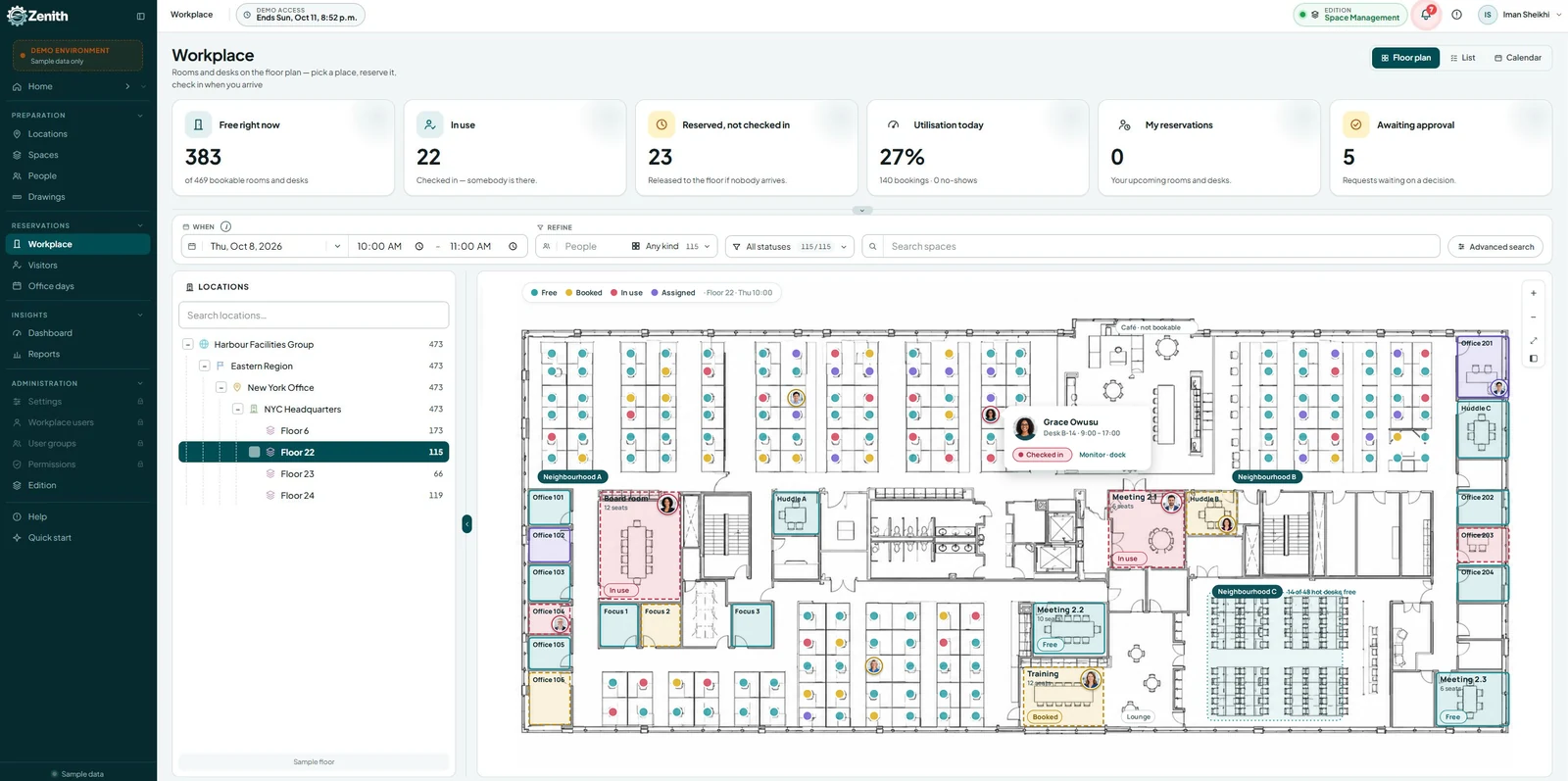
One of the standout features of space management software is its interactive floor planning, which provides a dynamic, visual representation of your office layout. This allows employees and administrators to see real-time availability of desks, meeting rooms, and collaborative zones, making it easy to book spaces with just a few clicks. Paired with occupancy sensors and booking analytics, these tools offer deep insights into how spaces are actually used—highlighting peak usage times, underutilized areas, and opportunities to reconfigure layouts for better efficiency. The software often integrates with calendar systems and mobile apps, ensuring seamless coordination across teams and devices.
When evaluating space management tools, look for these essential features:
| Feature | Description |
|---|---|
| Interactive Floor Plans | Visual maps of office layouts with real-time occupancy data. |
| Desk & Room Booking | Self-service portals for employees to reserve workspaces. |
| Occupancy Sensors | IoT devices that track real-time usage of spaces. |
| Analytics Dashboard | Insights into space utilization, peak hours, and trends. |
| Mobile Access | Apps for on-the-go booking and check-ins. |
| Integration Capabilities | Sync with calendars, HR systems, and collaboration tools. |
| Visitor Management | Track and manage external guests and contractors. |
Top Space Management Software Solutions
Here are some leading platforms that cater to hybrid workplaces:
1. Zenith
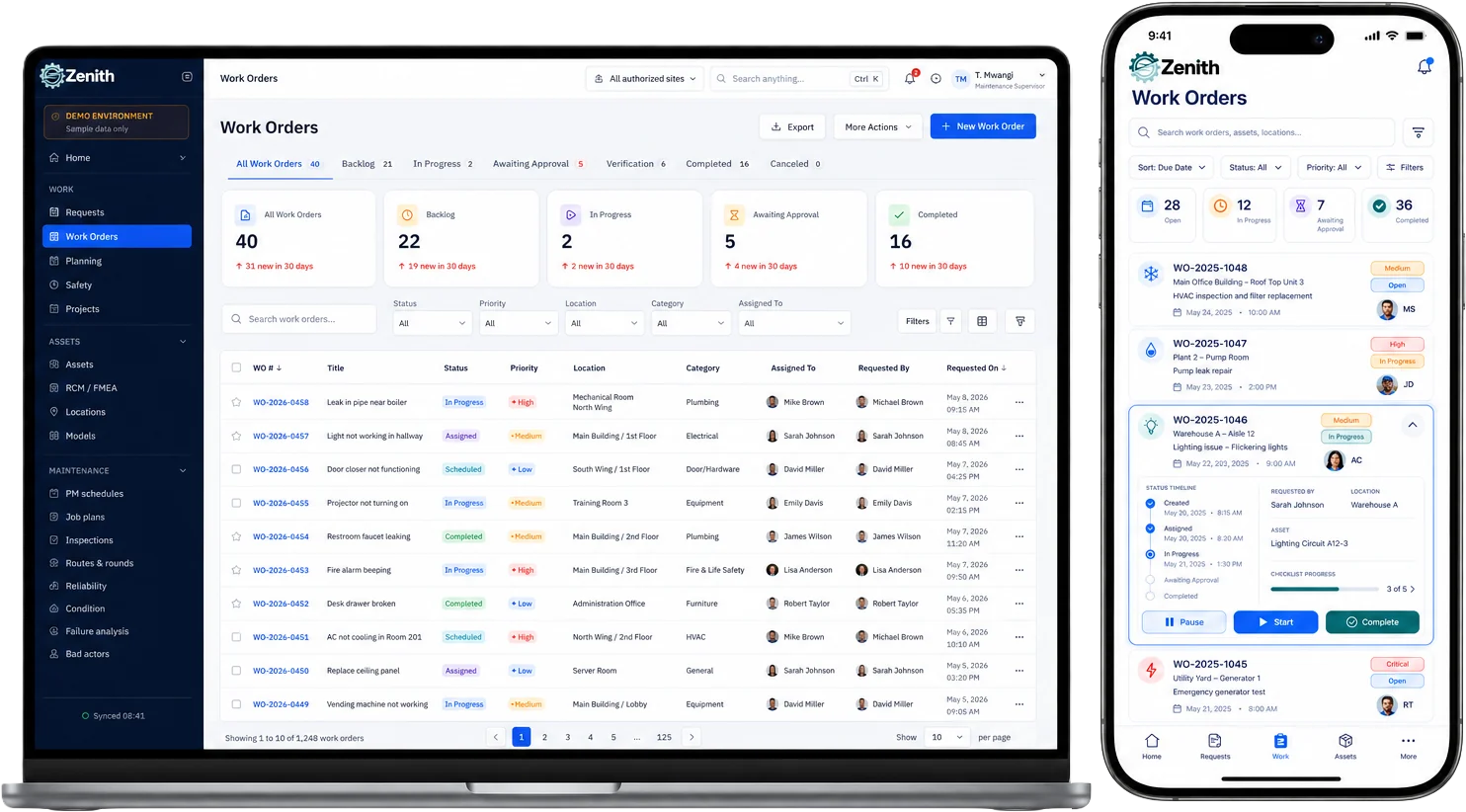
A robust space and facility management platform designed for scalability and ease of use. Zenith offers powerful tools for managing floor plans, occupancy, assets, and maintenance—all within a cloud-based interface. Its intuitive design and integration capabilities make it ideal for organizations seeking a comprehensive solution to support hybrid work environments.
2. Envoy
Offers desk booking, visitor management, and health screening tools. Known for its intuitive interface and strong integrations.
3. Robin
Provides interactive maps, desk booking, and analytics. Ideal for medium to large enterprises.
4. OfficeSpace
Features space planning, move management, and real-time occupancy tracking. Great for facilities teams.
5. Condeco
Focuses on meeting room scheduling and workspace booking. Offers robust enterprise-level features.
6. Skedda
Affordable and user-friendly, perfect for small businesses and coworking spaces.
| Software | Key Features | Best For | Platform Type | Notable Strengths |
|---|---|---|---|---|
| Zenith |
|
Scalable enterprise environments | Cloud-based | Comprehensive facility management, intuitive UI, cross-location visibility |
| Envoy |
|
Medium to large offices | Cloud-based | User-friendly, strong integrations |
| Robin |
|
Enterprise teams | Cloud-based | Visual planning, real-time data |
| OfficeSpace |
|
Facilities teams | Cloud-based | Detailed reporting, flexible layouts |
| Condeco |
|
Large enterprises | Cloud-based | Enterprise-grade features, global support |
| Skedda |
|
Small businesses, coworking spaces | Cloud-based | Affordable, simple setup |
Benefits of Implementing Space Management Software
Adopting space management software can lead to measurable improvements across your organization:
1. Cost Efficiency & Real Estate Optimization
Office space is one of the largest overhead costs for any organization. In a hybrid model, many desks and rooms sit unused for days. Space management software helps identify these underutilized areas through real-time occupancy data and usage analytics.
Example: A company discovers that only 60% of its workstations are used weekly. With this insight, they downsize one floor, saving thousands in rent and utilities.
2. Improved Employee Experience
Employees thrive in environments that offer autonomy and clarity. With space management tools, they can easily book desks, find colleagues, and reserve meeting rooms—all from their phones or laptops.
Why it matters: No more wandering around looking for a spot to work. Employees feel empowered and less stressed, which boosts morale and productivity.
3. Enhanced Collaboration
Hybrid work can fragment teams. Space management software helps reconnect them by making it easy to coordinate in-person meetings and shared workspaces.
Example: A marketing team uses the platform to see when teammates are in the office and books a collaboration zone for a campaign brainstorm—no back-and-forth emails needed.
4. Health & Safety Compliance
Post-pandemic, organizations must manage occupancy limits, cleaning schedules, and contact tracing. Space management software automates these processes.
Features include:
- Alerts when rooms exceed safe capacity
- Automated cleaning requests after bookings
- Visitor logs for contact tracing
5. Data-Driven Decision Making
Instead of guessing how space is used, leaders get hard data. Dashboards show peak usage times, popular areas, and trends over weeks or months.
Impact: Facilities teams can adjust layouts, reassign zones, or invest in the right types of spaces—like more quiet pods or fewer formal meeting rooms.
6. Scalability Across Locations
For companies with multiple offices or campuses, managing space manually is impossible. Space management software centralizes control and visibility.
Example: A global firm uses one dashboard to monitor occupancy in New York, London, and Singapore—making consistent policy enforcement and planning seamless.
7. Sustainability & Energy Efficiency
Unused rooms still consume energy. By tracking usage, companies can reduce lighting, HVAC, and cleaning in low-traffic areas.
Result: Lower carbon footprint and reduced operational costs—without compromising employee comfort.
8. Streamlined Facility Operations
Beyond booking, many platforms include tools for asset tracking, maintenance requests, and move planning. This turns the software into a full-fledged facility management hub.
Example: When a department relocates, the move planner feature helps coordinate desk assignments, IT setup, and signage updates—all in one place.
Bottom Line
Space management software isn’t just about booking desks—it’s about creating a smarter, more responsive workplace. It aligns physical space with human behavior, helping companies adapt to the fluid nature of hybrid work while saving money, improving employee satisfaction, and future-proofing their operations.
Integrating Space Management with Hybrid Work Strategy
To maximize the impact of space management software, it should be part of a broader hybrid work strategy. Here’s how to align it:
What Does Integration Really Mean?
Integrating space management software into your hybrid work strategy means using it not as a standalone tool, but as a core enabler of how your organization operates day-to-day. It’s about syncing your physical workspace with your workforce’s behavior, preferences, and business goals.
Think of it like this: the software is the engine, but your hybrid work strategy is the map. Without integration, you’re just idling.
Key Elements of Integration
1. Align with Work Policies
Before deploying any software, you need clear hybrid work policies. Who works remotely? How often? Are there anchor days when teams come in together?
Once these policies are defined, space management software can enforce and support them:
- Limit desk bookings to specific days
- Prioritize space for in-office collaboration
- Automate cleaning after high-traffic periods
Example: If your policy says marketing teams should be in-office Tuesdays and Thursdays, the software can auto-suggest bookings or block off zones for them.
2. Segment and Personalize
Not all employees use space the same way. Segment your workforce by role, department, or work style:
- Sales may need meeting rooms more often
- Developers may prefer quiet zones
- Executives may require private offices
Space management software can tailor access, booking rules, and layouts to match these needs—making the experience feel personalized and frictionless.
3. Integrate with Existing Systems
To avoid silos, your space management platform should connect with:
- HR systems (for employee profiles and permissions)
- Calendars (for syncing meetings and bookings)
- Collaboration tools (like Slack or Teams for notifications)
This creates a seamless experience where employees don’t need to jump between apps to manage their workday.
4. Use Data to Refine Strategy
The software collects rich data: occupancy rates, booking patterns, peak usage times. Feed this back into your hybrid strategy:
- Adjust anchor days based on demand
- Reconfigure spaces to match actual usage
- Identify teams that need more collaborative zones
Example: If analytics show that meeting rooms are underused on Fridays, you might encourage remote work that day or repurpose those rooms.
5. Communicate and Train
Integration only works if people know how to use the system and why it matters. Provide onboarding, quick guides, and regular updates. Make it part of your culture.
Tip: Frame it as a benefit, not a burden. “This tool helps you find the perfect spot to work, collaborate, and stay safe.”
Strategic Impact
When space management is fully integrated:
- Employees feel supported, not micromanaged
- Facilities teams operate proactively, not reactively
- Leadership gets visibility into how space supports business outcomes
It’s not just about desks and rooms—it’s about designing a workplace that adapts to your people
Security and Privacy Considerations
Space management software often collects sensitive data—such as employee schedules, location, and visitor logs. It’s crucial to choose platforms that prioritize:
- Data encryption
- GDPR compliance
- Role-based access controls
- Audit trails and reporting
Why Security and Privacy Matter in Space Management
Space management software doesn’t just track desks and rooms—it often handles personal data, employee schedules, location tracking, visitor logs, and even health screening information. In a hybrid workplace, where employees move fluidly between home and office, protecting this data becomes mission-critical.
Without proper safeguards, organizations risk:
- Data breaches
- Compliance violations
- Loss of employee trust
Core Security Features to Look For
1. Data Encryption
All data—whether in transit or at rest—should be encrypted using industry-standard protocols (like TLS and AES). This ensures that even if data is intercepted, it’s unreadable to unauthorized parties.
2. Role-Based Access Control (RBAC)
Not every employee needs access to every feature. RBAC ensures users only see and interact with data relevant to their role—reducing exposure and minimizing human error.
Example: A facilities manager can view occupancy analytics, but not employee health data.
3. Audit Trails and Activity Logs
These logs track who accessed what, when, and from where. They’re essential for forensic analysis in case of a breach and for maintaining accountability.
4. Multi-Factor Authentication (MFA)
Adding a second layer of identity verification—like a code sent to a mobile device—greatly reduces the risk of unauthorized access.
5. Secure APIs and Integrations
If the software connects with calendars, HR systems, or collaboration tools, those integrations must be secure and follow best practices to prevent data leaks.
Privacy Considerations in Hybrid Workplaces
1. Employee Consent and Transparency
Employees should know what data is being collected, why, and how it’s used. Transparent privacy policies and opt-in mechanisms build trust.
Tip: Include a privacy FAQ in your onboarding materials for the space management platform.
2. Location and Behavior Tracking
Some platforms track employee movement or desk usage. While useful for optimization, this can feel invasive if not handled carefully.
Best Practice: Use anonymized data for analytics and avoid tracking individuals unless absolutely necessary (e.g., for safety compliance).
3. Visitor Data Protection
Visitor logs may include names, contact info, and visit history. This data should be stored securely and deleted after a reasonable retention period.
4. Compliance with Regulations
Depending on your region, your software must comply with laws like:
- GDPR (EU)
- PIPEDA (Canada)
- CCPA (California)
Choose vendors who offer compliance documentation and data processing agreements.
Strategic Takeaway
Security and privacy aren’t just IT concerns—they’re foundational to employee trust and organizational resilience. When selecting space management software, prioritize vendors who treat data protection as a core feature, not an afterthought.
The Future of Space Management
As hybrid work continues to evolve, space management software will become even more intelligent. Expect innovations like:
AI-powered Space Recommendations
Uses machine learning to suggest optimal desk or room assignments based on employee habits, team proximity, and historical usage patterns.
Predictive Analytics for Occupancy Forecasting
Analyzes past occupancy trends to forecast future space demand, helping teams plan ahead and avoid overcrowding or underutilization.
Integration with Smart Building Systems
Connects with lighting, HVAC, and access control systems to automate energy savings, climate settings, and security based on real-time occupancy.
Voice-Activated Booking Assistants
Allows employees to reserve desks or rooms using voice commands via smart devices, streamlining the booking process hands-free.
Augmented Reality for Virtual Office Tours
Enables users to explore office layouts and available spaces through immersive AR experiences—ideal for onboarding, planning, or remote walkthroughs.
These advancements will further streamline operations and enhance employee satisfaction.
Final Thoughts
Space management software is no longer a luxury—it’s a necessity for hybrid workplaces. By investing in the right tools, organizations can create agile, efficient, and employee-centric environments that support the future of work.
Whether you’re a startup navigating flexible schedules or a global enterprise optimizing real estate, space management software offers the clarity and control you need to thrive.
Why Space Management Software Is Essential for Hybrid Workplaces
Hybrid work has reshaped the modern office, demanding a new level of flexibility and intelligence in how physical spaces are managed. Traditional static layouts and manual scheduling simply can’t keep up with the dynamic flow of employees coming and going on varying schedules.
Space management software rises to meet this challenge by offering smart, data-driven tools that enable:
- Desk booking for flexible seating arrangements
- Occupancy tracking to monitor real-time usage
- Collaboration support through meeting room scheduling and team coordination
These capabilities translate into powerful benefits:
- Cost savings by identifying and eliminating underused space
- Improved employee experience through autonomy and ease of access
- Smarter planning backed by analytics and usage trends
Leading platforms like Envoy, Robin, OfficeSpace, and Condeco are already helping organizations navigate this shift. And the future is even more exciting—with innovations like:
- AI-powered space recommendations that learn employee preferences
- Predictive analytics to forecast occupancy needs
- Smart building integrations for automated energy and access control
- Voice-activated assistants for hands-free booking
- Augmented reality for immersive office tours and planning
In short, space management software isn’t just a tool—it’s a strategic asset for building agile, efficient, and employee-centric workplaces in the hybrid era.
Ready to take control of your hybrid workplace?
Zenith offers a powerful, scalable solution for managing space, assets, and operations across multiple sites. With features like interactive floor plans, occupancy tracking, move planning, and project management, we help organizations streamline facility workflows and make smarter, data-driven decisions. Whether you’re optimizing a single office or coordinating across global locations, Zenith is built to adapt to your needs. If you’d like to learn more or see how we can support your space strategy, contact us today—we’re here to help you evolve with confidence.