
Running a modern factory means juggling complex operations, high-value assets, and tight budgets. Choosing the right software—whether a Computerized Maintenance Management System (CMMS), an Enterprise Resource Planning (ERP) platform, or an Enterprise Asset Management (EAM) suite—can make or break operational efficiency. Below, we unpack each solution, compare their capabilities side by side, and help you decide which best aligns with your factory’s goals.
What Is a CMMS?
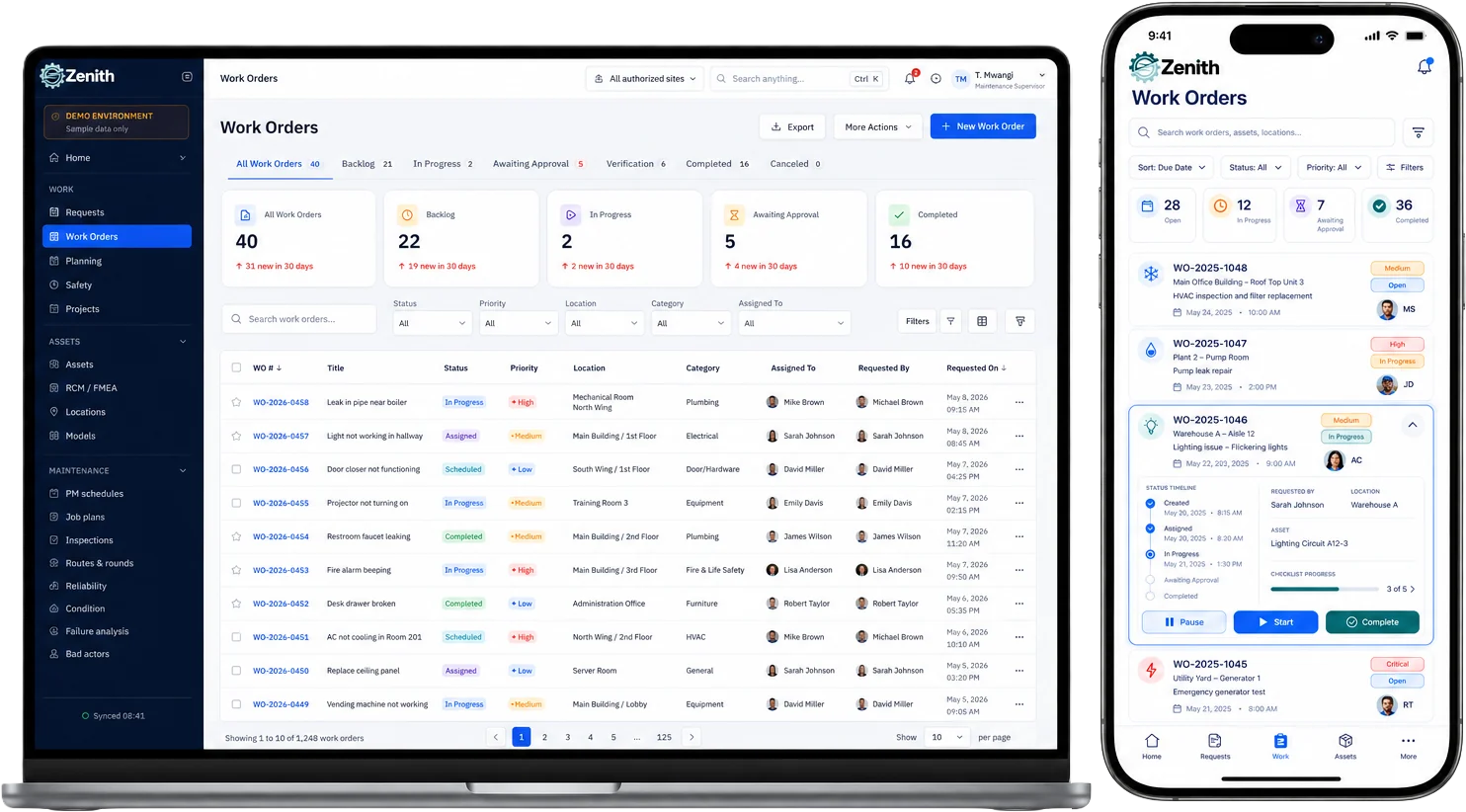
A CMMS is a specialized tool designed solely for maintenance management. It centralizes work orders, tracks equipment history, schedules preventive tasks, and manages spare-parts inventory. By automating routine maintenance workflows, CMMS solutions reduce unplanned downtime, extend asset lifespan, and give technicians a clear view of priorities.
Key CMMS capabilities include:
- Work order creation, assignment, and tracking
- Preventive maintenance scheduling based on time or usage
- Spare-parts inventory levels and reorder alerts
- Maintenance history logs with timestamps and labor costs
CMMS platforms shine in factories where keeping machinery running reliably is the top priority.
What Is an ERP?
An ERP system is a comprehensive business management suite that integrates multiple functions—finance, procurement, human resources, supply chain, and sometimes basic maintenance—into a single platform. Its main goal is to provide visibility across all departments, streamline resource planning, and ensure data consistency enterprise-wide.
Core ERP modules relevant to factories often include:
- Financial management (accounting, budgeting, cost tracking)
- Procurement and supplier management
- Inventory control across all goods, not just maintenance parts
- Production planning and materials requirement planning (MRP)
While some ERP vendors offer maintenance modules, these tend to be less feature-rich than dedicated CMMS or EAM tools.
What Is an EAM?
EAM bridges the gap between CMMS and ERP by covering the entire asset lifecycle—from acquisition and commissioning through maintenance, performance monitoring, and eventual disposal. It embeds maintenance workflows (like a CMMS) and ties them into financial planning, compliance reporting, and strategic decision-making.
Typical EAM features:
- Asset registration with detailed lifecycle and financial data
- Predictive analytics and condition-based maintenance
- Regulatory compliance tracking and audit trails
- Capital expenditure planning and depreciation schedules
EAM suits organizations managing fleets of high-value or heterogeneous assets—think multiple production lines, facilities, or specialized equipment.
Feature Comparison
Below is a high-level comparison of CMMS, ERP, and EAM capabilities to illustrate where each solution excels.
| Capability | CMMS | ERP | EAM |
|---|---|---|---|
| Maintenance-centric workflows | ✔️ Core focus | 🔲 Basic bolt-on | ✔️ Integrated with asset strategy |
| Asset lifecycle management | 🔲 Limited | 🔲 Basic in some modules | ✔️ From purchase to disposal |
| Financial planning & budgeting | 🔲 Minimal | ✔️ Comprehensive | ✔️ Depreciation, ROI, capex |
| Inventory control (all inventory) | ✔️ Spare parts only | ✔️ Full warehouse management | ✔️ Spare parts + long-term forecasting |
| Preventive & predictive maintenance | ✔️ Yes | 🔲 Limited | ✔️ Advanced, sensor-driven |
| Compliance & audit trails | ✔️ Yes | ✔️ Transaction logs | ✔️ Detailed regulatory reporting |
| Scalability for enterprise | ✔️ Cloud options | ✔️ Core strength | ✔️ Designed for global asset networks |
Factory Use Cases
- Small to Mid-Size Shop Floor
- Assets: Uniform CNC machines, presses
- Priority: Minimize unplanned stops, simple spare-parts tracking
- Recommended: CMMS to maximize uptime without over-engineering
- Multi-Site Manufacturer
- Assets: Mixed production lines, warehouse equipment
- Priority: Standardized maintenance, centralized inventory, compliance
- Recommended: EAM for cohesive asset data, predictive analytics, audit trails
- Enterprise-Level Production Network
- Assets: Global plants, R&D labs, complex supply chain
- Priority: Cross-department visibility, financial integration, regulatory compliance
- Recommended: ERP with integrated EAM/CMMS modules or best-of-breed EAM plus ERP
How to Decide
- Assess Your Maintenance Complexity
- If maintenance is a standalone function and assets are homogeneous, CMMS often suffices.
- Evaluate Asset Diversity and Criticality
- For high-value, varied assets requiring lifecycle oversight, EAM delivers deeper insights.
- Map Enterprise-Wide Integration Needs
- When finance, procurement, HR, and operations must share data seamlessly, prioritize ERP.
- Consider Budget and IT Resources
- CMMS solutions typically have lower entry costs and faster implementations.
- EAM and ERP can demand significant customization, integrations, and ongoing governance.
Implementation Tips
- Start small: Pilot with one facility or asset class to refine your approach.
- Clean your data: Consistent naming conventions and accurate records are critical.
- Engage stakeholders: Maintenance, IT, finance, and operations must all be aligned.
- Plan for change management: Training and clear communication drive adoption.
Conclusion
There’s no one-size-fits-all answer. A lean shop floor might thrive on a robust CMMS, while a global manufacturer could need the full breadth of ERP and EAM functionalities. By pinpointing your factory’s maintenance complexity, asset portfolio, and integration requirements—and by weighing factors like budget, timeline, and stakeholder readiness—you can choose the solution that fuels productivity, bolsters uptime, and drives strategic growth.