


Looking for the Canadian regulatory detail — CSA Z8002, provincial health authorities and where hospital maintenance records actually have to live? See our fuller guide, CMMS for Canadian healthcare. This article covers the compliance workflow itself: documentation, audit trails and scheduling.
Ensuring compliance in healthcare isn’t just about ticking boxes—it’s about safeguarding patient safety, maintaining accreditation, and avoiding costly penalties. A Computerized Maintenance Management System (CMMS) streamlines every aspect of equipment maintenance and facility operations, transforming fragmented processes into a cohesive, auditable workflow. By centralizing data, automating schedules, and generating detailed reports, healthcare organizations can meet stringent regulatory demands with confidence.
Understanding Compliance Challenges in Healthcare
Healthcare facilities must adhere to a complex web of standards and regulations. From the Joint Commission requirements in the United States to provincial healthcare acts and CSA guidelines in Canada, every piece of equipment and building system—from imaging machines to HVAC controls—must undergo regular inspection, calibration, and documentation.
- Patient-critical devices (ventilators, defibrillators) demand precise maintenance.
- Environmental systems (air handling, water quality) require certification for infection control.
- Digital records (HIPAA-compliant storage) call for secure, auditable data handling.
Without a unified system, organizations struggle to track due dates, store certificates, and prove maintenance history—leaving them vulnerable during audits.
Centralized Documentation and Audit Trails
At the heart of compliance is documentation. A robust CMMS offers:
- A single repository for all maintenance records, inspection logs, and compliance certificates.
- Automated audit trails that record who did what, when, and why—eliminating manual errors.
- Electronic signatures and time stamps to validate every completed work order.
When surveyors arrive, facilities can instantly retrieve reports and certificates dating back years, demonstrating unwavering adherence to standards.
Automated Scheduling, Reminders, and Alerts
Proactive maintenance prevents costly downtime and keeps facilities audit-ready. CMMS-driven scheduling empowers teams to:
- Define maintenance plans and calibration intervals for each asset.
- Set automatic reminders via email or mobile notifications.
- Trigger escalation workflows when tasks slip past due dates.
This level of automation guarantees that no piece of critical equipment is overlooked, reducing the risk of non-compliance citations.
Key CMMS Features Driving Compliance
A CMMS tailored for healthcare must include:
- Inspection & Calibration Management: Create checklists specific to regulatory requirements and log results in real time.
- Document Management: Attach manufacturer manuals, safety data sheets, and compliance certificates directly to asset records.
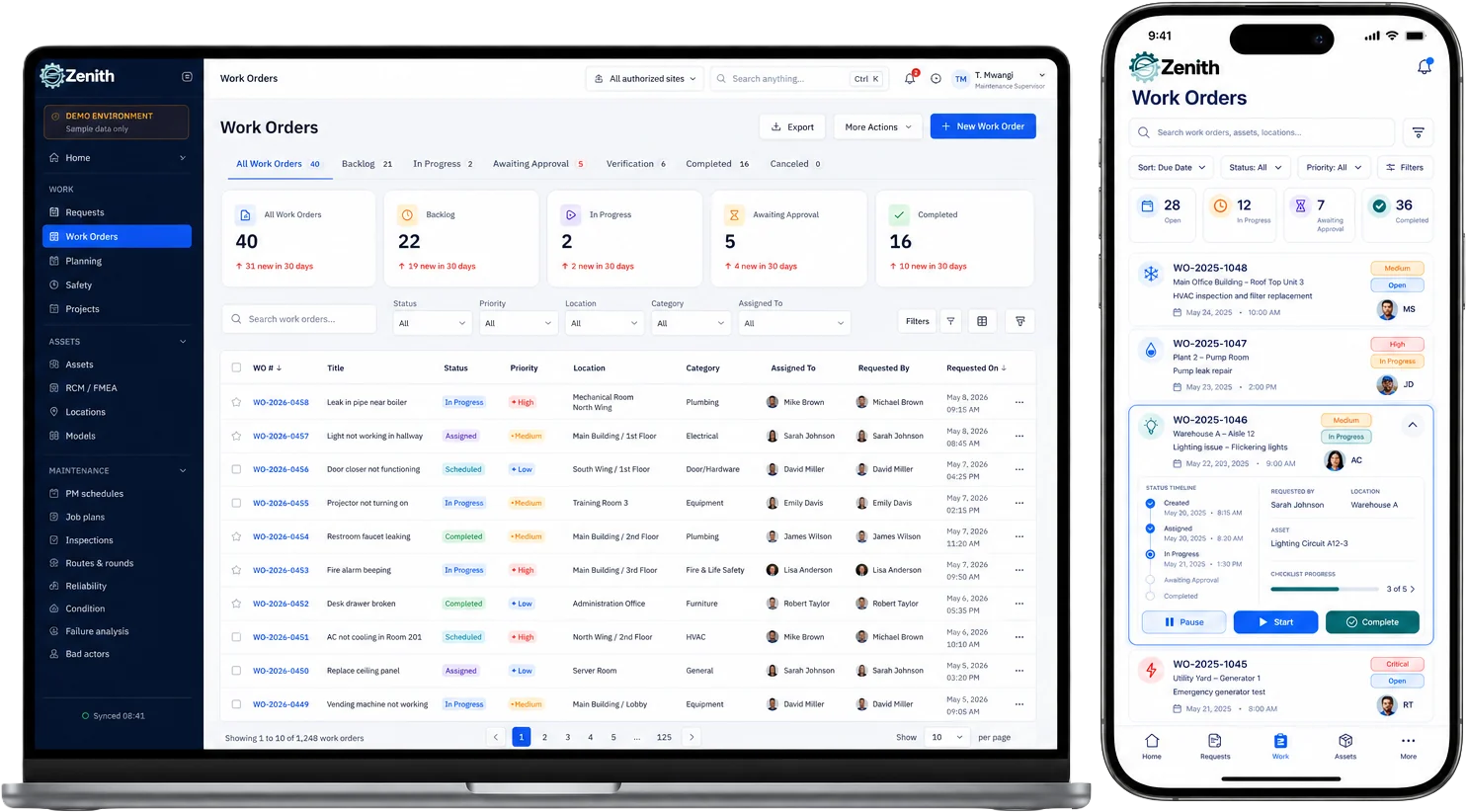
- Reporting & Dashboards: Generate compliance scorecards, overdue work order lists, and KPI reports at the click of a button.
- Role-Based Access Controls: Ensure only authorized personnel view or edit sensitive health and safety information.
- Secure Data Handling: Encrypt records and maintain HIPAA-aligned audit logs for patient-related equipment.
By leveraging these features, administrators can centralize oversight and reduce the administrative burden on clinical staff.
Benefits Beyond Compliance
While regulatory adherence is critical, adopting a CMMS delivers a host of additional advantages:
- Enhanced patient safety through fewer equipment failures.
- Streamlined workflows that free up technicians for higher-value tasks.
- Data-driven insights into asset performance, driving cost savings.
- Faster response times via mobile-enabled work order dispatch.
These operational improvements translate into tangible benefits for both patients and providers.
Best Practices for CMMS Implementation
To realize the full compliance potential of CMMS, healthcare facilities should:
- Garner executive sponsorship and align CMMS goals with organizational priorities.
- Involve clinical engineers, plant operations staff, and IT early in system configuration.
- Customize workflows to mirror unique inspection protocols and departmental structures.
- Provide hands-on training and establish a governance model for ongoing system updates.
- Conduct periodic reviews of asset lists, maintenance intervals, and regulatory changes.
This structured approach minimizes resistance and ensures a sustainable, audit-ready environment.
An illustrative scenario: what good looks like
The following is a worked example, not a customer account. It describes the kind of change a hospital maintenance team can reasonably aim for, and the figures are illustrative rather than measured.
Picture a 250-bed hospital running on paper logs, with missed calibrations and a standing audit backlog. Moving that onto a maintenance system would be aiming at:
- Calibration compliance climbing steadily, because every due date is scheduled rather than remembered.
- Audit preparation measured in hours rather than weeks, because the records are already assembled.
- A shrinking backlog, as planned work displaces reactive call-outs.
Nothing here is a measured result from a named customer. Where we can publish real figures with a client’s permission, we will say so plainly.
Conclusion and Next Steps
Maintaining compliance in healthcare demands precision, accountability, and agility—all hallmarks of a modern CMMS. By centralizing documentation, automating maintenance schedules, and providing robust reporting, Zenith empowers facilities to exceed regulatory standards while boosting operational efficiency.
Ready to transform your compliance program? Schedule a demo of Zenith today to see how integrated maintenance management can safeguard your patients, streamline audits, and future-proof your healthcare operations.
Looking to explore more on this topic? Check out our related posts: