

Churches are far more than sanctuaries—they’re community hubs, event venues, educational centers, and outreach headquarters. Yet, behind every polished pew and well-lit fellowship hall lies a web of maintenance challenges, budget pressures, and volunteer coordination. By adopting an integrated CMMS (Computerized Maintenance Management System) and CAFM (Computer-Aided Facility Management) platform, church leaders can transform reactive chores into strategic stewardship.
The Hidden Burden of Church Maintenance
Every church facility carries unique complexities:
- Deferred repairs compound over time, turning a minor roof leak into structural damage.
- Legacy HVAC, plumbing, and electrical systems demand specialized upkeep.
- Volunteer-based maintenance leads to inconsistent task follow-through and lost institutional knowledge.
- Safety audits, ADA compliance, fire protocols, and insurance inspections introduce layers of regulatory risk.
- Multifunctional spaces—from sanctuaries to classrooms—require dynamic scheduling and asset tracking.
- Energy inefficiencies inflate utility bills that could instead support ministries.
Left unmanaged, these issues erode resources, compromise safety, and distract from mission-critical activities.
Why Traditional Approaches Fall Short
Most churches rely on a patchwork of spreadsheets, sticky notes, and email threads. This siloed approach causes:
- Lost work orders when volunteers change roles.
- Unplanned downtime because preventive tasks aren’t scheduled.
- Over-ordering of parts or stockouts due to poor inventory visibility.
- Inefficient space usage and double-bookings for events.
- Limited transparency for board members or finance committees.
Without centralized data, facility managers can’t plan strategically—or demonstrate ROI on maintenance spending.
The Holistic Power of Integrated CMMS & CAFM
Combining CMMS and CAFM in one platform breaks down those silos:
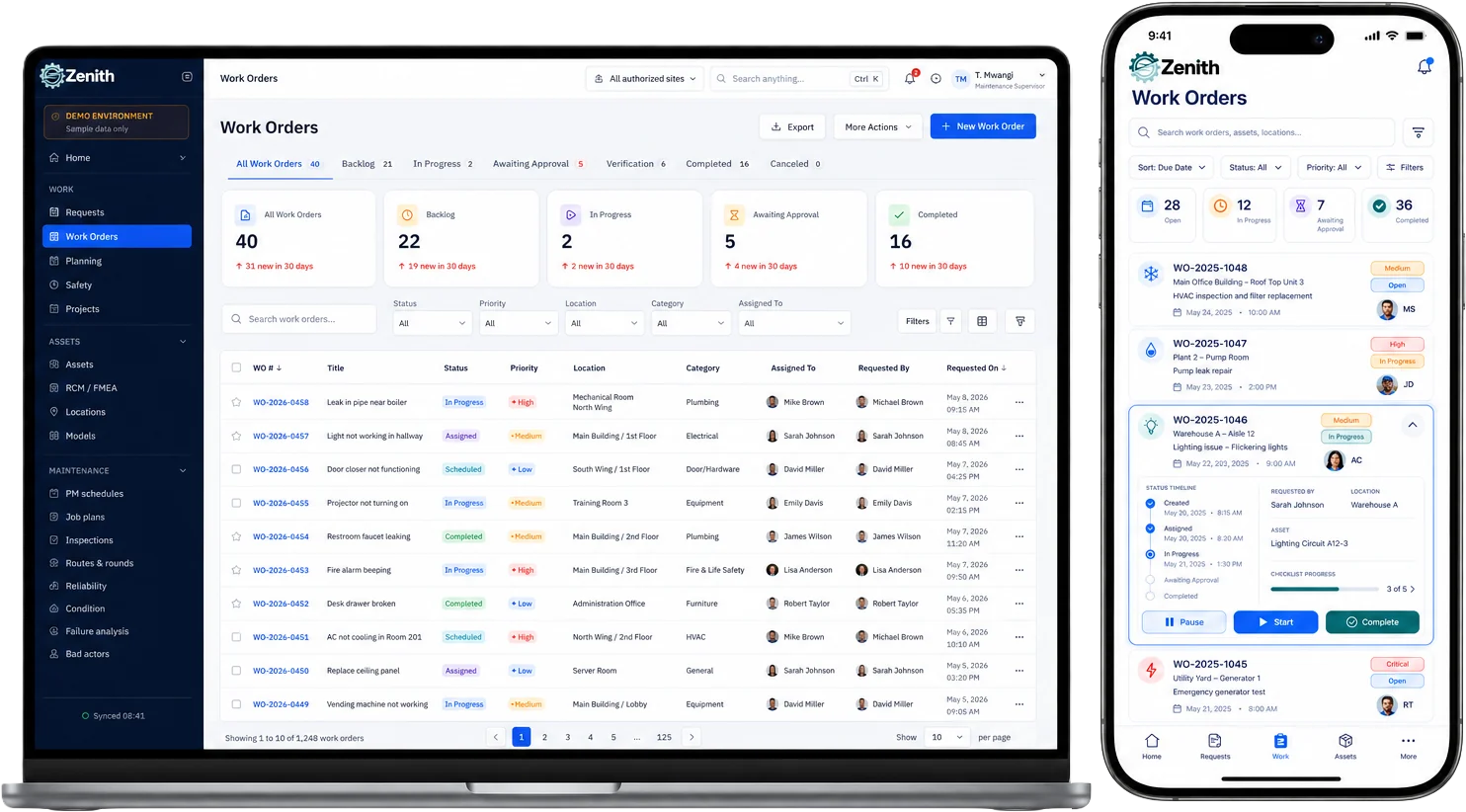
- Centralized Dashboard
- View open work orders, upcoming preventive tasks, space bookings, and budget variances at a glance.
- Data-Driven Maintenance
- Automate preventive schedules triggered by run hours, calendar intervals, or asset condition.
- Use historical repair data to predict failures and optimize technician routes.
- Space & Event Optimization
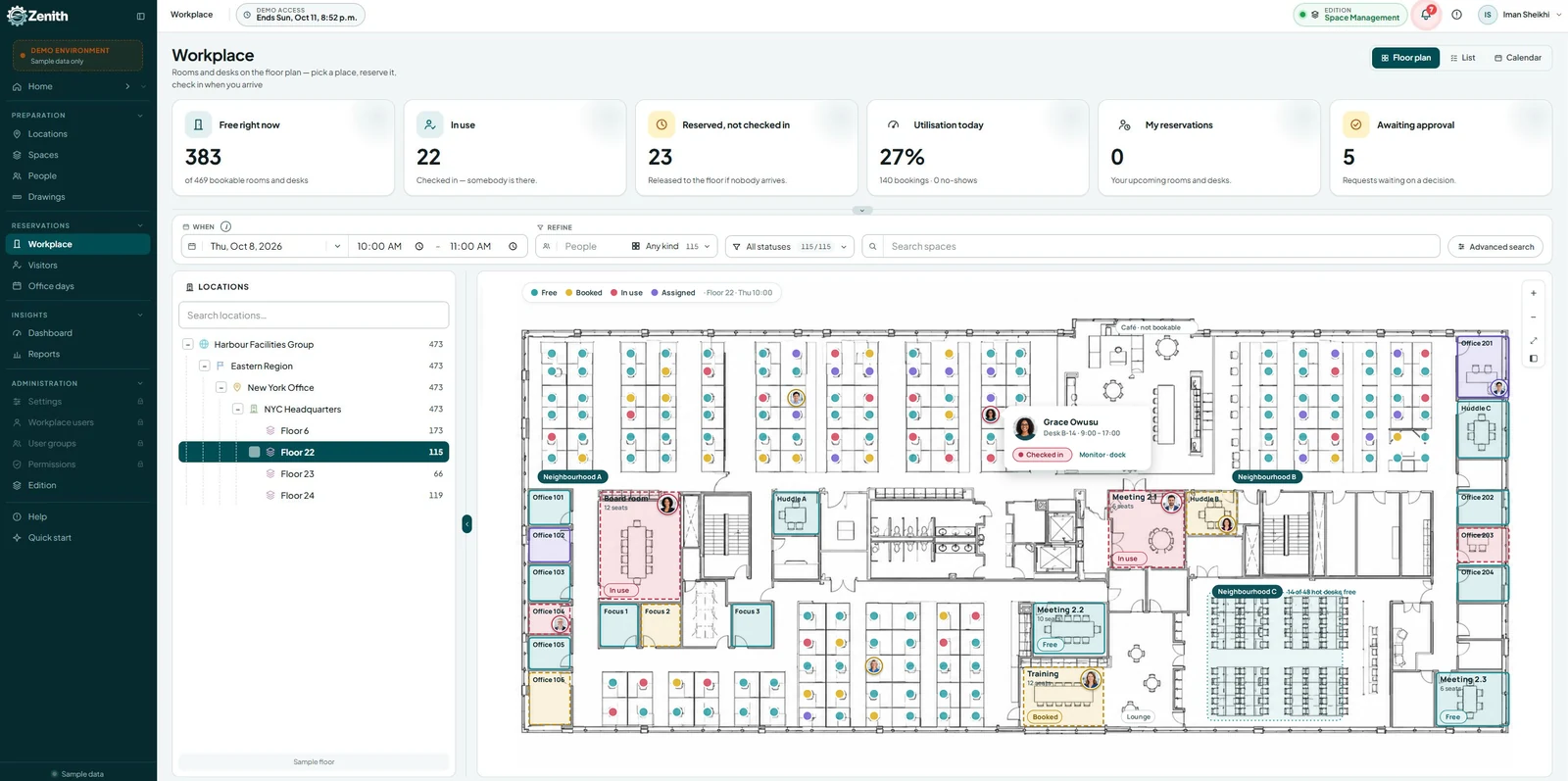
- Interactive floor plans let you assign rooms, track occupancy, and prevent double-bookings.
- Link maintenance requests to specific rooms or equipment, ensuring accountability.
- Compliance & Safety Management
- Store permits, inspection reports, and safety checklists alongside drawings and manuals.
- Automate reminders for fire alarm tests, elevator inspections, and ADA audits.
- Volunteer & Staff Coordination
- Grant tiered system access for volunteers, custodial teams, and external contractors.
- Mobile apps enable on-the-go status updates, photo attachments, and checklists.
- Financial Transparency
- Allocate labor and parts costs to departments or ministries.
- Generate lifecycle cost reports to support grant applications or capital-campaign proposals.
An illustrative scenario
The scenario below is illustrative. It is not an account of a named customer, and the figures in it are indicative of what a maintenance programme can aim at rather than measured results we can attribute. Where we can publish real numbers with a client’s permission, we say so plainly.
Grace Community Church, a 30,000 sq ft campus with 2,000 weekly attendees, faced skyrocketing utility bills and unplanned HVAC failures. After deploying an integrated CMMS/CAFM solution:
- Emergency HVAC repairs dropped by 35% in six months.
- Preventive task completion rose from 50% to 92%.
- Energy consumption fell 18% after identifying and rectifying inefficient equipment scheduling.
- Volunteer satisfaction improved—clear mobile work lists replaced last-minute text chains.
- Finance reports now include detailed maintenance cost breakdowns, driving more informed budget decisions.
Your Roadmap to Implementation
- Needs Assessment
- Audit current maintenance processes, compliance requirements, and space usage.
- Prioritize quick wins (e.g., recurring HVAC checks) and long-term goals (e.g., energy monitoring).
- Platform Selection
- Choose a solution that offers both CMMS and CAFM in one interface.
- Evaluate mobile capabilities, hosting options (cloud vs. on-premise), and integration with your accounting system.
- Data Migration
- Gather asset lists, floor plans, historical work orders, and vendor contacts.
- Cleanse and structure data before import.
- Volunteer & Staff Training
- Host kickoff workshops, distribute user guides, and assign “super users” among volunteer crews.
- Roll out the mobile app first—instant wins build momentum.
- KPIs & Continuous Improvement
- Track metrics like preventive completion rate, mean time to repair (MTTR), and space utilization.
- Schedule quarterly reviews to refine preventive schedules and update space-management rules.
Best Practices for Lasting Stewardship
- Establish a dedicated facility committee to oversee system adoption and budgeting.
- Leverage analytics to justify capital expenditure—show board members how data drives cost savings.
- Document processes and build knowledge repositories, preserving volunteer insights.
- Align maintenance workflows with service calendars—plan major projects during downtime.
- Celebrate wins: share monthly dashboards with staff and congregation to illustrate improved stewardship.
Conclusion: A Leap of Faith in Facility Management
Adopting an integrated CMMS/CAFM platform empowers church leaders to move from reactive “fire-fighting” to proactive stewardship. You’ll reduce unplanned downtime, control costs, ensure compliance, and free up volunteers to focus on ministry, not mop buckets.
Ready to transform your facility operations? Contact us for a tailored demo, or download our whitepaper on digital church maintenance best practices. Together, let’s build a foundation that supports your mission—day in, day out.