
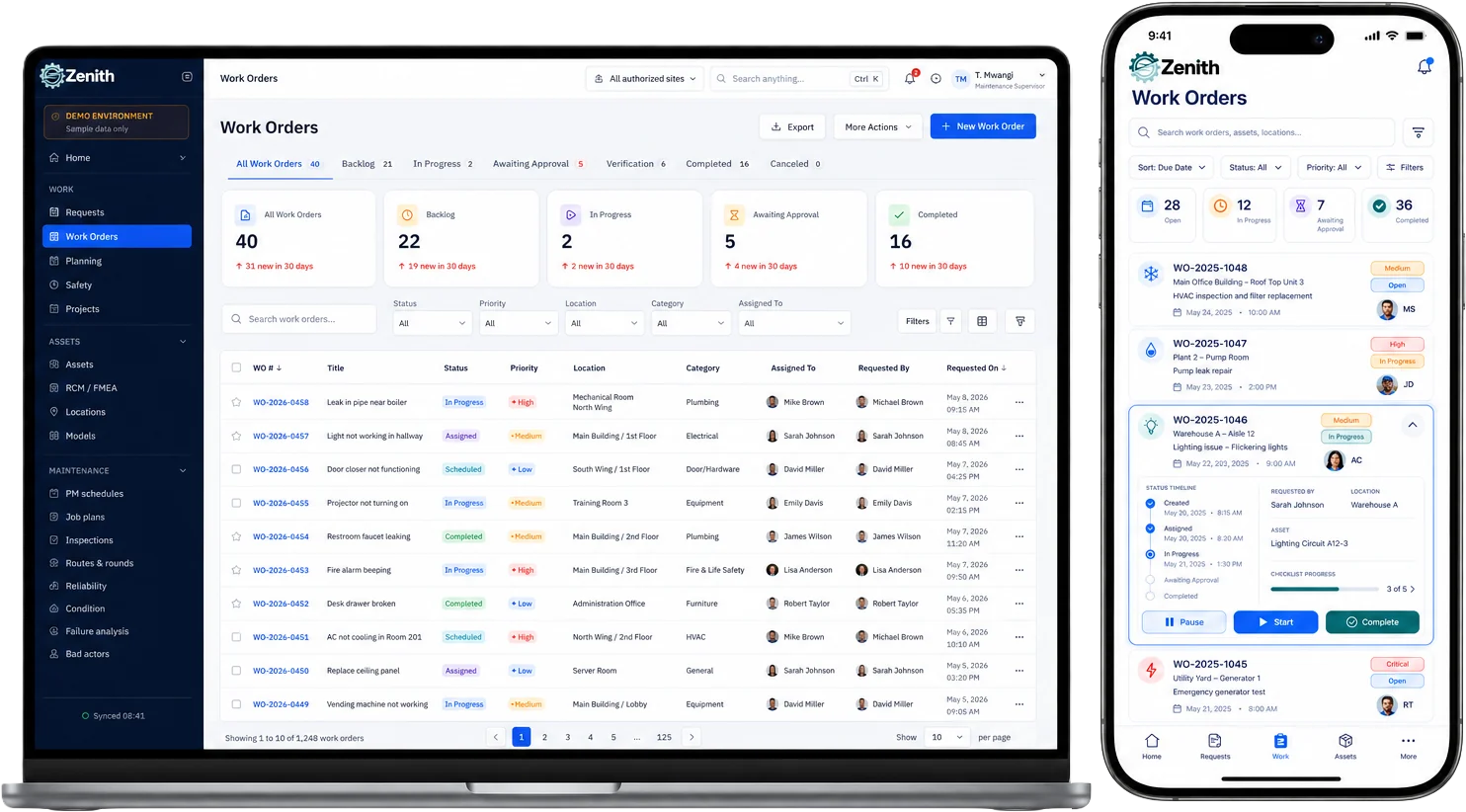
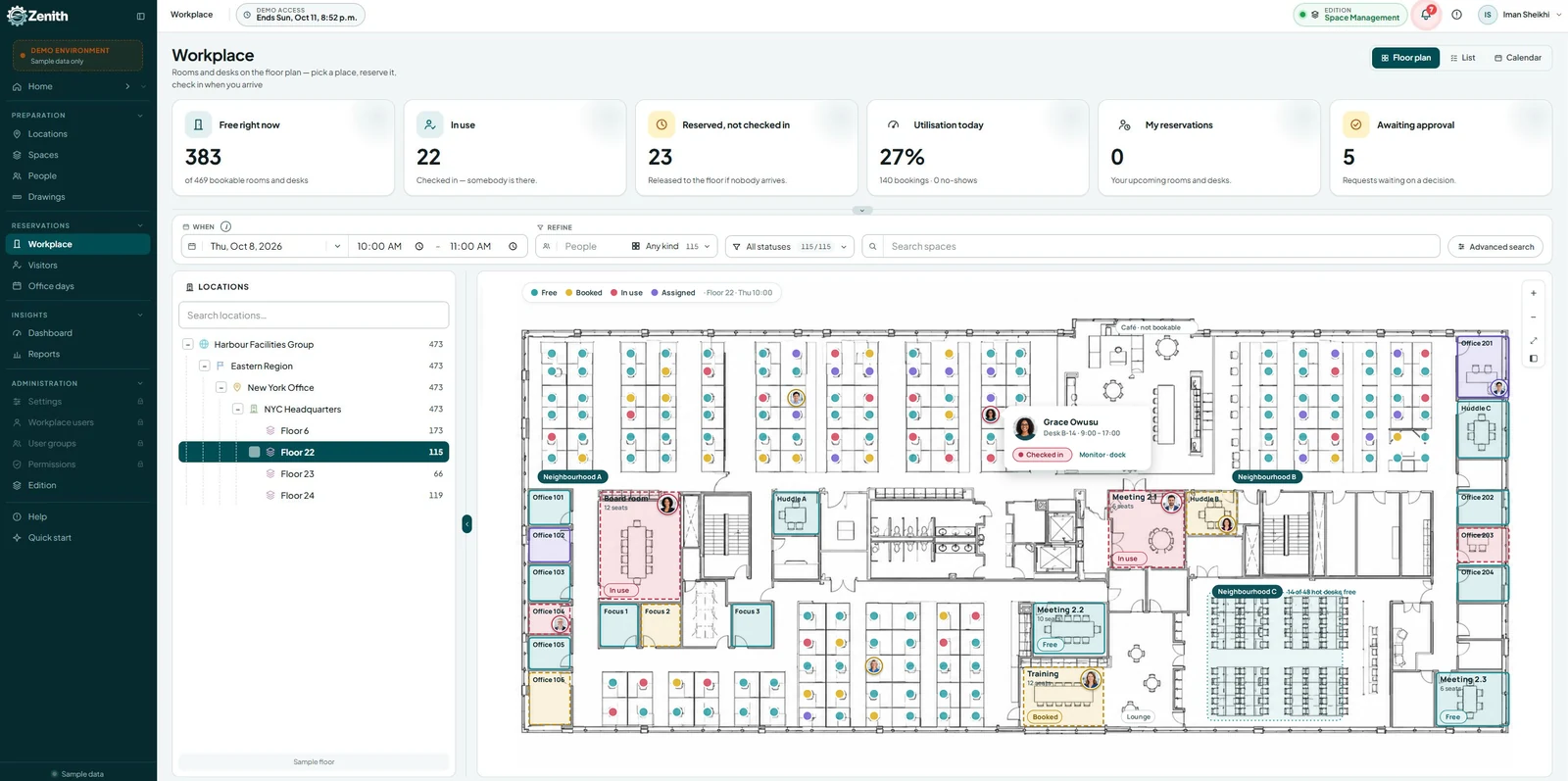


Zero-Touch Work Orders with IoT Sensors are revolutionizing how organizations manage maintenance workflows. As industries increasingly adopt smart technologies, the integration of IoT sensors allows for real-time monitoring and automated task creation. Consequently, maintenance teams can respond faster, reduce downtime, and extend asset lifespan—all without manual intervention. In addition, this approach minimizes human error and ensures that critical issues are addressed before they escalate. Whether you’re in healthcare, manufacturing, or facilities management, zero-touch automation is quickly becoming a game-changer.
What Are Zero-Touch Work Orders?
Zero-touch work orders with IoT sensors are transforming how maintenance is handled across industries. Traditionally, technicians had to manually inspect equipment, identify issues, and enter work orders into a CMMS. This process was time-consuming and prone to delays or missed faults.
How IoT Sensors Automate Maintenance
Now, with IoT-enabled automation, sensors continuously monitor asset conditions—such as temperature, vibration, or pressure—and instantly detect anomalies. When a threshold is breached, the system automatically generates a work order, assigns it to the appropriate technician, and sends real-time alerts. This seamless workflow eliminates the need for manual intervention.
Benefits of a Zero-Touch Workflow
As a result, maintenance teams respond faster, reduce downtime, and prevent small issues from becoming costly failures. Moreover, the system ensures that no critical alert is overlooked, improving reliability and asset performance. By shifting from reactive to proactive maintenance, organizations gain efficiency, save labor hours, and extend equipment lifespan.
Industry Applications
Whether in manufacturing, healthcare, or facilities management, zero-touch work orders powered by IoT sensors offer a smarter, more scalable approach to asset care.
This approach removes manual ticket creation by embedding intelligence at every stage of the maintenance pipeline. Key steps include:
- Anomaly Detection
Sensors—such as vibration, temperature, or pressure monitors—track asset health in real time and flag deviations from normal operating ranges. - Automated Ticket Generation
Once an anomaly threshold is breached, the IoT platform creates a work order in the CMMS, populating fields like asset ID, fault type, severity level, and timestamp. - Smart Prioritization & Assignment
Built-in rules engines rank the task based on criticality and automatically assign it to the appropriate technician or team, taking into account skill set, availability, and location. - Real-Time Notifications & Escalations
Alerts are sent via email, SMS, or mobile app push notifications. If the task isn’t acknowledged within a predefined window, it escalates to supervisors or backup teams. - Automatic Closure & Reporting
After the technician resolves the issue—often guided by step-by-step digital work instructions—the CMMS closes the order and logs performance metrics for ongoing optimization.
Implementing zero-touch work orders with IoT sensors can dramatically reduce downtime.
Industries adopting IoT-powered maintenance workflows are seeing major ROI.
The future of asset management lies in automated work orders driven by IoT sensors.
| Aspect | Traditional Work Orders | Zero-Touch Work Orders |
|---|---|---|
| Initiation | Manual diagnosis and ticket entry | Sensor-driven, automatic upon threshold breach |
| Data Accuracy | Prone to human error in logging details | Precise, metadata-rich entries from IoT telemetry |
| Response Time | Depends on staff availability and awareness | Instantaneous alerts with no human lag |
| Prioritization | Manual triage based on reported symptoms | Rule-based, severity-driven automatic ranking |
| Audit Trail | Often fragmented across emails and spreadsheets | Fully auditable within CMMS, complete timestamp logs |
By eliminating human bottlenecks in detection, documentation, and dispatch, zero-touch work orders transform maintenance from reactive firefighting into proactive, data-driven asset care.
Benefits of IoT-Driven Zero-Touch Maintenance Workflows
IoT sensors serve as continuous, real-time data sources that fuel every stage of an automated maintenance workflow. They monitor asset health, transmit telemetry, enable edge-or cloud-based analytics, and trigger maintenance actions within your CMMS—all without manual intervention.
Continuous Condition Monitoring
IoT sensors attach directly to machines and infrastructure, capturing critical parameters around the clock. Instead of relying on scheduled inspections, you gain:
- Instant visibility into shifts in temperature, vibration, pressure, humidity, or power draw
- Early warning of wear patterns, leaks, misalignments, or electrical anomalies
- Granular historical data that reveals trending issues before they escalate
By replacing spot checks with persistent monitoring, you turn maintenance from a calendar-driven chore into a data-driven discipline.
Data Acquisition and Connectivity
Once installed, sensors must reliably deliver data to your analytics platform or CMMS. Key elements include:
- Secure networking protocols (MQTT, HTTPs, LoRaWAN)
- Hybrid architectures that mix Wi-Fi, cellular, Ethernet, or mesh networks
- Edge gateways that aggregate and timestamp raw readings before forwarding
- Redundancy measures—dual SIM cards or fallback radio links—to avoid blind spots
A well-engineered connectivity layer ensures that no critical alert gets lost in transit.
Edge Computing and Data Filtering
Raw sensor streams can overwhelm both bandwidth and analytic engines. Edge computing nodes co-located with assets perform:
- Data normalization and calibration
- Intelligent filtering to suppress noise and false positives
- Local anomaly detection for millisecond-level reaction times
- Pre-processing that reduces cloud costs by sending only events or summaries
Pushing initial analytics to the edge accelerates response and lowers infrastructure expenses.
Advanced Analytics and Anomaly Detection
In the cloud or centralized servers, sensor feeds feed into machine learning models and rule-based engines that:
- Establish normal operating baselines per asset type
- Identify outliers—sudden spikes, slow drifts, pattern deviations
- Calculate Remaining Useful Life (RUL) and failure probabilities
- Prioritize alerts by risk, cost impact, or regulatory deadlines
These insights automatically generate work orders only when a genuine issue is detected, drastically cutting false alarms.
Integration with CMMS and Automated Workflows
IoT sensor platforms become true zero-touch systems once they link directly to your CMMS:
- API-driven ticket creation populates all relevant fields
- Rule engines assign tasks based on skills, shifts, and proximity
- Automated notifications, escalations, and SLA tracking
- Closed-loop feedback when technicians log completion and upload findings
This end-to-end connectivity erases manual handoffs and ensures every alert is managed.
Sensor Types and Use Cases
| Parameter | Common Sensor Technology | Typical Industry Use Case |
|---|---|---|
| Temperature | RTD, Thermocouple | HVAC systems, food processing, data centers |
| Vibration | MEMS accelerometer | Rotating machinery, conveyors, pumps |
| Pressure | Strain gauge, Piezo | Hydraulic presses, steam boilers, pipelines |
| Fluid Level/Flow | Ultrasonic, Magnetic | Chemical tanks, water treatment, fuel storage |
| Humidity | Capacitive RH sensor | Pharmaceutical clean rooms, warehouses |
| Electrical Current | CT clamp, Hall effect | Motor health, switchgear, power distribution |
Overcoming Common Challenges
Network reliability, data overload, and cybersecurity top the list of hurdles. Mitigation strategies include:
- Designing for intermittent connectivity with local buffering
- Tuning thresholds and leveraging edge filtering to reduce noise
- Segmenting IoT traffic on a dedicated VLAN or private subnet
- Encrypting data end-to-end and rotating keys on a schedule
Looking Ahead: Next-Gen Sensor Innovations
- Self-calibrating smart sensors that adapt thresholds over time
- Fiber-optic sensing for mile-long pipelines and structural health
- Sensor fusion systems that correlate multiple data streams for higher accuracy
- Battery-less energy harvesting devices powered by vibration or light
These advancements will further shrink maintenance cycles and push toward fully autonomous asset management.
Key Benefits of Zero-Touch Work Orders
Each benefit of zero-touch work orders contributes to a more efficient and reliable maintenance ecosystem. Let’s explore them one by one:
Faster Response Times
Since work orders are triggered automatically, technicians receive alerts within seconds. Consequently, issues are addressed before they escalate.
Zero-touch work orders powered by IoT sensors collapse the gap between fault detection and technician dispatch. The moment a sensor flags an out-of-bounds vibration, temperature, or pressure reading, a work order is automatically generated in the CMMS and routed to the right specialist. This immediacy eliminates the delays of manual reporting, ensuring critical issues are addressed within minutes rather than hours. Faster response translates directly into fewer interruptions and a more agile maintenance operation.
Reduced Downtime
By detecting problems early, zero-touch workflows allow for scheduled interventions. As a result, unplanned outages are significantly reduced.
By automating alerts and maintenance scheduling, zero-touch workflows drive maintenance from reactive firefighting to proactive planning. Sensors continuously monitor asset health and trigger repairs before a minor anomaly becomes a full-blown breakdown. Planned interventions can be slotted into low-impact windows, preventing costly production halts or service outages. The result is a dramatic drop in unplanned downtime, keeping lines running and facilities operating at peak capacity.
Improved Asset Lifespan
Timely maintenance prevents excessive wear and tear. Therefore, equipment lasts longer and performs more reliably.
Early anomaly detection catches wear patterns and component fatigue long before catastrophic failure. When IoT sensors feed real-time data into your CMMS, you can apply timely repairs or part replacements at the optimal moment. This precision maintenance avoids the collateral damage that occurs when equipment runs beyond its safe operating limits. Over time, consistent condition-based upkeep extends the useful life of motors, pumps, HVAC units, and other critical assets.
Lower Labor Costs
Automation reduces the need for manual inspections and data entry. In turn, technicians can focus on high-value tasks, improving overall productivity.
Automating the entire maintenance pipeline—detection, ticket creation, prioritization, and assignment—means fewer manual inspections and paperwork for technicians and planners. Teams can focus on high-value diagnostics and complex repairs instead of chasing down issues or entering data. Reduced administrative overhead and optimized labor allocation drive down overall maintenance spending. In many cases, organizations see a meaningful reduction in overtime and contract labor as routine tasks vanish under zero-touch management.
Data-Driven Insights
Every sensor-triggered work order adds to a growing pool of operational data. Over time, this enables smarter decision-making and continuous process improvement.
Every zero-touch work order is enriched with metadata—from exact sensor readings and timestamped events to technician response times and repair actions. Aggregating this telemetry in dashboards uncovers patterns in failure modes, peak stress periods, and process bottlenecks. Maintenance managers can leverage these analytics to refine threshold settings, optimize spare-parts inventories, and predict future wear trends. The continuous feedback loop elevates decision-making from gut instinct to evidence-based strategy.
| Benefit | Impact |
|---|---|
| Faster Response Times | Automated alerts cut reaction times by 50%+ |
| Reduced Downtime | Proactive fixes reduce unplanned outages |
| Improved Asset Lifespan | Early detection prevents severe equipment wear |
| Lower Labor Costs | Fewer manual inspections free up technician time |
| Data-Driven Insights | Historical trends guide future maintenance plans |
Real-World Examples of Zero-Touch Work Orders with IoT Sensors
Healthcare: Smart Monitoring for Medical Equipment
In a major hospital network, infusion pumps and HVAC systems are equipped with IoT sensors. The sensors detect flow irregularities or filter blockages and automatically create work orders in the facility’s CMMS. This zero-touch process has decreased equipment downtime by 40% and ensured critical devices remain patient-ready at all times.
Manufacturing: Sensor-Driven Production Line Maintenance
A global automotive plant uses vibration and temperature sensors on assembly robots. When a joint’s vibration signature deviates from its norm, the system auto-generates a high-priority work order and schedules a specialist during the next production lull. This automated flow has cut emergency maintenance interventions by 60% and saved millions in lost production hours.
Implementing a Zero-Touch Workflow: Best Practices
Rolling out a zero-touch maintenance system can feel like a leap into the future. To make it predictable and scalable, focus on five core areas—from hardware selection to continuous improvement. Each step builds on the last, creating a resilient, fully automated pipeline that minimizes surprises and maximizes uptime.
To successfully deploy a zero-touch maintenance system, organizations should follow a structured approach. Here’s how:
1. Choose the Right Sensors
Begin by identifying critical failure modes and selecting sensors that match those risks. For example, vibration sensors are ideal for rotating machinery, while temperature sensors suit HVAC systems. Additionally, consider environmental factors like moisture or heat when choosing sensor enclosures.
Picking the optimal sensor for each asset is the foundation of zero-touch. A mismatch here creates noise, false positives, or blind spots.
- Map failure modes
• List common breakdown causes (e.g., bearing wear, overheating).
• Match each mode to a sensor technology (vibration, IR, acoustic, pressure). - Assess environmental constraints
• High-temperature zones may require thermocouples with protective sheaths.
• Wet or corrosive conditions call for IP-rated housings. - Budget vs. precision trade-off
• Invest in high-accuracy MEMS or fiber-optic sensors where failure costs are catastrophic.
• Leverage lower-cost IoT beacons for non-critical assets.
2. Integrate Seamlessly with Your CMMS
Next, ensure your IoT platform can communicate with your CMMS via APIs or MQTT protocols. This integration allows for automatic ticket creation and real-time updates. Furthermore, test the connection in a sandbox environment before going live.
Sensors capture data; your CMMS executes action. A tight integration ensures zero delays or data drops.
- API compatibility
• Verify REST or MQTT endpoints for direct ticket creation.
• Ensure bi-directional updates so technicians’ field notes sync back to your IoT dashboard. - Data mapping and field population
• Pre-define asset IDs, location codes, and priority levels in both systems.
• Automate metadata insertion (sensor serial number, timestamp, baseline reading). - Sandbox testing
• Run simulated sensor events to validate work order fields.
• Adjust mapping scripts before going live on the production network.
3. Define Thresholds and Escalations
After integration, set clear thresholds for each sensor type. For instance, a temperature spike above 80°C might trigger a high-priority alert. Moreover, establish escalation paths to ensure unresolved issues are addressed promptly.
Anomaly detection only works if thresholds reflect real-world variance. Fine-tuning prevents overload and ensures genuine alerts.
- Baseline analysis
• Gather 30–60 days of “normal” operational data.
• Calculate average, standard deviation, and trending drift. - Rule creation
• Use multi-tier thresholds (warning, critical, emergency).
• Link each tier to specific actions—notifications, auto-closures, or system shutdowns. - Escalation paths
• Set acknowledgment windows (e.g., 15 minutes for critical tickets).
• Define cascading alerts: first to on-shift tech, then supervisors, then third-party service providers.
4. Train Your Teams
Even with automation, human expertise remains vital. Therefore, provide training on interpreting sensor data, responding to alerts, and updating digital work orders. Encourage feedback to refine the system continuously.
Even the best technology can stumble if people don’t trust it. Invest in hands-on training and clear documentation.
- Role-based workshops
• Technicians: interpreting sensor dashboards and digital instructions.
• Planners: adjusting thresholds, reviewing false positives, generating reports. - Standard operating procedures (SOPs)
• Document the end-to-end zero-touch lifecycle with screenshots.
• Highlight troubleshooting steps for network failures, sensor faults, or CMMS errors. - Feedback loops
• Create channels (weekly stand-ups, chat groups) for field teams to suggest tweaks.
• Update SOPs and rule sets based on frontline insights.
5. Monitor, Analyze, and Refine
Finally, track performance metrics like mean time to repair (MTTR) and false alert rates. Use this data to adjust thresholds, improve sensor placement, and enhance rule logic. Over time, these refinements will maximize ROI and system reliability.
Zero-touch isn’t a set-and-forget project. It thrives on iterative tuning and data-driven evolution.
- Key performance indicators (KPIs)
• Mean time to detect (MTTD) and mean time to repair (MTTR).
• Rate of false positives vs. true faults. - Regular health checks
• Quarterly sensor calibration and battery replacements.
• Network latency audits and CMMS log reviews. - Continuous improvement
• Use root-cause analysis on each automated ticket.
• Refine thresholds and rule logic every 6–12 months to adapt to changing operating conditions.
Implementing these best practices ensures your zero-touch workflow scales reliably, drives down costs, and delivers measurable uptime gains.
Overcoming Challenges and Ensuring Security
IoT deployments can face hurdles like network reliability, data overload, and cybersecurity risks. Mitigate these by:
- Implementing edge computing to filter and preprocess sensor data
- Encrypting data in transit and at rest
- Establishing redundant connectivity (Wi-Fi, cellular, Ethernet)
- Conducting regular penetration tests and firmware updates
A secure, resilient network foundation is vital for uninterrupted zero-touch operations.
Future Trends in IoT-Driven Maintenance
- Edge AI for real-time anomaly detection without cloud latency
- Digital twins paired with live sensor feeds for virtual troubleshooting
- 5G-enabled micro-networks to support massive sensor arrays
- Blockchain-backed audit trails for compliance and traceability
These innovations will push zero-touch work orders from “nice-to-have” to industry standard.
Frequently Asked Questions
What are zero-touch work orders?
Zero-touch work orders are fully automated maintenance tickets generated directly by IoT sensors when they detect an anomaly. This removes manual inspection and ticket creation, letting your CMMS handle the entire workflow from fault detection through resolution.
How do IoT sensors trigger automated work orders?
Sensors continuously stream telemetry—temperature, vibration, pressure, etc.—to an IoT platform or edge gateway. When predefined thresholds are breached, the system uses rule engines to generate, prioritize, and assign a work order in your CMMS without human intervention.
Do I need a specific CMMS to implement zero-touch workflows?
Most modern, cloud-based CMMS solutions support API or MQTT integrations that enable zero-touch workflows. If you’re using a legacy system, lightweight middleware or an IoT integration layer can bridge sensor data into your existing CMMS.
Which types of IoT sensors are most effective for maintenance automation?
Key sensor technologies include:
- MEMS accelerometers for vibration analysis
- RTD and thermocouples for temperature monitoring
- Strain-gauge or piezo sensors for pressure
- Ultrasonic or magnetic flow and level meters
Choosing the right sensor depends on your asset’s failure modes and environmental conditions.
How do you ensure security when deploying IoT-based zero-touch maintenance?
Secure your network and data by:
- Encrypting data in transit (TLS/MQTT with certificates) and at rest
- Segmenting IoT devices on a dedicated VLAN or subnet
- Implementing regular firmware updates and penetration tests
Robust cybersecurity practices prevent unauthorized access and data tampering.
Can zero-touch workflows integrate with my existing maintenance systems?
Yes. Zero-touch platforms typically offer RESTful APIs, webhooks, or MQTT endpoints to connect with ERP, SCM, digital twins, and other enterprise applications. Bi-directional integration ensures updates flow seamlessly between systems.
What ROI can I expect from a zero-touch maintenance program?
Early adopters often report:
- 30–50% reduction in unplanned downtime
- 20–40% savings in labor and administrative costs
- 10–20% extension of critical asset lifespan
Typical payback periods range from six to twelve months, depending on asset criticality and scale of deployment.
Conclusion and Call to Action
Zero-touch work orders powered by IoT sensors elevate maintenance from reactive firefighting to proactive, data-driven management. Organizations in healthcare, manufacturing, and beyond are already realizing dramatic uptime gains and cost savings.
Ready to transform your maintenance workflows? Contact us for a demo or download our whitepaper on building a zero-touch maintenance strategy.
Check out the related article here for more details:
Predictive Maintenance Without IoT: How to Make It Work in the Real World
Predictive Maintenance with CMMS: The Future Is Now
From Reactive to Predictive: AI‑Powered CMMS Software Transforming Maintenance in 2025
AI-Powered Predictive Maintenance Module: Revolutionizing Facilities Management with Zenith
A Beginner’s Guide to Predictive Maintenance Technologies
For a deeper dive into how IoT sensors are transforming industrial maintenance, check out IBM’s guide to predictive maintenance.
You can also explore McKinsey’s research on IoT in manufacturing for broader industry insights.