
If you’ve ever felt like maintenance is a never-ending game of catch-up, you’re not alone. Canadian organizations—from small property managers to complex universities and hospitals—struggle with scattered work orders, reactive repairs, and limited visibility across assets. Maintenance scheduling software solves that by giving you structure, accountability, and real-time insight. And if you want a system that pairs practical scheduling with facility-centric workflows, Zenith stands out with an easy way to organize spaces, assets, tasks, and teams.
What maintenance scheduling software does
Maintenance scheduling software helps you plan, assign, and track upkeep activities across equipment, buildings, and infrastructure. It replaces spreadsheets and ad-hoc emails with a central system that keeps schedules on track and your team aligned.
- Core capabilities:
- Plan recurring tasks, inspections, and seasonal routines
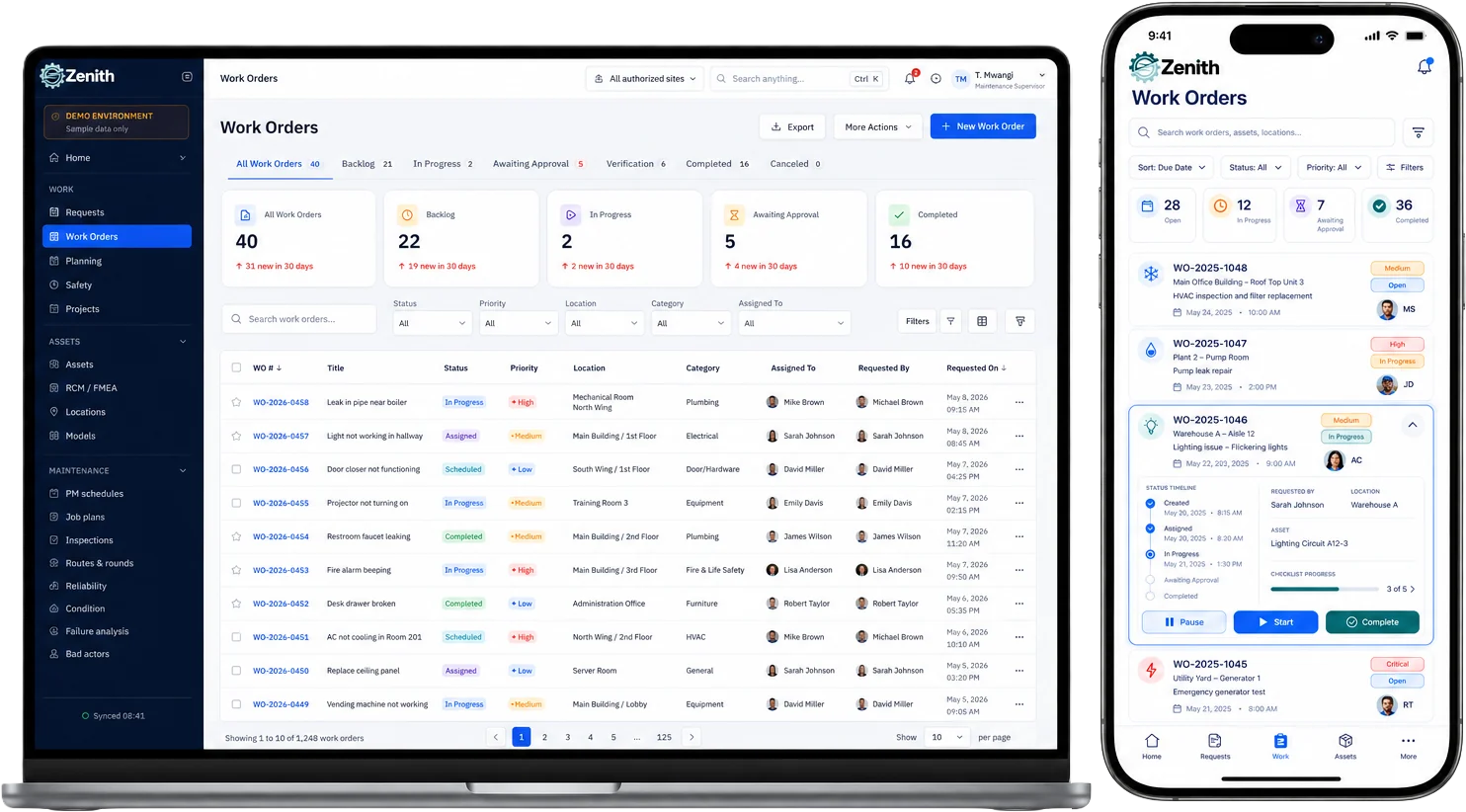
- Manage work orders with priorities, SLAs, and status updates
- Track assets, warranties, lifecycle data, and locations
- Log labor, materials, and costs for reporting and forecasting
- Store manuals, drawings, and compliance documentation
- Why it matters in Canada:
- Seasonality: Winterization, snow-load checks, freeze-thaw cycles, HVAC changeovers
- Compliance: Provincial safety codes, fire inspections, and audit readiness
- Distributed operations: Multi-site portfolios spanning cities and provinces
- Resource constraints: Tight budgets and staffing shortages demand smarter scheduling
How Zenith helps Canadian organizations
Zenith is a facility-focused maintenance platform designed to make scheduling and execution simpler without forcing you into rigid, IT-heavy processes. It bridges the gap between “we just need a tool” and “we need facilities intelligence.”
Key strengths
- Calendar-based scheduling:
Visual planning: Build recurring maintenance calendars by asset, location, or team.
Automatic assignments: Generate work orders on schedule with assignees, parts lists, and checklists.
Seasonal templates: Apply winter/summer routines to HVAC, roofs, grounds, and safety systems. - Work orders that move work forward:
Smart triage: Priorities, SLAs, and routing ensure urgent issues get attention fast.
Mobile-first updates: Techs can log notes, photos, and completion from the field.
Parts and labor tracking: Keep costs tied to assets and tasks for true ROI visibility. - Asset and space intelligence:
Asset profiles: Serial numbers, warranties, vendor contacts, maintenance histories.
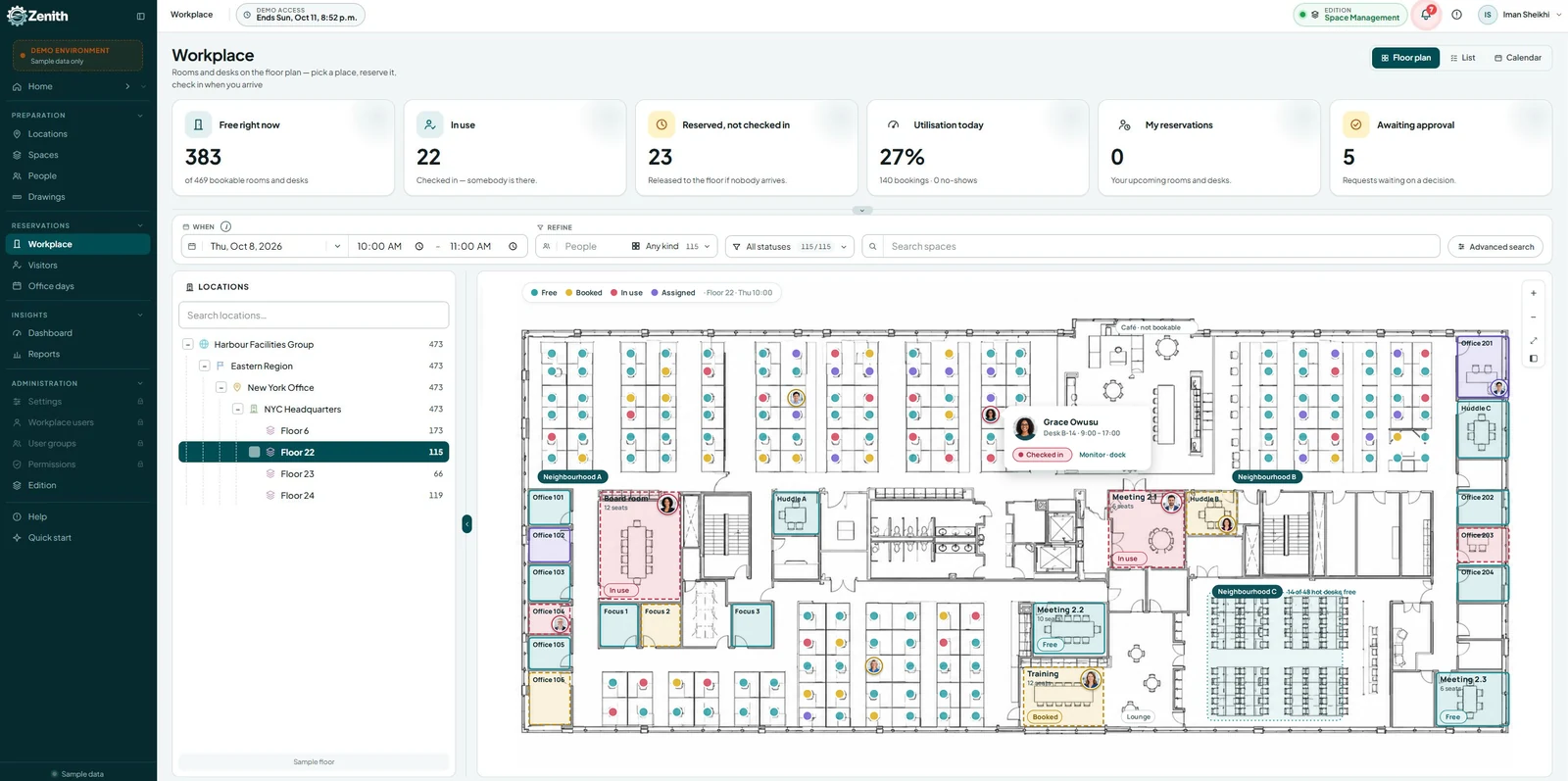
Location-aware: Map tasks to rooms, floors, buildings, and campuses—ideal for universities and healthcare.
Lifecycle planning: Use maintenance data to forecast replacement cycles and budget needs. - Compliance and documentation:
Audit-ready records: Automatic logs of inspections, fire/life safety tasks, and corrective actions.
Attachments and drawings: Store O&M manuals, as-builts, and photos alongside assets and work orders.
Reporting: Proof of maintenance for insurers, regulators, and accreditation bodies. - Integration and scalability:
APIs and data import: Pull in existing asset lists, floor plans, and work histories.
Role-based access: Keep vendors, techs, and managers in the loop with appropriate permissions.
Cloud or hybrid options: Fit your IT policies and data residency requirements.
Benefits that show up on the bottom line
- Reduced downtime:
Predictability: Recurring schedules prevent small issues from becoming outages.
Early detection: Checklists and inspections catch wear and tear before failure. - Lower maintenance costs:
Preventive focus: Fewer emergency call-outs and overtime spikes.
Inventory control: Use the right parts, avoid rush orders, and cut waste. - Better team productivity:
Clear workflows: Everyone knows what to do, when, and with which assets.
Less admin: Templates, auto-generated tasks, and mobile updates remove busywork. - Compliance confidence:
Proof on demand: Show your maintenance history instantly to auditors and insurers.
Standardization: Consistent procedures reduce variability across sites. - Strategic decisions:
Real data: See repair trends, true asset costs, and replacement timing.
Budget foresight: Plan capital and operational spend with evidence, not guesswork.
Industry-specific benefits and use cases in Canada
Municipal government and public works
- Challenges: Distributed assets (roads, parks, facilities), seasonal workloads, tight budgets.
- How Zenith helps:
- Planned routines: Snow equipment service schedules, road sign inspections, playground audits.
- Multi-site visibility: Track tasks across all city buildings, from libraries to arenas.
- Citizen service alignment: Prioritize high-impact requests and document resolutions.
Education and campuses
- Challenges: Complex campuses, HVAC seasonality, safety inspections, space changes.
- How Zenith helps:
- Space-linked tasks: Tie work orders to rooms, labs, and residences.
- Semester templates: Breaks, move-ins, and lab equipment calibrations.
- Compliance: Fire alarms, extinguishers, eyewash stations—tracked and documented.
Healthcare and hospitals
- Challenges: Strict compliance, uptime of critical equipment, infection control workflows.
- How Zenith helps:
- Asset histories: Ventilators, sterilizers, imaging systems—all with warranties and PM logs.
- Regulatory readiness: Audit trails for inspections and preventive maintenance.
- Priority routing: Critical areas (OR, ICU) get fast escalation pathways.
Property management and real estate
- Challenges: Tenant satisfaction, reactive repairs, diverse building portfolios.
- How Zenith helps:
- Recurring tasks: HVAC filter changes, elevator inspections, roof checks.
- Work order portals: Structured intake reduces back-and-forth with tenants and vendors.
- Cost tracking: Link labor and parts to units and buildings for chargebacks.
Manufacturing and industrial
- Challenges: Production uptime, machine failure risk, spare parts planning.
- How Zenith helps:
- PM calendars: Vibration checks, lubrication cycles, calibration routines.
- Downtime reduction: Early detection via checklists and trend logs.
- Inventory ties: Ensure critical spares are on hand before scheduled maintenance.
Transportation and logistics
- Challenges: Fleet upkeep, warehouse equipment, safety inspections, cold-chain reliability.
- How Zenith helps:
- Fleet schedules: Mileage- or time-based service triggers for trucks and vans.
- Warehouse assets: Dock doors, forklifts, conveyors—each with PM and inspection tasks.
- Compliance docs: Keep CVIP-style records and safety certifications in one place.
Retail and hospitality
- Challenges: Guest experience, equipment reliability, multi-location branding consistency.
- How Zenith helps:
- Site templates: Standard PM routines for refrigeration, POS stations, and kitchen gear.
- Rapid triage: Escalate power/HVAC issues at busy times to avoid lost sales.
- Brand protection: Keep storefronts and guest rooms consistently well-maintained.
Utilities and energy
- Challenges: Distributed infrastructure, rigorous safety standards, outage prevention.
- How Zenith helps:
- Network-wide PM: Scheduled inspections for substations, pumps, and control systems.
- Documentation: Detailed logs for regulators and safety audits.
- Predictive-ready: Use historical data to inform condition-based maintenance.
Construction and contractors
- Challenges: Tool/equipment upkeep, jobsite variability, rental asset tracking.
- How Zenith helps:
- Equipment calendars: Service schedules for compressors, generators, lifts.
- Jobsite mapping: Assign tasks to specific sites and phases.
- Cost capture: Track materials and labor by project for accurate billing.
Nonprofits and cultural institutions
- Challenges: Limited staff, heritage asset care, donor reporting.
- How Zenith helps:
- Gentle routines: Climate control checks, exhibit lighting, archival storage checks.
- Volunteer-friendly workflows: Simple assignments and mobile updates.
- Transparency: Reports that show stewardship to boards and funders.
Agriculture and food processing
- Challenges: Seasonal operations, food safety requirements, equipment cleanliness.
- How Zenith helps:
- Sanitation schedules: SOP-driven cleaning tasks with checklists and proof logs.
- Harvest/processing equipment: PM tied to throughput and seasonal cycles.
- Regulatory alignment: Document compliance for inspections and certifications.
Mining and natural resources
- Challenges: Harsh environments, heavy equipment, safety-critical inspections.
- How Zenith helps:
- Checklists for extremes: Lubrication, wear tracking, structural inspections.
- Incident-ready records: Clear history for investigations and risk reviews.
- Parts planning: Align PM schedules with long-lead spares and vendor service windows.
Features that make scheduling stick
- Recurring task builder:
Templates: Create reusable routines by asset class, building type, or industry.
Triggers: Time-based, usage-based, or event-based schedules.
Dependencies: Sequence tasks (inspect → service → verify) without manual juggling. - Smart assignments and routing:
Skills and locations: Assign to techs with the right certifications or nearest site.
Auto-escalation: Missed deadlines bump priority or notify supervisors.
Vendor coordination: Invite external contractors with scoped access. - Checklists and SOPs:
Consistency: Step-by-step tasks reduce variability and human error.
Attachments: Photos, manuals, and drawings at the point of work.
Quality gates: Require verification steps before marking complete. - Mobile-first execution:
Offline mode: Keep working even without signal; sync later.
Quick logs: Barcodes/QRs to pull asset records instantly.
Safety prompts: Pre-task checks for lockout/tagout or PPE reminders. - Reporting and analytics:
KPIs: PM completion rate, mean time to repair, backlog size, compliance score.
Cost curves: Compare preventive vs. corrective spend.
Asset health: Spot chronic offenders and plan replacement.
Implementation tips for Canadian teams
- Start with critical assets:
Prioritize: Choose equipment where downtime is expensive or dangerous.
Stabilize: Build simple, achievable PMs before expanding. - Standardize SOPs:
Consistency: Use checklists and naming conventions across sites.
Training: Short mobile-friendly guides help techs adopt quickly. - Align with seasons:
Winter/summer: Build calendar blocks for freeze protection, HVAC changeovers, and grounds care.
Storm prep: Roof, drainage, and generator checks before heavy weather. - Track compliance from day one:
Evidence: Attach photos and logs to inspection tasks.
Audits: Keep recurring compliance PMs separate from ad-hoc repairs for visibility. - Measure and iterate:
KPIs: Watch completion rates and overdue tasks; adjust staffing or schedules.
Feedback loop: Ask techs where checklists help or hinder, then refine.
Why Zenith over generic scheduling tools
- Facilities-first design: Spaces, assets, and drawings sit at the core—ideal for campuses, hospitals, and multi-building portfolios.
- Easy scheduling without rigidity: Build PMs that match reality, not just software defaults.
- Audit-ready out of the box: Documentation and attachment workflows keep you inspection-ready.
- Scales with you: Start with a single site; grow to province-wide portfolios without replatforming.
Frequently asked questions
What is maintenance scheduling software?
It’s a system for planning, assigning, and tracking maintenance tasks across assets and locations. Instead of relying on spreadsheets and memory, you create recurring schedules, manage work orders, and log labor and parts—all in one place.
Do I need to know “preventive maintenance” to use Zenith?
No. You can start with plain-language tasks like “change filters every 3 months” or “inspect elevators monthly.” Zenith will turn these into recurring schedules and track completion automatically.
How is this different from a generic task app?
Generic apps track to-dos, but they don’t understand assets, locations, warranties, compliance, or lifecycle costs. Maintenance scheduling software connects tasks to the physical things you manage and the standards you must meet.
Can Zenith help with compliance in Canada?
Yes. Zenith stores inspection records, checklists, and attachments so you have proof of maintenance. You can generate audit-ready reports for safety inspections, fire systems, and regulatory reviews.
What if we have multiple sites across different provinces?
Zenith supports multi-site portfolios with role-based access, location-aware scheduling, and cross-site reporting. You can standardize PM templates while keeping local variations where needed.
How hard is it to get started?
You can import assets and existing schedules, then build templates for recurring tasks. Start with a few critical assets, train your techs on mobile workflows, and expand once your first month of PMs runs smoothly.
Does it support vendors and contractors?
Yes. You can route work orders to external vendors with scoped access, track their time and materials, and keep all documentation in one place.
Can we track costs and justify budgets?
Absolutely. Zenith links labor and parts to assets and tasks. Reports show preventive versus corrective spend, chronic failures, and replacement timing—evidence you can use in budget discussions.
Is it suitable for small teams?
Yes. Many small property managers and local businesses use Zenith to replace spreadsheets. You can start simple and add features as your needs grow.
How does it handle seasonal Canadian maintenance?
You can build seasonal templates—winterization, spring inspections, summer HVAC changeovers, fall roof checks—and apply them across assets and sites. Calendars keep your team aligned as the seasons shift.
Getting started: a simple rollout plan
- Phase 1: Inventory and priorities
- List assets: Buildings, HVAC, elevators, vehicles, production equipment.
- Pick top 20: Choose the assets that cause the most risk if they fail.
- Define PMs: Create clear, short checklists for each.
- Phase 2: Scheduling and training
- Build calendars: Time-based and season-based schedules.
- Assign teams: Match skills to tasks; set SLAs and escalation paths.
- Train on mobile: Quick how-tos for logging work, photos, and parts.
- Phase 3: Measure and improve
- Watch KPIs: PM completion, overdue tasks, emergency calls.
- Refine SOPs: Remove steps that don’t add value; add safety gates where needed.
- Expand scope: Roll out to more assets and sites; standardize templates.
The takeaway
Maintenance scheduling software is the backbone of reliable operations. In Canada, where seasonality, compliance, and multi-site logistics add complexity, a facility-centric platform like Zenith helps you transform from reactive firefighting to proactive, well-documented maintenance. You get fewer breakdowns, lower costs, happier occupants—and the confidence to pass any audit with evidence ready.