


Implementing a robust preventive maintenance (PM) program in healthcare is not just about keeping machines humming—it’s about safeguarding patient safety, meeting regulatory requirements, and extending the lifespan of critical assets. A well-structured PM program can dramatically reduce unplanned downtime, lower repair costs, and ensure your facility operates at peak efficiency.
1. Assess Your Assets and Define Objectives
Begin by creating a comprehensive inventory of all medical devices, facility systems, and support equipment. For each asset, record:
- Manufacturer specifications and recommended maintenance intervals
- Current condition and maintenance history
- Criticality to patient care and operational workflow
Next, establish clear objectives. Do you aim to reduce emergency repairs by 50%? Increase equipment uptime to 99.5%? Align your PM goals with broader organizational priorities, such as accreditation standards, budget targets, and patient satisfaction metrics.
2. Develop Tailored Maintenance Strategies
Not all assets require the same level of attention. Categorize equipment into tiers based on risk and impact:
- Tier 1: Life-support and surgical devices
- Tier 2: Diagnostic imaging and laboratory instruments
- Tier 3: HVAC, generators, and facility infrastructure
For each tier, define maintenance procedures:
- Inspection Tasks: Visual checks, performance validation, and safety tests
- Routine Servicing: Lubrication, cleaning, calibration, and filter replacements
- Component Replacement: Proactive swap of wear parts before failure
Document standardized checklists that specify tools, tolerances, and methods for each activity.
3. Create Detailed Schedules and Workflow
Automate task scheduling to eliminate manual tracking errors. A typical preventive maintenance schedule includes:
| Step | Frequency | Responsible Party | Key Deliverables |
|---|---|---|---|
| Visual Inspection | Weekly | Biomedical Technician | Inspection report |
| Calibration Check | Monthly | Calibration Engineer | Calibration certificate |
| Safety Testing | Quarterly | HTM Specialist | Compliance documentation |
| Major Servicing | Biannual | Vendor Technician | Service log and parts report |
| System Audit | Annual | Compliance Officer | Full audit report |
Use reminders and escalation rules to ensure overdue tasks are addressed promptly and transparently.
4. Leverage a CMMS to Centralize Data
A Computerized Maintenance Management System (CMMS) is your cornerstone for preventive maintenance. Key functionalities should include:
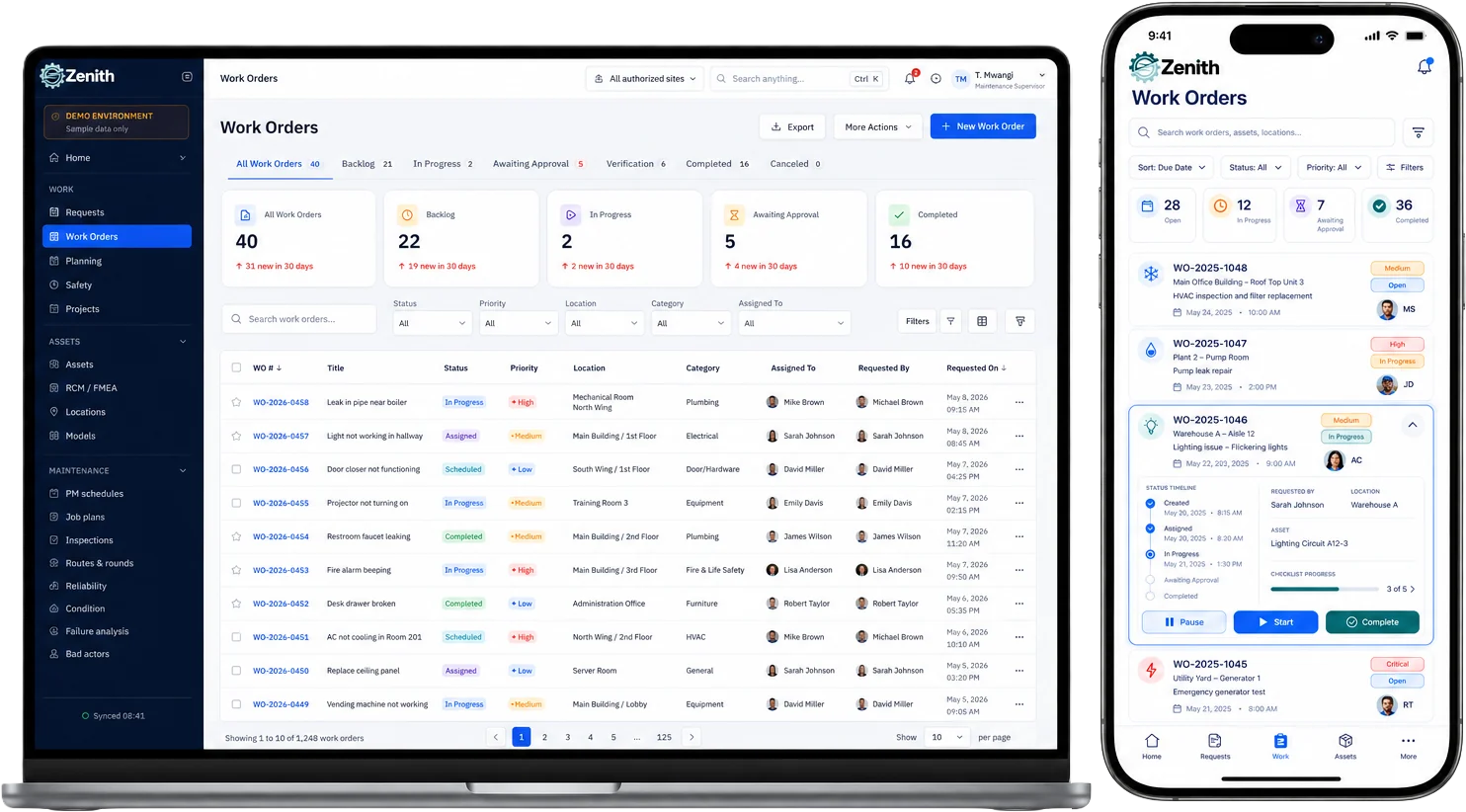
- Work Order Management: Generate, prioritize, and assign PM tasks automatically.
- Asset Life-Cycle Tracking: Record every maintenance event, intervention cost, and spare part usage.
- Document Repository: Store manuals, SOPs, compliance certificates, and audit trails.
- Analytics and Dashboards: Monitor PM completion rates, mean time between failures (MTBF), and cost-per-maintenance metrics.
By centralizing all maintenance activities in one platform, teams gain visibility into asset performance and can make data-driven decisions.
5. Train and Engage Your Maintenance Team
Even the best-designed program will falter without skilled personnel. Focus on:
- Structured Onboarding: Introduce new hires to PM objectives, workflows, and software tools.
- Hands-On Workshops: Demonstrate inspection techniques, calibration steps, and safety protocols.
- Regular Refresher Courses: Update staff on regulatory changes, new equipment, and software enhancements.
- Feedback Loops: Encourage technicians to report procedural gaps, suggest improvements, and share field insights.
A culture of continuous learning empowers teams to identify issues early and adapt processes over time.
6. Monitor Performance and Refine Processes
Preventive maintenance is an evolving journey. Implement a review cadence to:
- Analyze KPIs like PM compliance rate, downtime reduction percentage, and maintenance cost savings.
- Conduct root-cause analyses for any unexpected failures or missed service windows.
- Adjust maintenance intervals and procedures based on real-world performance data.
- Incorporate emerging technologies—such as IoT sensors or predictive analytics—to further optimize schedules.
Continuous refinement ensures your PM program remains proactive and aligned with shifting operational demands.
Benefits of a Well-Designed PM Program
- Enhanced patient safety through reliable equipment
- Improved regulatory compliance with audit-ready records
- Lower total cost of ownership via reduced emergency repairs
- Increased staff productivity and morale
- Data-driven insights that support capital planning
Conclusion
Building a preventive maintenance program in healthcare requires strategic planning, clear objectives, and the right technology foundation. By assessing assets, tailoring maintenance tasks, automating workflows with a CMMS, and investing in team training, your facility can achieve greater reliability, compliance, and cost efficiency. Start today by mapping your top 20 critical assets, setting SMART PM goals, and exploring Zenith’s preventive maintenance modules to power your healthcare operations into the future.