
Computerized Maintenance Management System (CMMS) Software by Zenith
“CMMS Software Canada” is a keyword that facility or maintenance managers normally use to find local CMMS software in Canada. Zenith is a high-performance solution for asset operations toolset that centralizes data from across teams and devices into one, easy-to-implement platform. Real-time data provides visibility into the day-to-day maintenance life cycle, asset utilization, and performance measurement to support informed decisions.
Zenith is a CMMS Software developed in Canada to deliver facility information via a simple and intuitive browser interface through Canadian organizations’ intranet, corporate network, or the internet via a web server.
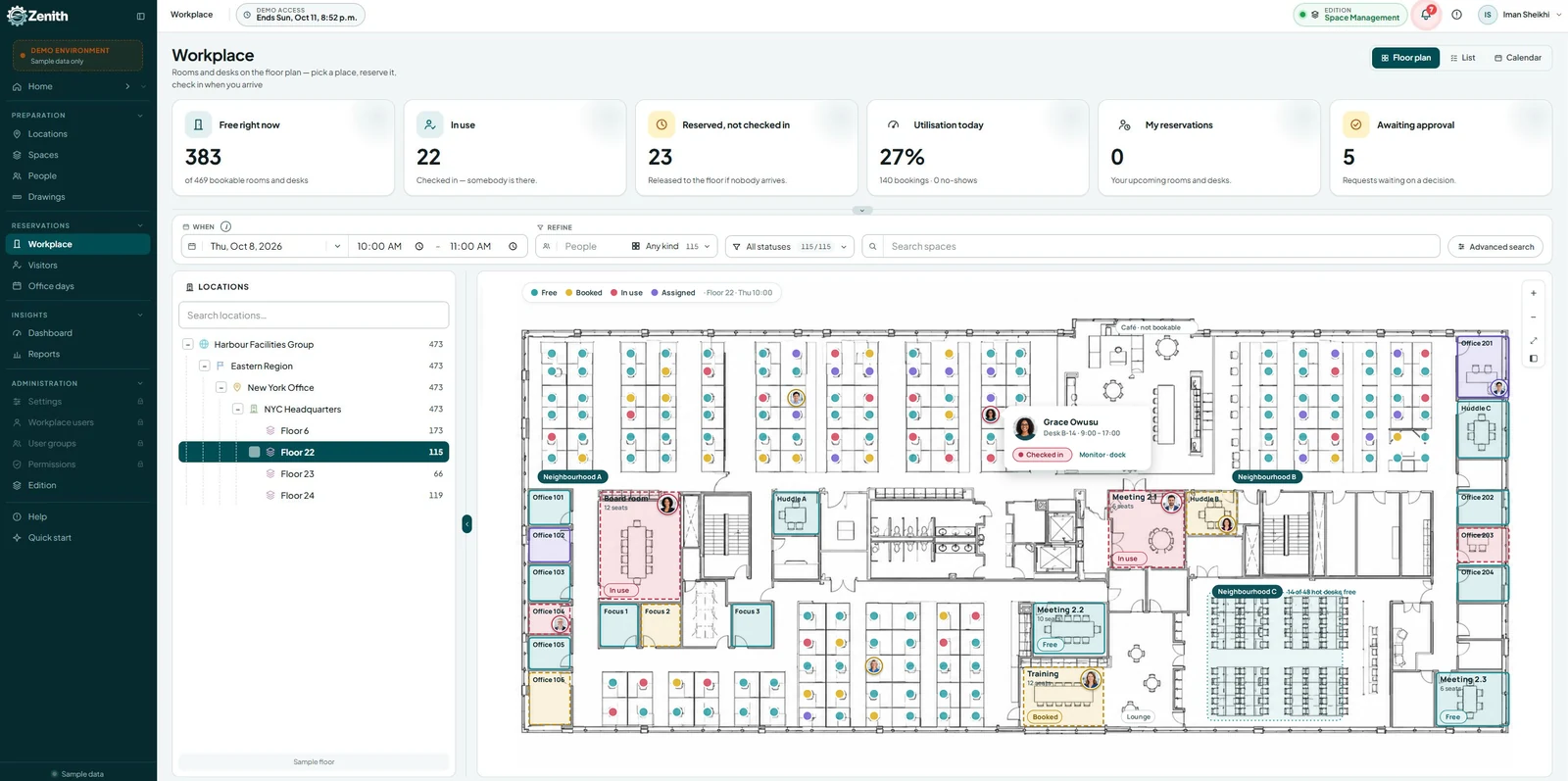
Zenith includes everything Canadian industries need to deploy a robust web/mobile application for managing your intelligent facilities, data, and reports.
Zenith is easy to learn and use – even for the most technically challenged. Zenith lets you control who has access to your facility data – user logins control who has access to what data and functions.
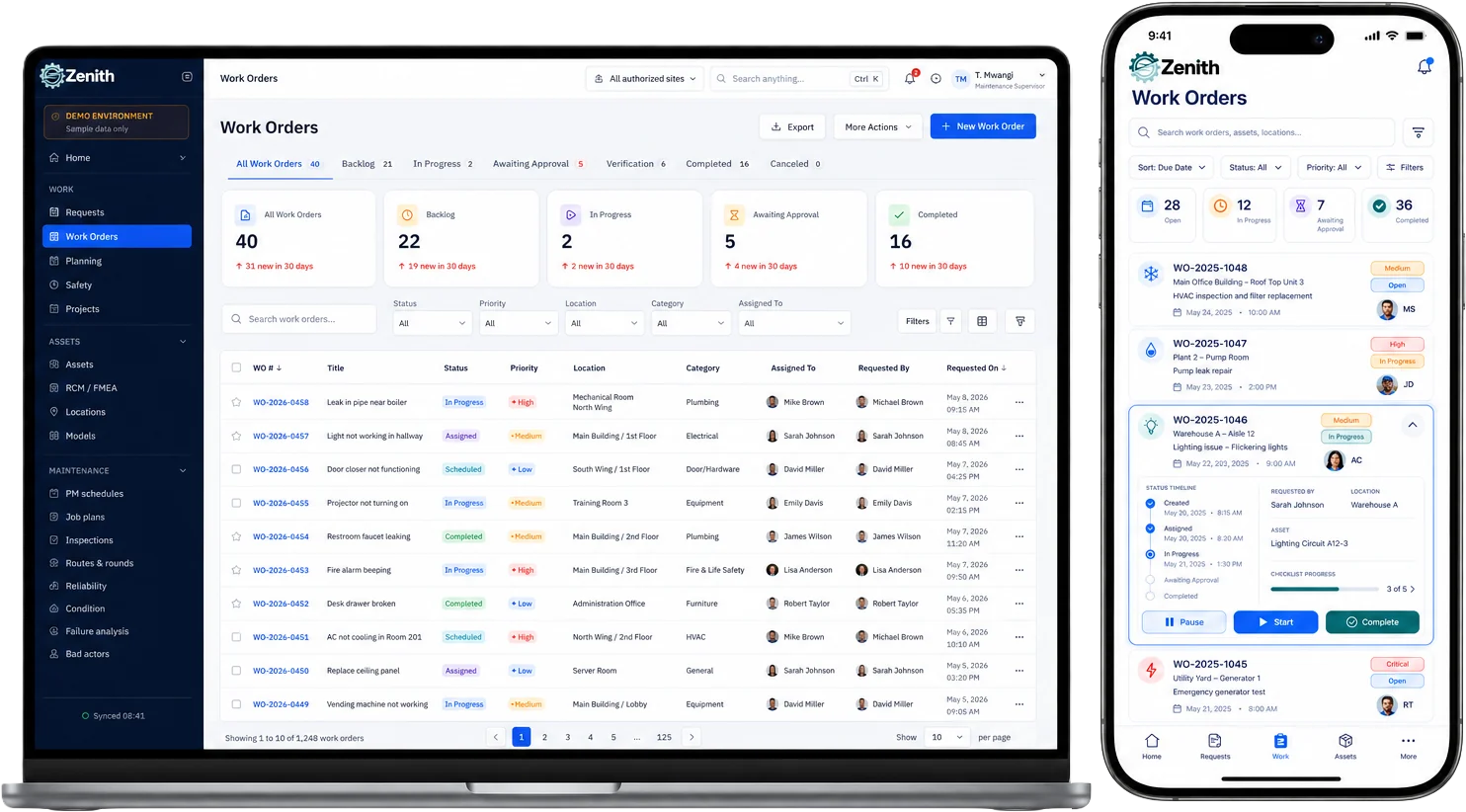
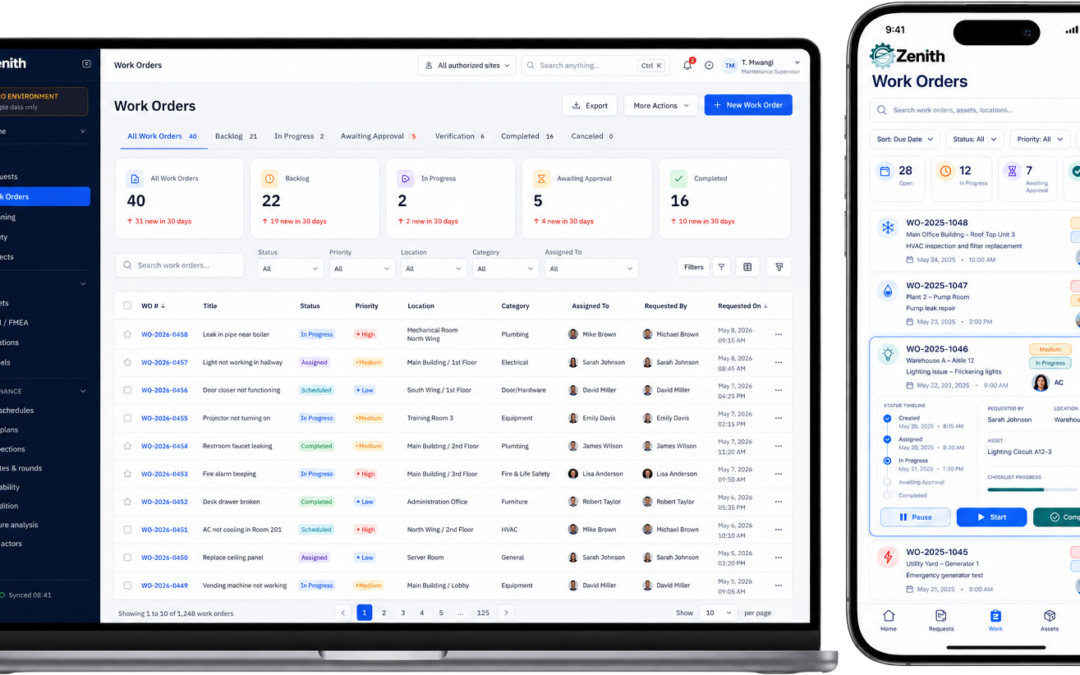
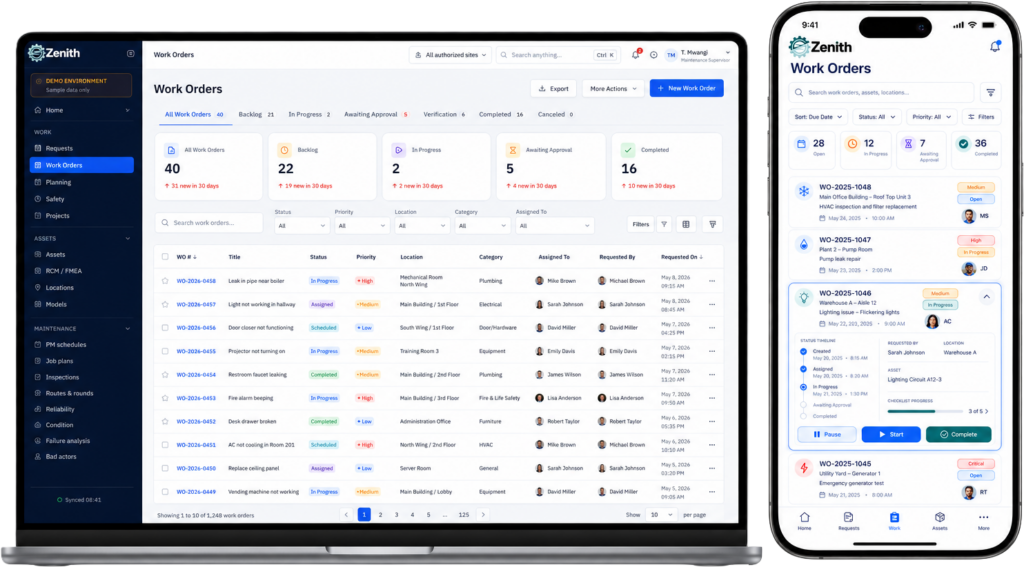
Ditch the paperwork — Seamless collaboration and real-time updates for work orders within and across locations.
Info at your fingertips — Your entire asset history in your back pocket from maintenance history to warranties and depreciation
Data-Driven Decisions — Advanced analytics to optimize asset performance with real-time data.
Real-Time Tracking — Wireless sensors that make it easy to monitor assets remotely to take preventive maintenance to the next level
There is no complicated software to learn or programming skills needed, thus minimizing.
Zenith Functionalities
Flexible and Easy-to-use Canadian CMMS software. Save time, simplify your work, streamline maintenance planning, and prevent unplanned downtime.
Zenith is a CMMS Software developed in Canada to simplify work order management. Your day shouldn’t be spent searching through stickie notes or firefighting maintenance emergencies—you should be free to focus on the bigger picture, charting a course to increased uptime and strengthened reliability. That’s where Zenith comes in.
- Empowers you with flexible, easy-to-use work order software
- Simplifies PM scheduling with a drag & drop calendar
- Connects your team with the mobile work order
- Automates work orders to trigger based on asset health data
Zenith equips you with an interactive preventive maintenance scheduler, complementing a wealth of tools that include work orders, asset management, and spare parts inventory.
- Makes maintenance planning easy with an intuitive scheduler
- Gives you the flexibility to customize your PMs and recurring work orders
- Automatically notifies you of scheduling conflicts
Zenith CMMS streamlines the asset organization, tracking, and lifecycle management of global, asset-intensive businesses.
- Gives you detailed asset info, status, and maintenance history, just a few clicks away
- Empowers you with data & reporting that reveals asset lifecycle insights
- Connects your teams with mobile & asset barcode scanning
Manage Your Assets With Ease & Gain an Eagle-Eye View
Explore an organized asset hierarchy, view detailed maintenance records, and chart a course to optimal asset lifespan.
Simple, searchable, organized
Browse a searchable asset hierarchy that gets you the info you need quickly. Your view is configurable drag & drop columns, edit labels, and personalize your workspace.
Monitor asset health, lifecycle, & maintenance records.
See current asset status, location, and key info like related spare parts. Review maintenance history and discover time and cost-saving insights. Track lifecycle, from purchase to EOL (End-of-Life), and optimize equipment utilization.
See the bigger picture: asset profitability.
Your asset health is key to reducing maintenance costs and driving production. Build powerful dashboards that give deep insight into utilization, condition monitoring, and failure trends.
Discover & standardize a winning strategy across many worksites
Zenith is a multi-site CMMS: you can customize display, settings, and permissions from a master account. Implement best practices throughout sites via workflows and work order procedures — standardizing compliance and success.
Enterprise-level reporting & data standardization
Enjoy streamlined reporting thanks to uniform maintenance data. Quickly build dashboards that give insight into equipment status, uptime, OEE, and maintenance costs. Discover where you can save time and money across the enterprise.
Mobile makes life easy.
Snap a photo of a broken machine and submit a work request via QR code. Get asset info instantly with barcode scanning. Complete work orders, approve requests, and book parts in the field.
Asset details are a few taps away.
Find assets quickly, attach them to work orders, and view work history. Complete route-based equipment inspections. Discover and knock out nearby open work orders when you’re already in the field for one of them.
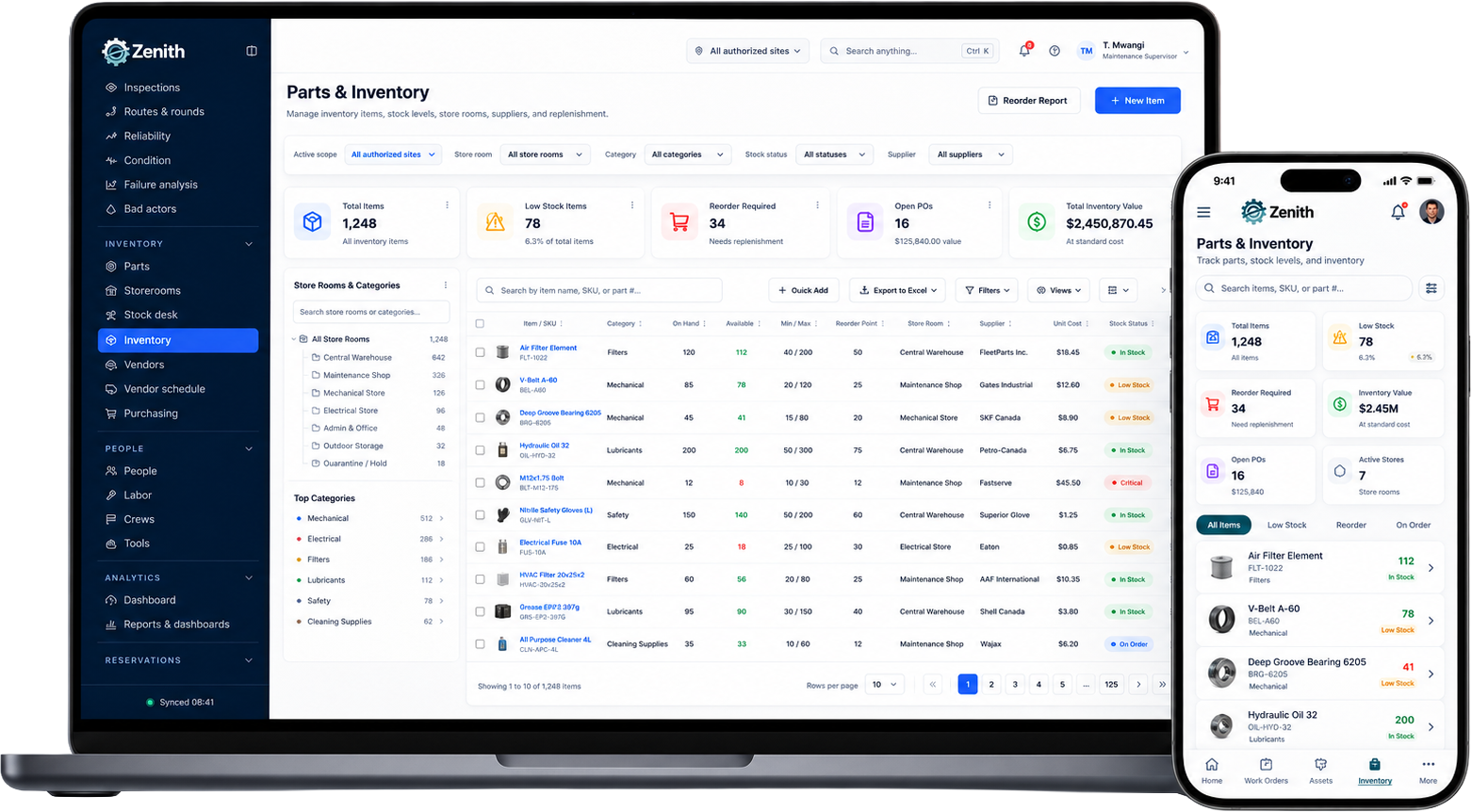
Spare parts at the ready for asset failures
Easily find the parts you need and assign them to work orders or PMs. Make sure critical spares are ready to go for MRO emergencies. Note relevant spares in asset details to make sure techs are up to speed when machine faults strike.
Streamlined planning that saves time & cuts costs
Manage routine preventive maintenance and recurring work orders. Schedule PMs to trigger based on equipment usage. Automate work orders to trigger based on asset health data like vibration or temperature.
Simple, interactive PM calendar
Map out your work orders and PMs with the Zenith Scheduler, an intuitive, drag & drop calendar. Assign work quickly. Customize and filter your view to see only the work that matters to you.
Automatically see and resolve conflicts.
Get notified of schedule conflicts as you work and resolve them right away. Receive overscheduling alerts and level-load work distribution to optimize your maintenance workflow distribution.
Quick & flexible work order system
Organize, create, assign, and track work orders and work requests. Get in and get out with Zenith’s search functionality. Make your workspace your own – rename labels, drag and drop columns, and prioritize work orders as you see fit.