

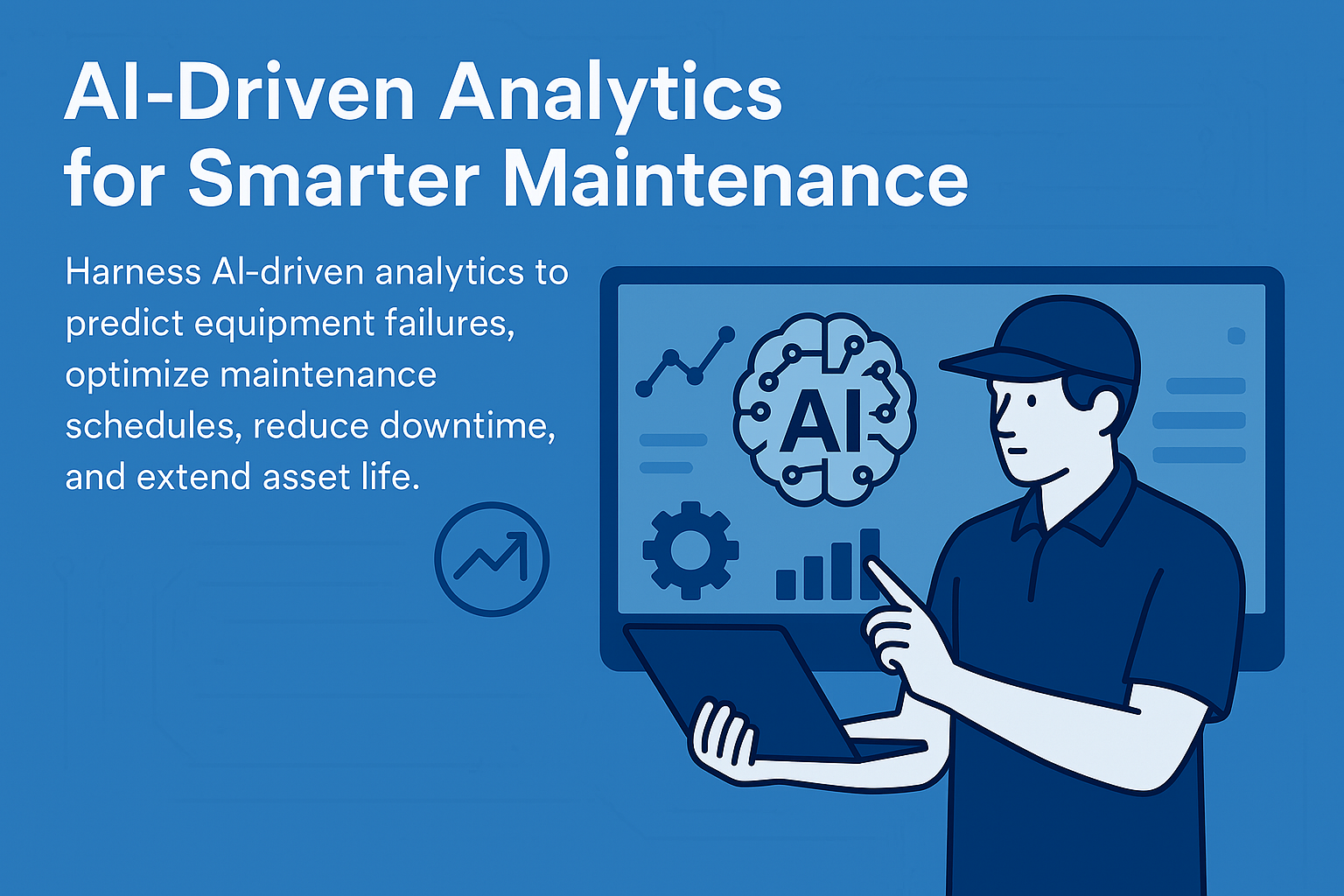
In an era where unplanned downtime can cost industries millions per hour, organizations are turning to artificial intelligence (AI) to transform maintenance from reactive fire-fighting into proactive strategy. By leveraging AI-driven analytics, companies can predict equipment failures before they occur, optimize maintenance schedules, and unlock new levels of operational efficiency.
The Shift from Reactive to Maintenance prédictive
Traditional maintenance models often fall into two buckets:
- Reactive maintenance: Fixing equipment only after it fails, leading to unplanned downtime and emergency repair costs.
- Preventive maintenance: Scheduling inspections at fixed intervals, which can result in over-servicing or missed anomalies.
AI-driven predictive maintenance uses machine learning to analyze historical and real-time data, detecting subtle patterns that signal impending failure. This shift enables maintenance teams to intervene precisely when needed, reducing disruptions and extending asset life.
Core Technologies Powering AI-Driven Maintenance
AI-driven analytics rests on several key pillars:
| Technology | Fonction | Benefit |
|---|---|---|
| Machine Learning Algorithms | Analyze historical sensor and operational data to model failures | Generate early warnings and failure probabilities |
| Sensor Data Analytics | Collect and preprocess data on temperature, vibration, pressure | Detect anomalies in real time and filter out noise |
| Real-Time Monitoring Systems | Continuously track equipment health via IoT and cloud platforms | Provide immediate alerts for parameter deviations |
| Digital Twins | Create virtual replicas of assets to simulate behavior | Run what-if scenarios, optimize maintenance strategies |
Key Benefits for Smarter Operations
- Reduced Unplanned Downtime
Predict failures days or weeks in advance, scheduling maintenance during planned windows. - Cost Savings
Lower emergency repair bills and optimize spare-parts inventories. - Extended Asset Lifespan
Address wear and tear early, preventing accelerated degradation. - Enhanced Safety and Compliance
Identify hazardous conditions—like overheating or excessive vibration—before they compromise safety. - Data-Driven Insights
Use AI recommendations to refine maintenance plans and budget forecasts.
Implementing AI-Driven Analytics: A Roadmap
- Assess Data Infrastructure
Inventory existing sensors, IoT devices, and historical maintenance records. - Integrate Data Sources
Consolidate sensor feeds, CMMS logs, and production metrics into a unified data lake. - Develop and Validate Models
Train ML algorithms on labeled failure data; validate with live pilot projects. - Integrate with CMMS
Feed AI-generated alerts and work-order recommendations directly into your CMMS or CAFM system. - Train and Empower Teams
Offer hands-on workshops so technicians understand AI insights and can fine-tune thresholds. - Iterate and Scale
Review model accuracy, adjust parameters, and expand coverage to additional assets.
An illustrative scenario: a manufacturing plant
The scenario below is illustrative. It is not an account of a named customer, and the figures in it are indicative of what a maintenance programme can aim at rather than measured results we can attribute. Where we can publish real numbers with a client’s permission, we say so plainly.
A global auto-parts manufacturer deployed AI-driven analytics across its stamping presses. In six months:
- Unplanned downtime dropped by 45%.
- Maintenance costs fell by 30% through optimized lubrication and part exchanges.
- Mean time between failures (MTBF) increased by 20%.
By integrating AI alerts into their CMMS, the plant achieved seamless scheduling and real-time visibility into asset health.
Best Practices and Challenges
- Ensure Data Quality
Clean, labeled datasets are essential for accurate model training. - Plan for Change Management
Secure executive sponsorship and involve technicians early to overcome resistance. - Choose Scalable, Vendor-Agnostic Solutions
Avoid lock-in; select platforms that support diverse equipment and protocols. - Maintain Cybersecurity
Protect data at rest and in transit, especially when connecting IoT devices to cloud analytics.
Future Outlook
As AI technologies mature, predictive maintenance will evolve into prescriptive maintenance—where systems not only forecast failures but also recommend optimal repair sequences and resource allocations. The convergence of AI, edge computing, IoT, and digital twins promises an era of fully autonomous maintenance operations, maximizing uptime and driving competitive advantage.
Embrace AI-driven analytics today to turn maintenance into a strategic asset. The future of smarter, leaner, and safer operations starts with data—and AI is the key to unlocking its full potential.