
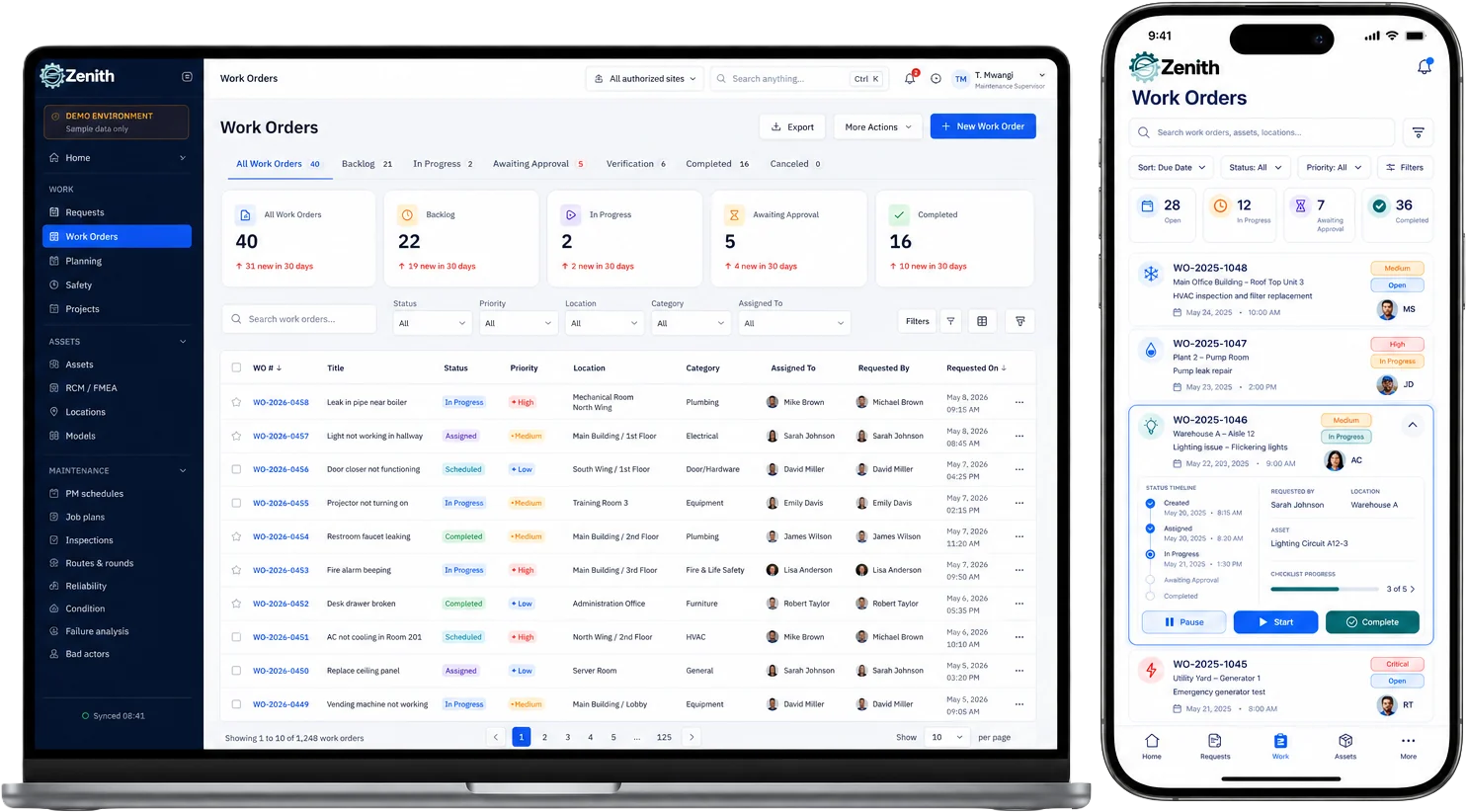
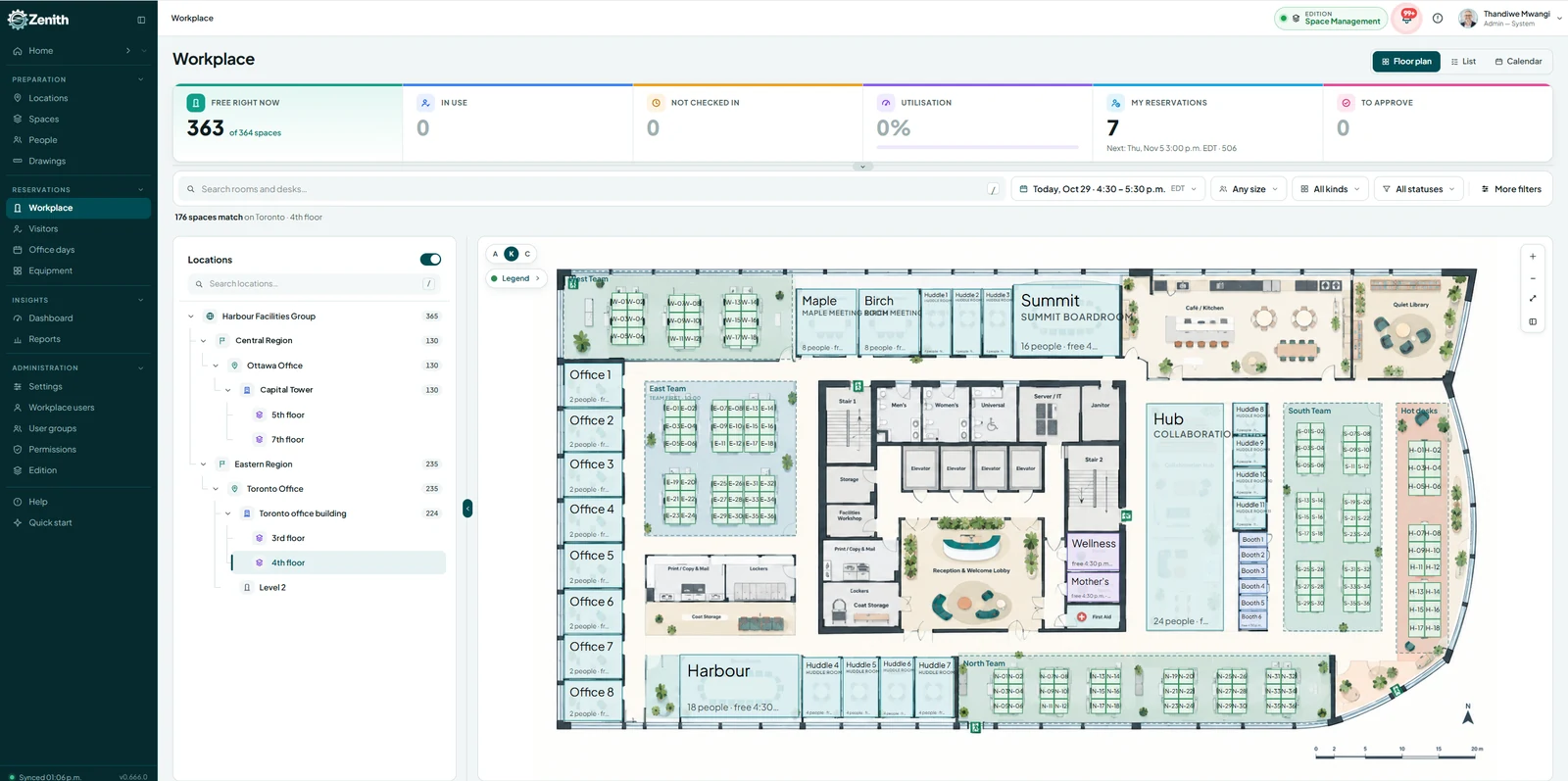

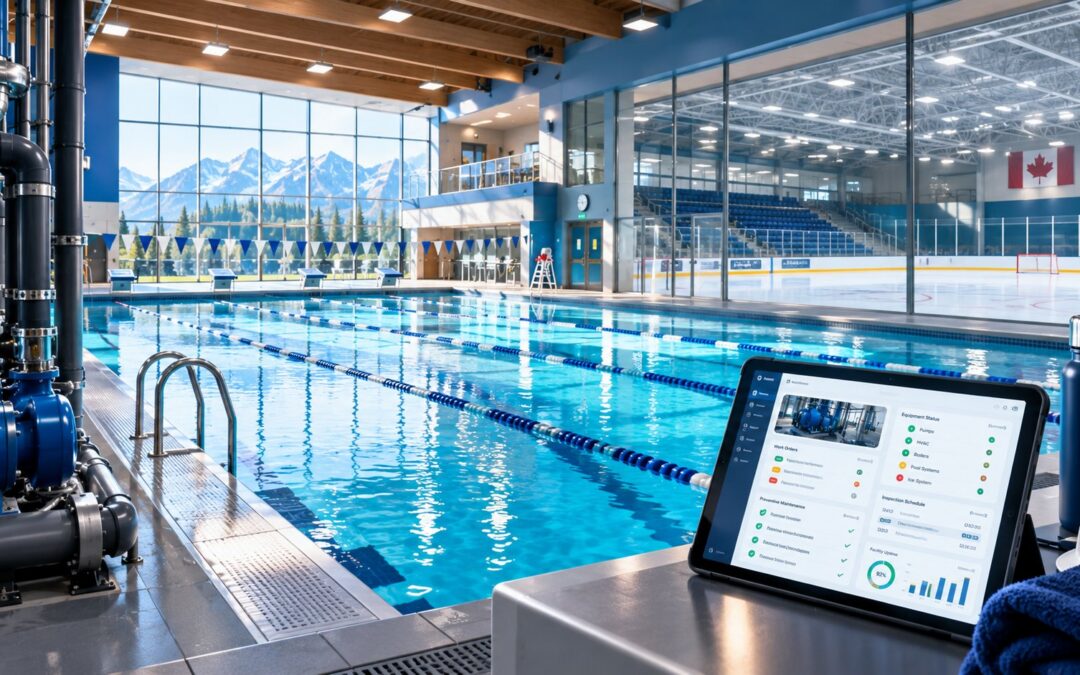
A recreation centre runs two very different machines under one roof. The pool is a water treatment plant that the public swims in, checked by a health inspector. The arena is a refrigeration plant, often running on ammonia, regulated as pressure equipment. Both depend on routine checks done the same way every day, and both are judged on the records you keep. This guide covers what Alberta and British Columbia expect from pool records, what the 2017 Fernie arena tragedy changed for ice plants, a practical checklist, and how to move the logs from clipboards into a CMMS (computerized maintenance management system).
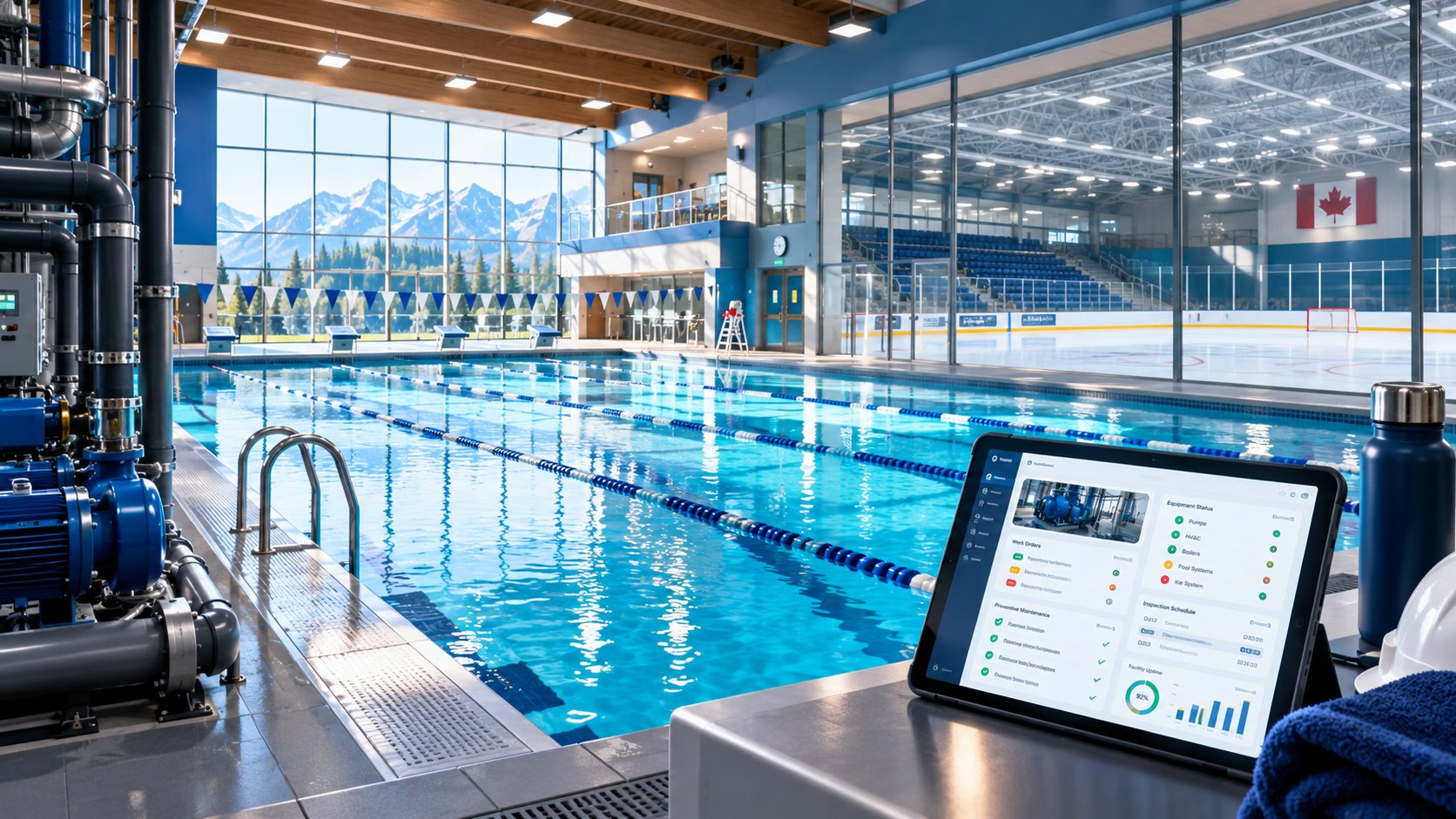
Why pools and arenas are different from other buildings
Most facility maintenance is about keeping equipment running. In a pool and an arena, the daily readings are the job. A chlorine level that drifts for a few hours, or a refrigeration leak that is noticed but not recorded, can turn into a public health or safety incident. That changes what good maintenance looks like:
- Readings, not just tasks. Free chlorine, pH, brine temperature and compressor pressures are numbers with an acceptable range. Ticking “done” is not enough.
- Many checks a day. Pool water is tested several times a day in busy facilities, often by different staff on different shifts.
- An outside reader. Health inspectors, safety officers and insurers read your logs. They need to be complete, legible and show who did what, and when.
- Aging equipment. Many Canadian arenas run refrigeration plants that are decades old, so the history of each chiller, compressor and detector matters.
What pool inspectors expect to see
Rules are set by each province, so check the current version for your facility. Two examples from Western Canada show how specific they are:
| Alberta | British Columbia | |
|---|---|---|
| Règle | Pool Standards under the Public Swimming Pools Regulation | Pool Regulation (B.C. Reg. 296/2010) and the B.C. Guidelines for Pool Operations |
| Chlorine and pH | Manual test of free chlorine, combined chlorine and pH at least once a day | Free chlorine, combined chlorine and pH at least twice a day; every 4 hours recommended for public pools |
| Alkalinity | At least once a week | At least once a week |
| Records | Readings with times, chemicals used, water temperature and clarity, equipment maintenance, incidents and contamination events | A daily record for each pool, kept onsite for the health officer, with the date, time and name of the person for each entry |
Both provinces also expect records of chemicals added, equipment maintenance and incidents. In practice, the inspector wants to open a log for any day and see every test, who did it, what was done when a reading was out of range, and what equipment work happened.
Ice plants: what changed after Fernie
In October 2017, an ammonia release at the Fernie Memorial Arena in B.C. killed three workers and forced the evacuation of nearby homes. Technical Safety BC’s investigation found that ammonia had leaked into the brine, pressurizing a pipe until a coupling separated. It made 18 recommendations and stressed that maintenance programs “must address and alleviate the risks presented by aging equipment,” and that even very small refrigerant leaks can signal an extremely hazardous situation.
Regulators followed up. In Alberta, ABSA issued guidance in 2021 specific to ammonia refrigeration systems, which includes annual self-audits by owners, reporting of unsafe conditions and keeping specified records. For arena operators the message is the same everywhere: small signs such as a slow pressure change, a detector alarm or a recurring leak must be recorded, followed up and visible to whoever looks at that plant next.
A practical pool and arena checklist
Use this as a starting point, then adjust it to your equipment, your provincial rules and your manufacturer’s instructions.
| How often | Pool | Arena and ice plant |
|---|---|---|
| Each shift or several times a day | Free and combined chlorine, pH, water clarity; compare manual tests with the controller | Brine supply and return temperatures, suction and discharge pressures, compressor run status |
| Quotidien | Automated controller readings and setpoints (Alberta requires them recorded daily), filter pressure, flow rate, chemical feed and stock levels, water temperature | Ammonia detector status, machine room walk-through, ice surface temperature, resurfacer check |
| Hebdomadaire | Total alkalinity, backwash as needed, deck and drain inspection | Compressor oil level and run hours, ventilation fan test, dehumidifier check |
| Mensuel | Chemical room inspection, safety equipment check, suction outlet covers | Detector and alarm test, emergency ventilation test, eyewash and safety equipment check |
| Annuel | Equipment servicing, suction outlet cover expiry dates | Refrigeration plant inspection and self-audit, chiller and brine system condition review, emergency drill |
The problem with paper logs
Most pools and arenas still keep these logs on paper or in a shared spreadsheet. It works until something goes wrong:
- Gaps are invisible. A missed 2 p.m. test is only noticed weeks later, if at all.
- Out-of-range readings are not followed up. The number is written down, but nothing tells the supervisor, and nothing records what was done about it.
- No trends. A pH that creeps up every afternoon, or brine that runs a little warmer each week, is hard to see across dozens of paper sheets.
- Inspection day is a scramble. Pulling together a month of records for a health inspector or insurer takes hours.
- Equipment history is scattered. The chiller’s leak history lives in emails, invoices and memory.
How to run pool and arena logs in a CMMS
A CMMS turns each log into a scheduled round with readings, limits and an owner:
- Build the hierarchy. Set up the facility, then the pool, hot tub, ice plant, machine room and their equipment, such as pumps, filters, chlorinators, compressors, chillers and detectors.
- Turn each log into a checklist. Each reading becomes a measurement step with a unit and an acceptable range, for example free chlorine in mg/L or brine temperature in °C. Add pass/fail steps for visual checks and sign-off where a supervisor must confirm.
- Schedule the rounds. Create daily, weekly and monthly rounds. Where a test is needed several times a day, give each test time its own daily round so a missed test shows up straight away.
- Act on out-of-range readings. A reading outside its limits is flagged, so the supervisor sees it and a corrective work order can follow.
- Track equipment meters. Record compressor run hours and other meter readings with high and low alarms, and let them trigger servicing.
- Report automatically. Schedule the logs and trends as PDF reports emailed to the facility manager every week, and keep them ready for the inspector.
How Zenith helps recreation facilities
Zenith is a Canadian CMMS hosted in Canada, in English and French. For pools and arenas it gives you:
- Inspection checklists with real readings: measurement steps with units, low and high limits and pass/fail criteria, plus photo, text and sign-off steps. Readings outside the range are flagged.
- Trends you can see: measurement steps can be marked for trending, so chlorine, pH or brine temperatures can be viewed over time to troubleshoot.
- Meters with alarms: run hours and other readings with high and low alarm levels, linked to preventive maintenance.
- Scheduled PDF reports: reports filtered by date and site, printed, saved as PDF or emailed automatically every week or month to the people who need them.
- Complete equipment history: every work order, reading, photo and document on the chiller, pump or detector it belongs to, with who did the work and when.
- Phone app for staff on the deck and in the machine room, so readings are entered where they are taken.
You can see how inspections and preventive maintenance work in our short video series, ou apprenez-en davantage sur setting up a preventive maintenance schedule et tracking equipment maintenance.
Les questions qu’on nous pose
Can a CMMS replace our paper pool log?
Yes, as long as it records each reading with the date, time and the person who took it, and lets you produce the log for any day. Check your provincial rules and with your local health authority on how they want records presented, and keep a printed or PDF copy available onsite if they ask for one.
How do we handle tests several times a day?
Set up one round for each test time, such as opening, midday, afternoon and closing. Each one appears on the right person’s list at the right time, and a missed round is visible straight away.
Can we see chlorine or brine temperature trends?
Yes. When readings are recorded as measurement steps rather than free text, you can view them over time, spot drift early and compare them with chemical use and equipment work.
Is a CMMS only for large multi-pool facilities?
No. A single pool or rink benefits as much, because the same few staff handle every shift. Starting with one facility and a handful of rounds is often the easiest way to begin.
Par où commencer
Pick your most important log, usually the pool water test or the ice plant round, and set it up first with the readings, limits and test times you already use. Once staff are entering readings on their phones, add the weekly and monthly checks. If you would like to see it with your own facility, book a 30-minute demo and we will walk through your pool and arena logs with you.