


Facility management teams across Canada face evolving challenges. From harsh winters in Yukon to humid summers in Ontario, asset uptime and workplace safety are non‐negotiable. Selecting the right technology—a full‐featured Facility Management (FM) platform or a focused Computerized Maintenance Management System (CMMS)—can transform operations, reduce costs, and boost productivity.
In this in‐depth post, we’ll break down:
- What FM software and CMMS are
- Core features and differences
- Benefits tailored to Canadian operations
- A comparison table for quick insights
- Decision‐making criteria
- Implementation best practices
- Future trends in maintenance technology
- Realistic scenarios in Canadian contexts
By the end, you’ll have a clear roadmap for choosing the system that fits your organization’s needs, budget, and long‐term strategy.
Understanding Facility Management Software
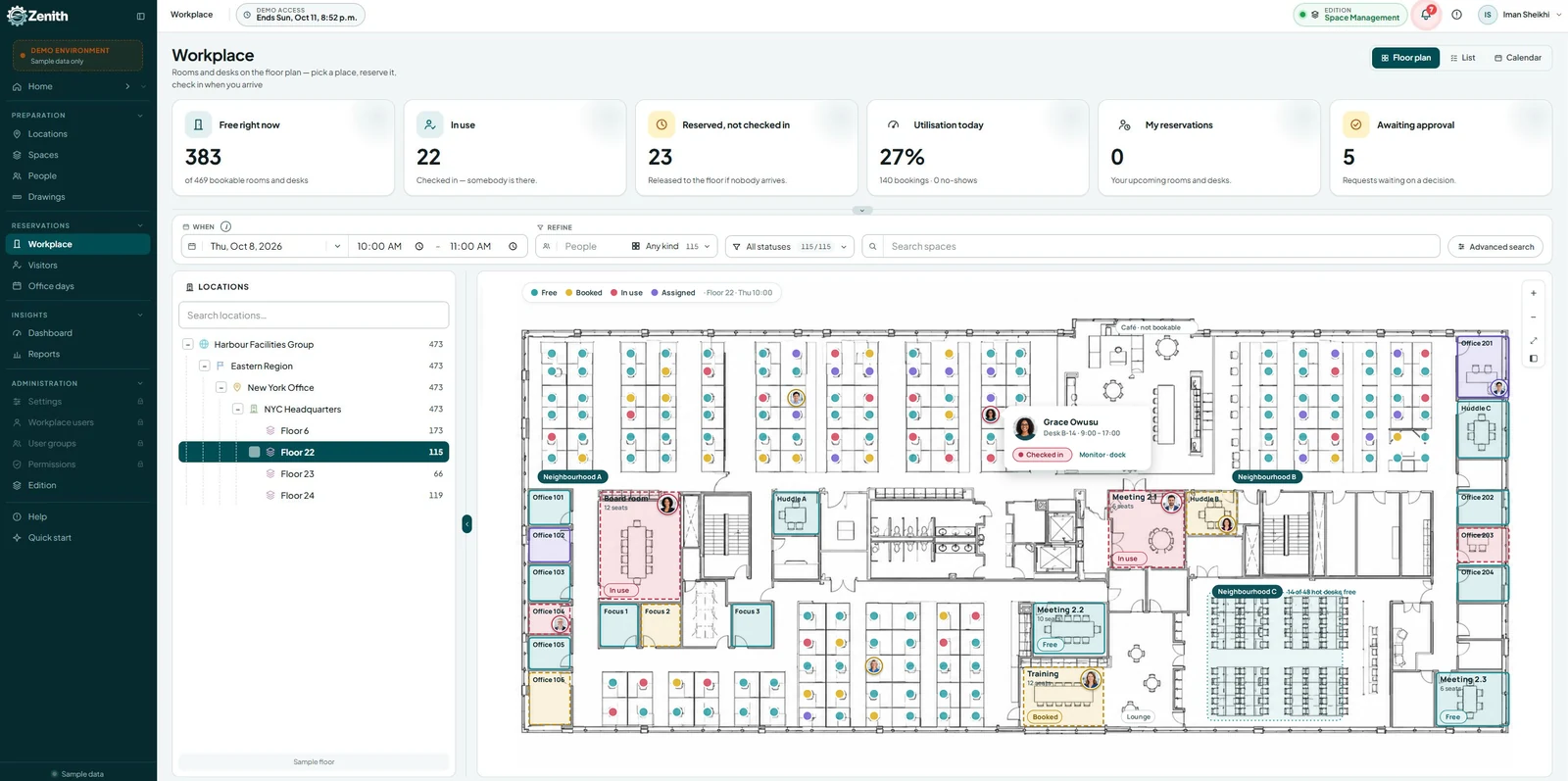
Facility Management Software offers a unified platform for managing all aspects of a building or campus. It extends beyond maintenance to encompass space planning, energy management, lease administration, and more.
Key capabilities include:
- Space and occupancy management, with interactive floor plans
- Integrated work orders spanning maintenance, cleaning, security, and catering
- Asset lifecycle tracking—from procurement to disposal
- Energy and sustainability analytics for reducing carbon footprint
- Vendor and contract management, with compliance documentation
These systems are designed to support facility managers, real estate teams, and corporate executives in making data‐driven decisions about physical assets and infrastructure.
Understanding CMMS
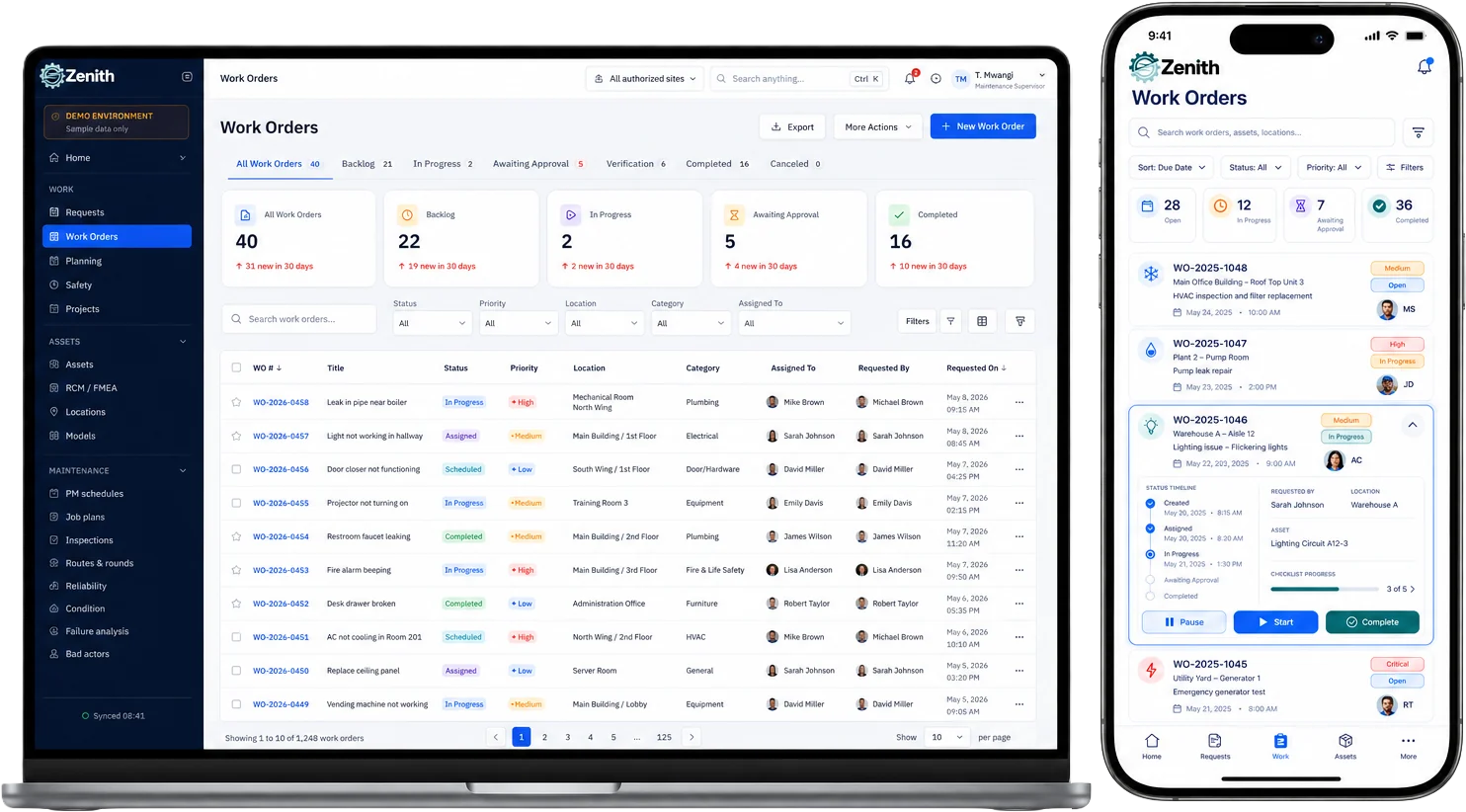
A Computerized Maintenance Management System focuses specifically on maintenance workflows and asset reliability. Its core mission is to ensure equipment uptime, streamline preventive tasks, and track maintenance costs.
Core CMMS functionality typically includes:
- Work order creation, assignment, and tracking
- Preventive maintenance scheduling based on time or meter readings
- Asset hierarchy and parts inventory management
- Downtime and labor hours reporting
- Mobile access for technicians during field work
While CMMS excels at maintenance efficiency, it generally lacks modules for space planning, energy analytics, and lease management found in broader FM platforms.
FM Software vs. CMMS: Feature Comparison
To visualize the differences, here’s a side‐by‐side comparison:
| Feature | FM Software | CMMS |
|---|---|---|
| Maintenance Management | Yes | Yes |
| Preventive Maintenance Scheduling | Yes | Yes |
| Asset Lifecycle & Inventory | Yes | Yes |
| Space & Occupancy Planning | Yes | No |
| Lease & Contract Administration | Yes | Limited |
| Energy & Sustainability Insights | Yes | No |
| Vendor & Compliance Tracking | Yes | Limited |
| Mobile App for Technicians | Yes | Yes |
| Reporting & Dashboards | Enterprise‐wide analytics | Maintenance‐focused reports |
| Integration with ERP & IoT | Extensive integrations | Growing but more specialized |
Why Canadian Organizations Choose Facility Management Software
- Compliance with Provincial Regulations
Canadian operations must meet diverse safety codes in each province. FM platforms centralize audit trails, permits, and inspection records—simplifying compliance across jurisdictions. - Bilingual & Multilingual Support
Many providers offer English/French interfaces, helping teams in Quebec and federal agencies maintain clear communication. - Campus and Multi‐Site Management
Universities, hospitals, and government bodies often oversee multiple facilities. FM systems aggregate data across sites, offering holistic insight and standardized processes. - Sustainability Mandates
Federal and provincial green building programs reward operations that track energy consumption. FM tools deliver the metrics necessary for LEED or ENERGY STAR certifications. - Real‐Time Space Utilization
With hybrid work trends on the rise, Canadian companies need up‐to‐date occupancy data. FM software integrates with IoT sensors to optimize real estate and reduce overhead.
Why Canadian Organizations Choose CMMS
- Focus on Maintenance Excellence
Manufacturing plants in Ontario and resource extraction sites in Alberta rely on robust preventive maintenance to avoid costly downtime. - Simplicity and Rapid Deployment
CMMS solutions are often quicker to implement, letting smaller teams start scheduling and logging work orders within days. - Cost‐Effective for Single‐Site Operations
A focused CMMS can be more budget‐friendly if your needs revolve around machine reliability rather than full facility oversight. - Deep Mobile Technician Support
Field technicians in remote regions of Canada benefit from offline mobile capabilities, barcode scanning, and quick parts lookup. - Data‐Driven Asset Management
Metered PM triggers and failure analysis tools ensure critical equipment in utilities, transit, and heavy industry stays online.
How to Choose: Key Decision Factors
When evaluating FM software versus CMMS, consider:
- Scope of Operations
- Do you need space planning, lease management, or energy tracking? FM software covers all.
- If your primary goal is maintenance efficiency, CMMS may suffice.
- Organization Size & Complexity
- Multi‐site, multi‐department enterprises often require the integrated vision FM platforms provide.
- Small to mid‐sized facilities with a handful of critical assets might find CMMS more practical.
- Budget & Total Cost of Ownership
- FM systems typically have higher upfront and licensing costs but deliver broader ROI.
- CMMS can be more affordable initially; watch for add‐on fees as needs grow.
- Integration Requirements
- FM software often offers extensive APIs for ERP, building automation, and IoT systems.
- CMMS integrations focus on parts suppliers, financial systems, and existing maintenance tools.
- Regulatory and Sustainability Goals
- FM platforms simplify multi‐jurisdictional reporting and green building certifications.
- CMMS, while limited in broader analytics, can help meet mandatory equipment inspection standards.
Implementation Best Practices
Rolling out any new technology requires careful planning:
- Establish Clear Objectives
Define success metrics—reduced downtime, energy savings, compliance rates—before vendor selection. - Secure Stakeholder Buy‐In
Engage operations, finance, IT, and end users early to ensure alignment. - Data Migration & Cleanup
Inventory your assets, work order history, and vendor contacts. Clean, consistent data is the backbone of any system. - Phased Rollout
Start with pilot sites or pilot modules (e.g., maintenance first, then space planning) to minimize risk. - Training & Change Management
Invest in role‐based training and create internal champions to drive adoption. - Continuous Improvement
Schedule regular reviews of KPIs. Leverage dashboards to refine processes and expand functionality over time.
Canadian Case Scenario: University Campus vs. Manufacturing Plant
- University Campus in Vancouver
Needs: lecture hall booking, custodial schedules, HVAC preventive maintenance, sustainability reporting.
Ideal: FM software with space modules, integrated work orders, energy analytics. - Steel Mill in Sault Ste. Marie
Needs: rapid work order turnaround, mobile maintenance logs, parts inventory optimization.
Ideal: CMMS with offline mobile, barcode scanning, robust preventive scheduling.
Emerging Trends and Future Outlook
- IoT and Predictive Maintenance
Sensor data will feed AI algorithms to predict failures before they occur, reducing unplanned outages. - AI-Driven Space Optimization
Machine learning will analyze occupancy patterns to reconfigure workspaces dynamically. - Sustainability Scorecards
Automated tracking of energy, water, and waste will be integrated into compliance dashboards. - Cloud and Edge Computing
Hybrid architectures will optimize bandwidth for remote installations, ensuring real‐time data access across Canada’s vast geography.
Conclusion
Choosing between a full‐featured Facility Management Software and a focused CMMS boils down to your organization’s operational scope, strategic goals, and budget constraints. For enterprises juggling multiple sites, regulatory mandates, and sustainability objectives, FM software delivers an all‐in‐one solution. For teams singularly focused on equipment uptime, a well‐implemented CMMS can be cost‐effective and agile.
No matter which path you choose, rigorous planning, data hygiene, and user engagement will determine success. Embrace the technology that aligns with your long‐term vision and watch your Canadian operation thrive.
Frequently Asked Questions
1. Can CMMS handle space planning or room bookings?
No, CMMS focuses strictly on maintenance workflows. For space planning and room scheduling, facility management software is required.
2. Is bilingual support standard in Canadian FM solutions?
Many leading FM vendors offer English and French interfaces. Always confirm language options during vendor evaluation.
3. How long does implementation typically take?
CMMS pilot programs can launch in 4–8 weeks. Full FM software deployments often span 3–9 months, depending on scope and data migration complexity.
4. What ongoing costs should I expect?
Budget for annual subscription or license fees, support and maintenance contracts, infrastructure (cloud or on‐premises), and periodic training.
5. Can I integrate a CMMS with my building automation system?
Yes, many CMMS platforms offer APIs for integrating with BAS, though integration depth varies by vendor.
6. Which ROI metrics matter most?
Track downtime reduction, maintenance labor hours saved, energy cost savings, regulatory fines avoided, and asset lifespan extension.
7. Do Canadian regulations influence software choice?
Absolutely. Provinces have unique safety standards. Ensure your chosen solution supports audit trails and reporting aligned with your jurisdiction.
8. Can I start with CMMS and later upgrade to FM software?
Yes. Some vendors offer modular upgrades. Plan your data structure and integrations with future expansion in mind.
9. What training resources are typically provided?
Vendors supply online courses, in‐person workshops, user manuals, and dedicated support portals. Confirm training scope and costs upfront.
10. How do cloud and on‐premises options compare?
Cloud solutions reduce IT overhead and accelerate deployment. On‐premises can offer stricter data control but require more internal resources.