

Introduction
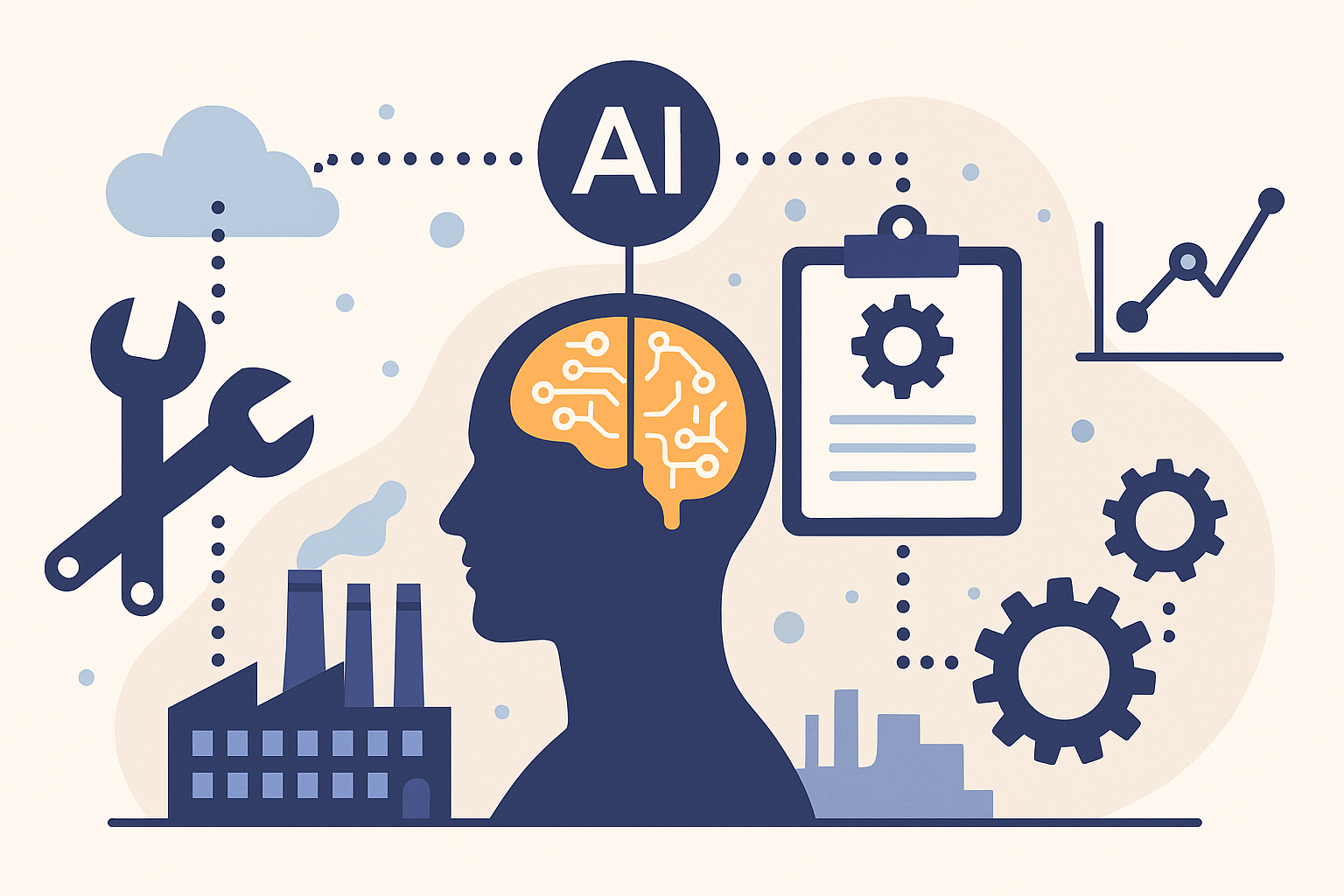
For decades, maintenance teams have been stuck in a reactive cycle — fixing equipment only after it fails. But in 2025, AI‑powered CMMS software is rewriting the rules. By combining IoT sensors, machine learning, and predictive analytics, organizations can now anticipate issues before they happen, saving time, money, and resources.
The Problem with Reactive Maintenance
Reactive maintenance, sometimes called “run-to-failure”, is the practice of waiting until equipment breaks down before taking action. While it might seem cost‑effective at first — because you’re only spending money when something actually fails — it’s a short‑term mindset that often leads to bigger, more expensive problems.
Why It’s Risky
- Unplanned Downtime
Breakdowns rarely happen at convenient times. When a critical asset fails unexpectedly, production halts, deadlines are missed, and service levels drop. In industries like manufacturing or healthcare, even an hour of downtime can cost thousands — or even millions — of dollars. - Higher Repair Costs
Emergency repairs are almost always more expensive than planned maintenance. You may need to pay rush fees for parts, overtime for technicians, or even rent temporary equipment to keep operations running. - Shortened Asset Lifespan
Running equipment until it fails often causes more severe damage than if issues were addressed early. This can lead to premature replacement, increasing capital expenditure. - Safety Risks
Equipment failures can create hazardous situations for employees, customers, or the public. For example, a failed HVAC system in a hospital could compromise patient safety. - Inefficient Resource Use
Maintenance teams are forced into firefighting mode, constantly reacting to crises instead of working strategically. This leads to stress, burnout, and poor morale.
The Hidden Costs
While reactive maintenance might avoid the upfront expense of preventive work, the hidden costs — lost productivity, emergency labor, expedited shipping, and reputational damage — often far outweigh any savings.
Why This Sets the Stage for Predictive Maintenance
This section is important because it creates a clear “pain point” in your blog post. By showing the reader the real‑world consequences of reactive maintenance, you make the case for why AI‑powered CMMS and predictive strategies are worth the investment. It’s the “before” picture that makes the “after” (predictive maintenance) more compelling.
According to Plant Engineering, unplanned downtime can cost manufacturers up to $260,000 per hour.
Absolutely — let’s expand that section so it’s richer, more engaging, and gives your readers a crystal‑clear understanding of what AI‑Powered CMMS really means and why it’s such a big deal in 2025.
What is AI‑Powered CMMS?
A Computerized Maintenance Management System (CMMS) is a software platform that helps organizations plan, track, and optimize maintenance activities for their assets — everything from machinery and HVAC systems to vehicles and IT equipment.
Traditionally, CMMS platforms have been powerful record‑keeping and scheduling tools, but they relied heavily on human input and fixed schedules. That meant maintenance was often time‑based (e.g., service every 3 months) rather than condition‑based (service when the data shows it’s needed).
AI‑powered CMMS takes this to the next level by integrating:
- Artificial Intelligence (AI) – Algorithms that learn from historical and real‑time data to spot patterns and predict future issues.
- Internet of Things (IoT) sensors – Devices that continuously monitor equipment performance, temperature, vibration, energy use, and more.
- Predictive analytics – Statistical models that forecast when a component is likely to fail, so maintenance can be done just in time.
How It Works
- Data Collection – IoT sensors and connected systems feed live data into the CMMS.
- AI Analysis – Machine learning models process this data to detect anomalies and trends.
- Predictive Alerts – The system flags potential failures before they happen.
- Automated Actions – Work orders are generated automatically, complete with recommended parts, tools, and technician assignments.
Why It’s a Game‑Changer
- From Reactive to Predictive – Instead of waiting for breakdowns, you act before they occur.
- Optimized Scheduling – Maintenance happens only when needed, reducing wasted labor and downtime.
- Cost Savings – Preventing failures avoids expensive emergency repairs and extends asset life.
- Better Decision‑Making – AI insights help managers prioritize resources and investments.
Example in Action
Imagine a manufacturing plant where a conveyor motor is monitored by vibration and temperature sensors. The AI in the CMMS notices a subtle increase in vibration over two weeks — a sign of bearing wear. Instead of the motor failing mid‑shift, the system schedules a bearing replacement during planned downtime, avoiding a costly production halt.
Absolutely — this section is really the heart of the story in your AI‑powered CMMS blog post, because it’s where you show the reader the before and after of adopting predictive maintenance. Let’s expand it so it’s more vivid, persuasive, and tied to real‑world 2025 trends.
From Reactive to Predictive: The Shift in 2025
For years, many organizations have operated in a reactive maintenance mode — fixing equipment only after it breaks. While this approach can seem cost‑efficient in the short term, it’s unpredictable, stressful for maintenance teams, and expensive in the long run.
In 2025, the game is changing. Advances in AI, IoT sensors, and cloud‑based CMMS platforms are making predictive maintenance not just possible, but practical and affordable for organizations of all sizes.
What’s Driving the Shift
- Affordable Sensor Technology
IoT sensors that monitor vibration, temperature, pressure, and energy use have dropped in price, making them accessible to mid‑sized businesses — not just large enterprises. - AI That Learns Your Assets
Modern CMMS platforms use machine learning to understand the unique “normal” operating patterns of each asset, so they can detect subtle changes that signal trouble ahead. - Cloud Integration & Mobility
Maintenance teams can now receive predictive alerts on mobile devices, approve work orders instantly, and coordinate repairs without being tied to a desk.
How the Shift Works in Practice
- Reactive Model:
A conveyor belt motor fails unexpectedly during peak production. The line stops, orders are delayed, and the repair requires rush‑ordered parts and overtime labor. - Predictive Model:
The CMMS detects a gradual increase in motor vibration over two weeks. It automatically schedules a bearing replacement during planned downtime, avoiding disruption and extra costs.
Benefits Organizations Are Seeing in 2025
- Up to 50% reduction in unplanned downtime
- 20–40% lower maintenance costs due to fewer emergency repairs
- Extended asset life thanks to timely interventions
- Improved safety by preventing catastrophic failures
Why This Matters Now
In a competitive, cost‑sensitive economy, the ability to predict and prevent failures is becoming a strategic advantage. Companies that adopt AI‑powered CMMS in 2025 aren’t just improving maintenance — they’re improving profitability, customer satisfaction, and operational resilience.
Key Benefits of AI‑Driven Predictive Maintenance
1. Reduced Downtime
In traditional maintenance, equipment failures often happen without warning, forcing operations to grind to a halt. With AI‑driven predictive maintenance, IoT sensors and machine learning models continuously monitor asset health. When the system detects early warning signs — like unusual vibration, temperature spikes, or pressure changes — it sends predictive alerts.
Result: Maintenance teams can schedule repairs during planned downtime, avoiding costly production stoppages and keeping service levels high. In industries like manufacturing, this can mean saving thousands of dollars per hour of avoided downtime.
2. Lower Maintenance Costs
Emergency repairs are expensive — not just because of the repair itself, but also due to overtime labor, expedited shipping for parts, and lost productivity. Predictive maintenance flips the script by catching issues early, when fixes are simpler and cheaper.
Example: Replacing a worn bearing before it fails might cost a few hundred dollars; waiting until it seizes could cost thousands in repairs and lost output. Over time, this proactive approach significantly reduces the total maintenance budget.
3. Extended Asset Life
Every asset has a designed lifespan, but poor maintenance practices can shorten it dramatically. By addressing wear and tear before it causes major damage, predictive maintenance helps equipment operate closer to its optimal condition for longer.
Benefit: This delays the need for costly capital investments in new machinery, maximizes return on assets, and improves sustainability by reducing waste.
4. Data‑Driven Decisions
AI‑powered CMMS platforms don’t just react — they learn. They collect and analyze both historical data (past failures, repair history, usage patterns) and real‑time data (sensor readings, environmental conditions).
Impact:
- Managers can prioritize maintenance on the most critical or at‑risk assets.
- Budgets can be allocated more effectively.
- Long‑term planning becomes more accurate, as decisions are based on evidence rather than guesswork.
Industries Leading the Way
1. Manufacturing – Minimizing Production Line Stoppages
In manufacturing, every minute of downtime can mean thousands of dollars in lost output. AI‑powered CMMS platforms are helping plants monitor critical machinery — from conveyor belts to CNC machines — in real time.
- How it works: IoT sensors track vibration, temperature, and energy consumption. AI algorithms detect early signs of wear or imbalance, triggering maintenance before a breakdown occurs.
- Impact: Predictive maintenance can reduce unplanned downtime by up to 50%, keep production schedules on track, and improve overall equipment effectiveness (OEE).
- Example: An automotive parts manufacturer uses AI‑driven CMMS to schedule bearing replacements during planned maintenance windows, avoiding costly mid‑shift stoppages.
2. Healthcare – Ensuring Critical Medical Equipment is Always Operational
In healthcare, equipment reliability isn’t just about efficiency — it’s about patient safety. MRI machines, ventilators, surgical lights, and sterilization units must be available and functioning at all times.
- How it works: AI‑powered CMMS integrates with biomedical monitoring systems to track usage hours, calibration needs, and performance metrics.
- Impact: Hospitals can prevent unexpected equipment failures during surgeries or emergencies, reduce patient wait times, and comply with strict regulatory standards.
- Example: A Canadian hospital uses predictive maintenance to detect anomalies in its HVAC system, ensuring operating rooms maintain sterile air quality without interruption.
3. Facilities Management – Managing HVAC, Lighting, and Security Systems Efficiently
Large facilities — from office towers to universities — rely on complex systems for heating, cooling, lighting, and security. Failures in these systems can disrupt operations, waste energy, and create safety risks.
- How it works: AI‑powered CMMS connects to building management systems (BMS) to monitor performance data in real time.
- Impact: Facilities teams can optimize energy use, extend the life of expensive infrastructure, and respond to issues before tenants or staff even notice a problem.
- Example: A university campus uses predictive analytics to schedule HVAC maintenance during semester breaks, avoiding disruptions during lectures and events.
Definitely — the “Challenges to Adoption” section is where you help readers understand that while AI‑powered CMMS and predictive maintenance are powerful, they’re not a magic switch. There are real‑world hurdles that organizations need to anticipate and plan for. Expanding this part makes your article more credible and balanced, because it shows you’re not just selling the benefits — you’re addressing the realities.
Challenges to Adoption
1. Upfront Costs and ROI Concerns
Implementing AI‑powered CMMS often requires investment in:
- IoT sensors for equipment monitoring
- Software licensing or subscription fees
- Integration with existing systems
For some organizations, especially smaller ones, the initial price tag can feel daunting. The key is to frame it as a long‑term cost‑saving measure — but that ROI may take months or years to fully realize.
2. Integration with Legacy Systems
Many companies still rely on older machinery or outdated maintenance software. Connecting these to modern AI‑driven CMMS platforms can be technically challenging.
- Potential issues: Compatibility gaps, custom API development, or the need for hardware upgrades.
- Solution: A phased rollout, starting with the most critical or easily integrated assets, can reduce disruption.
3. Workforce Training and Change Management
Predictive maintenance changes how technicians work. Instead of reacting to breakdowns, they’re interpreting data and acting proactively.
- Challenge: Some staff may resist change or feel intimidated by new technology.
- Solution: Invest in hands‑on training, involve teams early in the process, and highlight how the system makes their jobs easier, not harder.
4. Data Quality and Management
AI is only as good as the data it receives. Inaccurate, incomplete, or inconsistent data can lead to false alerts or missed warnings.
- Challenge: Ensuring sensors are calibrated, data streams are reliable, and information is properly categorized.
- Solution: Establish clear data governance policies and assign responsibility for data oversight.
5. Cybersecurity Risks
Connecting assets to the cloud and IoT networks increases the potential attack surface for cyber threats.
- Challenge: Protecting sensitive operational data and preventing unauthorized access to critical systems.
- Solution: Work with vendors who prioritize security, use encrypted communications, and regularly update software.
6. Cultural Shift in Maintenance Philosophy
Moving from a “fix it when it breaks” mindset to a predictive, data‑driven approach requires a cultural change.
- Challenge: Leadership and frontline teams must align on the value of prevention over reaction.
- Solution: Share success stories, track measurable improvements, and celebrate early wins to build buy‑in.
How to Get Started
- Assess your current CMMS – Can it integrate with IoT and AI tools?
- Start small – Pilot predictive maintenance on high‑value assets.
- Train your team – Ensure staff understand how to interpret AI insights.
- Partner with experts – Work with vendors experienced in AI‑driven CMMS.
Conclusion — Why Now is the Time to Act, and How Zenith Can Help
The shift from reactive to predictive maintenance isn’t just a passing trend — it’s a fundamental change in how organizations protect their assets, control costs, and maintain operational excellence. In 2025, AI‑powered CMMS platforms are no longer reserved for large enterprises with massive budgets. Affordable IoT sensors, cloud‑based systems, and intuitive AI tools have made predictive maintenance accessible to businesses of all sizes and industries.
By adopting an AI‑driven approach, you can:
- Prevent costly downtime before it disrupts your operations
- Lower maintenance expenses through smarter scheduling and early interventions
- Extend the life of your assets, delaying expensive replacements
- Make confident, data‑driven decisions that improve efficiency and profitability
But technology alone isn’t enough — you need a platform that’s proven, user‑friendly, and backed by a team that understands your industry’s unique challenges.
That’s where Zenith comes in.
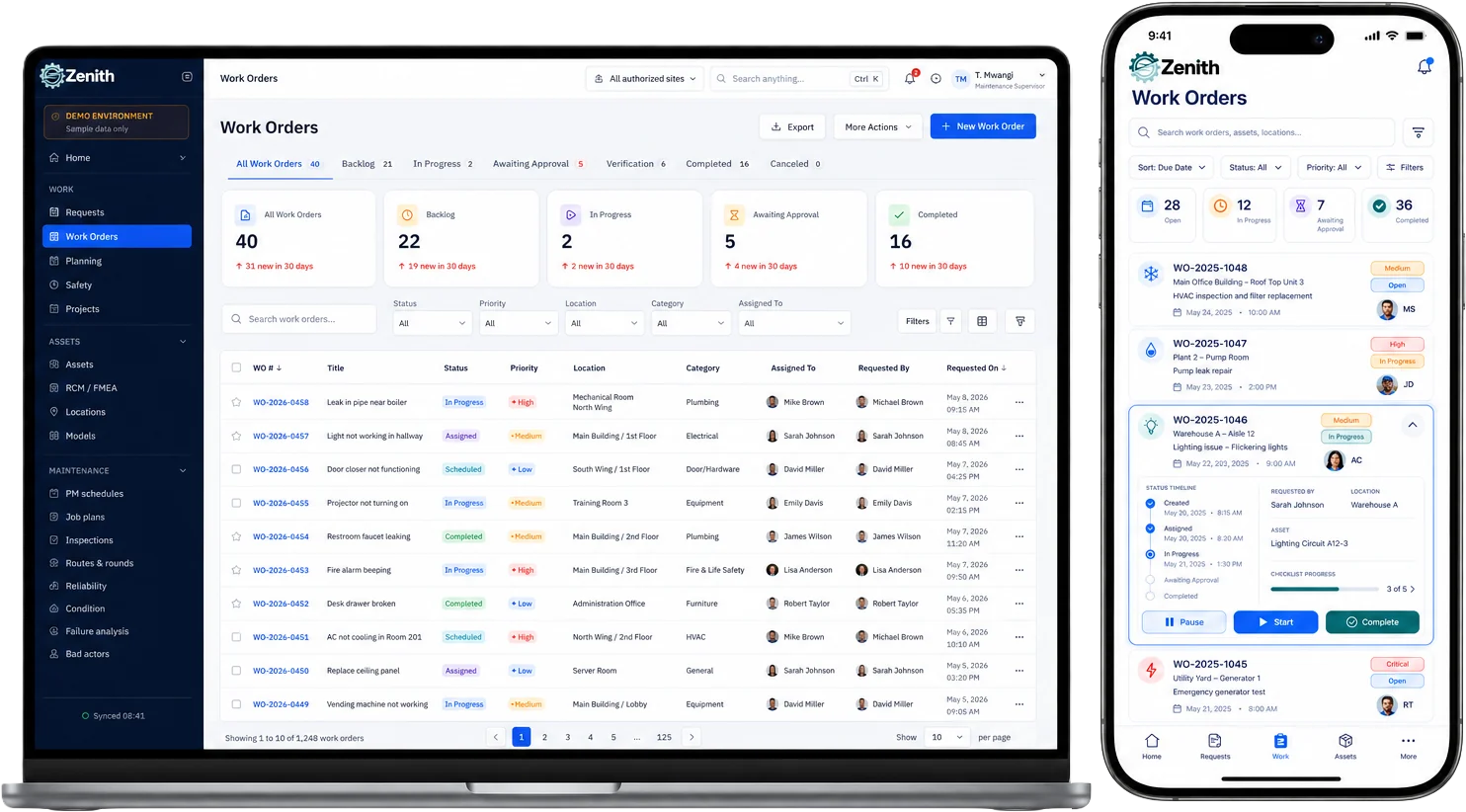
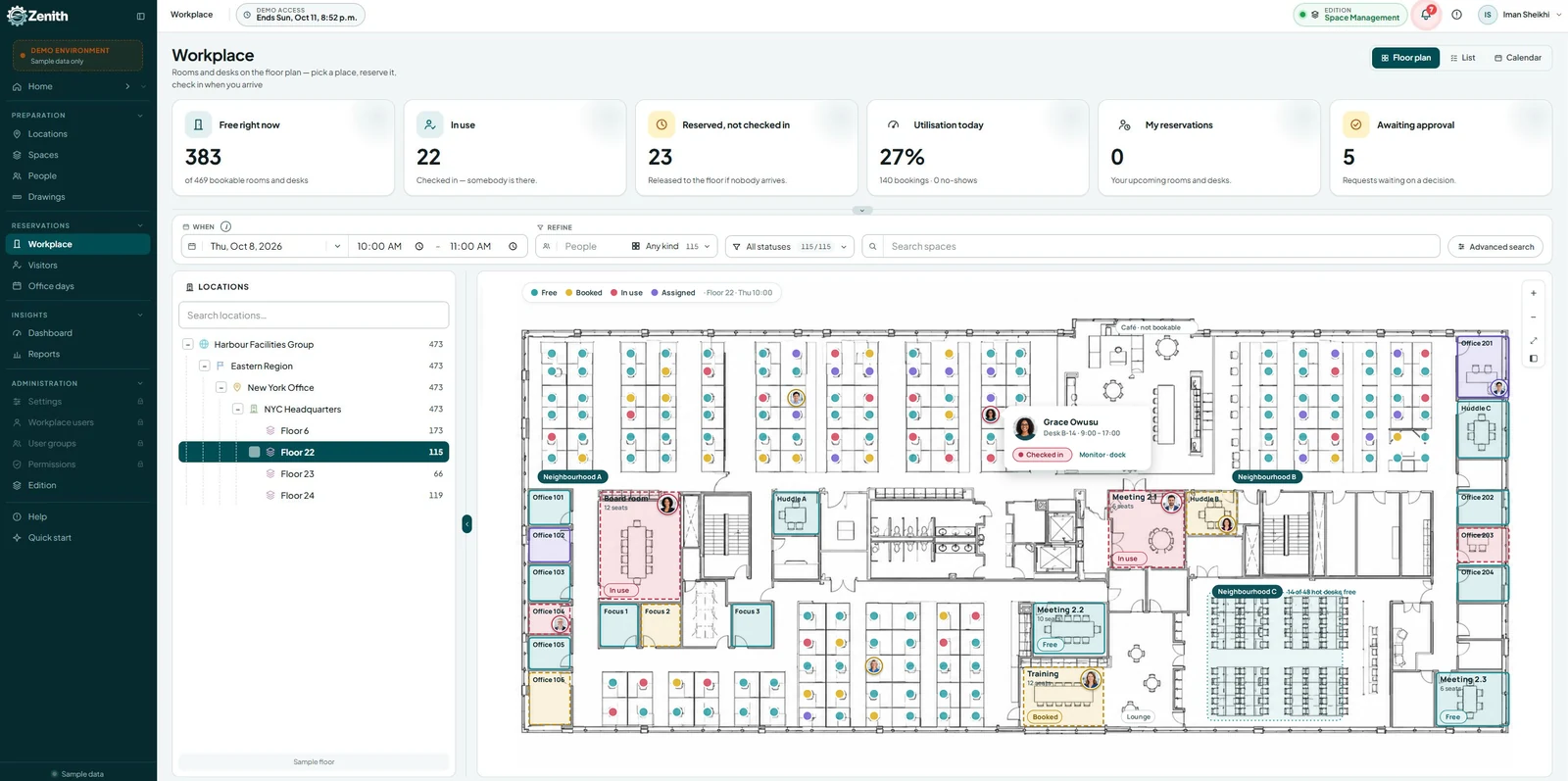
Zenith’s Facility Management Software and Maintenance Management Capabilities are designed to integrate seamlessly with your existing workflows. With real‑time asset monitoring, predictive analytics, and intuitive scheduling tools, Zenith empowers your team to move from firefighting mode to a proactive, strategic maintenance culture.
Whether you’re managing a manufacturing plant, a healthcare facility, or a multi‑site corporate environment, Zenith gives you:
- Clear visibility into asset health and space utilization
- Automated alerts that keep you ahead of potential failures
- Customizable reports to track performance and ROI
- Scalable solutions that grow with your organization
In short, Zenith doesn’t just help you maintain your assets — it helps you future‑proof your operations. The sooner you make the shift, the sooner you’ll see the benefits in reduced costs, improved uptime, and a more resilient business.
Frequently Asked Questions (FAQ)
1. What is an AI‑Powered CMMS?
An AI‑Powered Computerized Maintenance Management System uses artificial intelligence to automate maintenance scheduling, predict equipment failures, and optimize asset performance. It goes beyond traditional CMMS by learning from historical data and real‑time inputs to make smarter decisions.
2. How does predictive maintenance save money?
By identifying potential issues before they cause breakdowns, predictive maintenance reduces costly downtime, minimizes emergency repairs, and extends the lifespan of assets. This means fewer disruptions and more predictable budgeting.
3. Is AI‑Powered CMMS only for large companies?
Not anymore. Cloud‑based platforms like Zenith make advanced maintenance tools accessible and affordable for organizations of all sizes — from small facilities to multi‑site enterprises.
4. How quickly can I see results after implementing Zenith?
Many organizations notice improvements in scheduling efficiency and reduced downtime within the first few months. Predictive insights become even more accurate over time as the system learns from your data.
5. Can Zenith integrate with my existing systems?
Yes. Zenith is designed to integrate with your current workflows, asset databases, and scheduling tools, so you can start benefiting from AI‑driven insights without overhauling your entire tech stack.
6. What kind of support does Zenith provide?
You’ll have access to onboarding assistance, training resources, and ongoing customer support to ensure your team gets the most out of the platform.